DeFi has transformed how we think about finance. It promises a permissionless, borderless, and transparent way to manage assets. But for all its advantages, DeFi relies heavily on data sourced from outside the blockchain. That’s where oracles come into play. They serve as the vital link connecting smart contracts to real-world information. Without oracles, DeFi applications would be blind to anything beyond their own code. Understanding their role helps you participate more confidently and securely.
What are oracles and why do they matter in DeFi?
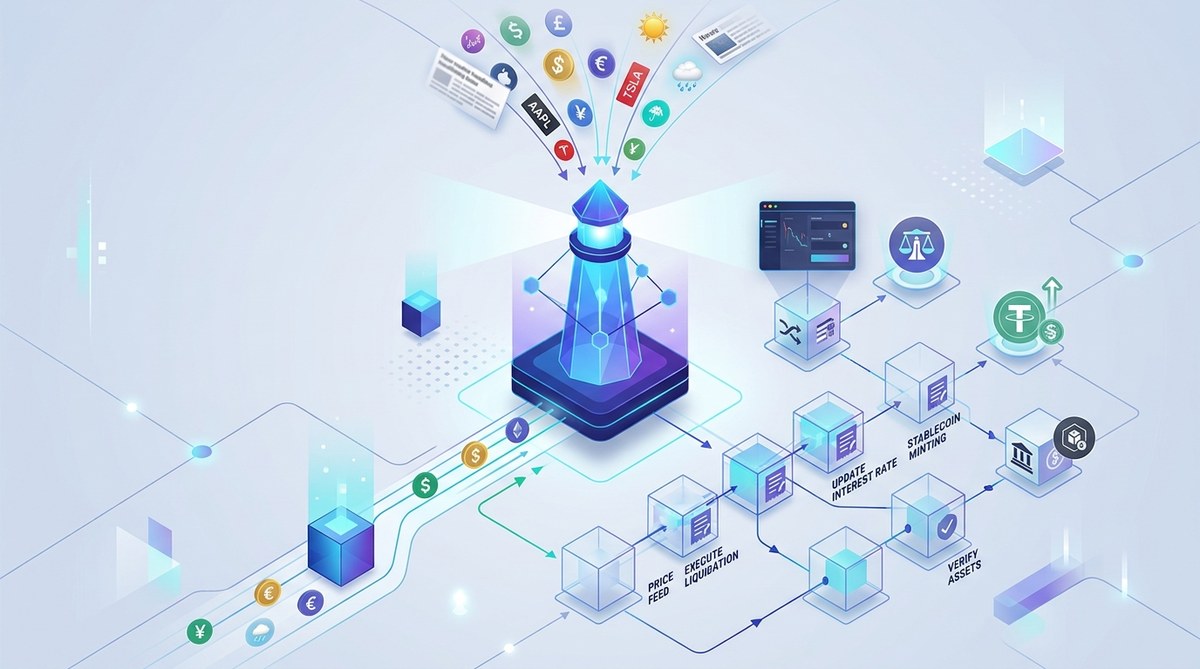
Oracles are off-chain data providers that feed external information into blockchain-based smart contracts. Think of them as trusted messengers. They gather data from various sources—such as price feeds, weather reports, or event outcomes—and deliver it securely to the blockchain. This process enables smart contracts to execute based on real-world conditions. For example, a DeFi lending platform might rely on an oracle to confirm the current price of ETH before releasing funds.
In decentralized finance, accuracy and trustworthiness are everything. If an oracle feeds incorrect data, the smart contract could execute wrongly, leading to financial losses. That’s why the significance of oracles cannot be overstated. They essentially serve as the eyes and ears of DeFi, ensuring that contracts operate with reliable information.
Oracles in DeFi act as bridges linking smart contracts to external data sources, enabling real-world information to trigger code execution securely. Their trustworthiness is crucial for safe and efficient decentralized finance operations.
How do oracles work in DeFi applications?
Oracles perform a series of steps to deliver data from the outside world into blockchain environments. Here’s a simple process:
- Data Request: A smart contract requests specific information, like the current price of a cryptocurrency or the outcome of an event.
- Data Aggregation: The oracle collects data from multiple reputable sources to verify accuracy. This might include price data from different exchanges or weather reports from various weather stations.
- Data Transmission: Once verified, the oracle transmits this data back to the smart contract on the blockchain.
- Contract Execution: The smart contract uses the received data to trigger predefined actions, such as releasing collateral, settling a bet, or adjusting interest rates.
Practical process for using oracles effectively in DeFi:
- Identify the data your smart contract needs.
- Choose a reliable oracle service that sources and verifies this data.
- Integrate the oracle into your smart contract, ensuring it fetches data accurately and securely.
- Regularly monitor the oracle’s performance and update if needed to maintain data integrity.
Types of oracles in DeFi
Oracles come in different forms, each suited for specific use cases. Here are a few common types:
- Price feeds: Provide real-time asset prices, vital for decentralized exchanges and derivatives.
- Cross-chain oracles: Enable data transfer between different blockchains, supporting interoperability.
- Event oracles: Report outcomes of real-world events, often used in prediction markets.
- Compute oracles: Perform complex off-chain computations and return the results on-chain.
Centralized versus decentralized oracles
The core difference is trust. Centralized oracles rely on a single data source or provider. This introduces a risk if that source is compromised or dishonest. For example, if a single price feed is manipulated, it can lead to incorrect contract execution.
Decentralized oracles aggregate data from multiple sources and use consensus mechanisms to validate accuracy. This approach significantly reduces the risk of data manipulation, aligning better with DeFi’s trustless ethos. Protocols like Chainlink are popular examples of decentralized oracles, ensuring data integrity through multiple independent nodes.
Why oracles are critical for DeFi growth and security
Oracles unlock the potential of smart contracts to interact with the real world. Without them, DeFi would be limited to purely on-chain activities, reducing its usefulness. For instance:
- Price oracles enable automated trading, lending, and collateral management.
- Event oracles facilitate decentralized prediction markets, where outcomes depend on real-world events.
- Cross-chain oracles support interoperability, allowing assets and data to flow seamlessly across different networks.
Their importance extends beyond functionality. Security is paramount. A compromised oracle can cause massive losses or system failures. That’s why protocols invest heavily in designing secure, tamper-resistant oracle systems.
“The security of DeFi heavily depends on the reliability of oracles. Robust decentralization and verification mechanisms are essential to prevent attacks and ensure trust.” — Expert Advice
Challenges and best practices for using oracles in DeFi
Despite their benefits, oracles introduce certain risks and challenges:
- Data manipulation: If an oracle relies on a single source, it becomes vulnerable to attack.
- Latency issues: Slow data updates can cause contracts to act on outdated information.
- Cost: Running secure, decentralized oracles can be expensive.
- Centralized points of failure: Relying on a single provider contradicts DeFi’s trustless principles.
To mitigate these issues, consider the following best practices:
- Use multiple data sources to verify information.
- Implement decentralization in oracle architecture.
- Regularly audit and update oracle configurations.
- Monitor data feeds actively for anomalies.
- Choose reputable oracle providers like Chainlink or Band Protocol.
Techniques to improve oracle security
| Technique | Purpose | Common Mistake |
|---|---|---|
| Data aggregation | Combine multiple sources to verify accuracy | Relying on a single source |
| Incentive mechanisms | Reward honest node operators | Ignoring potential collusion |
| Decentralized node networks | Reduce reliance on a single provider | Using centralized oracles |
| Regular audits | Detect vulnerabilities early | Overlooking security updates |
The future of oracles in DeFi
As DeFi continues to expand, oracles will become even more integral. Innovations such as hybrid oracles, combining on-chain and off-chain data, aim to improve security and efficiency. Cross-chain oracles will facilitate a more interconnected ecosystem, allowing seamless asset transfer and data sharing between networks.
Addressing current challenges involves enhancing decentralization, incentivizing honest participation, and developing standards for data verification. Layered security models and cryptographic proofs will further strengthen oracle trustworthiness.
Final thoughts: making smarter choices with oracles
Understanding how oracles in DeFi function empowers you to evaluate protocols more critically. When participating in DeFi, always consider a platform’s oracle design—relying on decentralized, multi-source feeds reduces risk. Stay informed about the security measures in place and favor protocols that prioritize reliable data verification.
By recognizing the crucial role oracles play, you can make smarter investment decisions. They are not just technical components but the backbone of trust in decentralized finance. Incorporate this knowledge into your strategy, and you’ll navigate DeFi’s dynamic landscape with greater confidence.
A practical step towards smarter DeFi participation
Begin by researching the oracle systems behind the platforms you use. Check if they employ decentralization and multiple data sources. Consider the security track record and community trust in their oracle solutions. Applying these insights will help you participate more safely and effectively in the exciting world of DeFi.