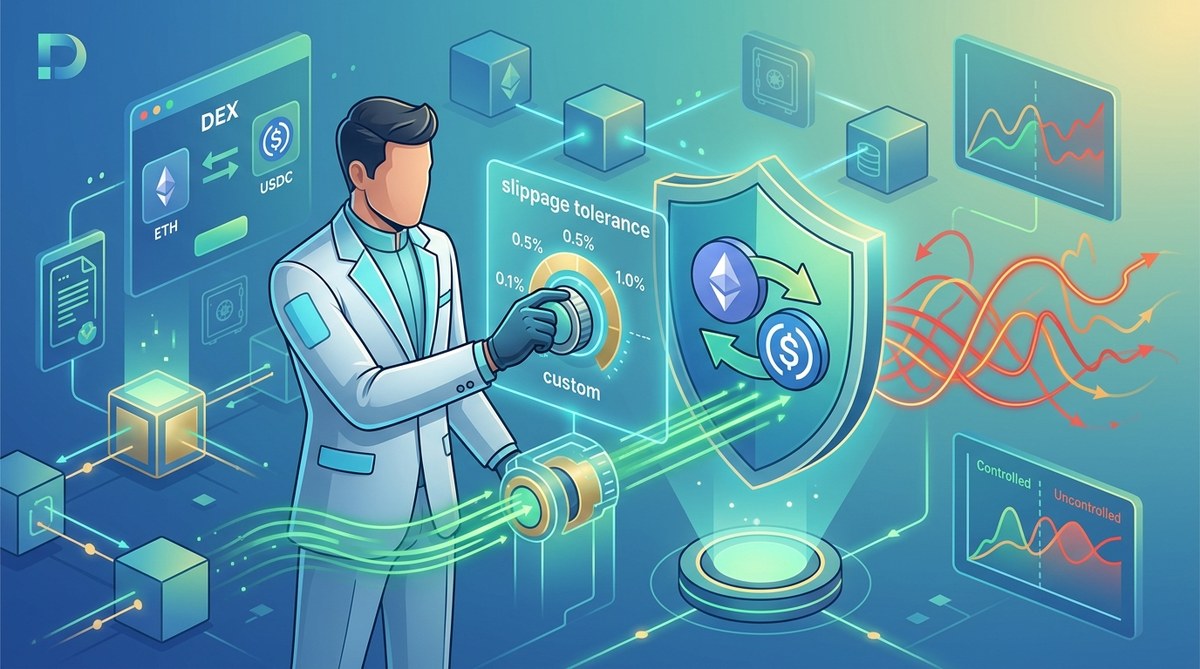
When trading cryptocurrencies on decentralized exchanges, understanding slippage tolerance is key to protecting your funds. Slippage occurs when the price at which your trade executes differs from the expected price. This can happen due to market volatility, low liquidity, or network congestion. Managing slippage helps ensure your trades are executed within acceptable price ranges, preventing unexpected losses or failed transactions. Whether you’re swapping tokens or providing liquidity, mastering slippage tolerance can make your DeFi experience smoother and safer.
Adjusting slippage tolerance allows you to control how much price variation you’re willing to accept during a trade. Setting it too low may cause failed transactions, while too high exposes you to higher risks of unfavorable fills. Proper management of this setting enhances trade security, especially during volatile periods, ensuring your crypto swaps remain predictable and within your desired price range.
What is slippage tolerance and why it matters
Slippage tolerance is a setting you can adjust on many decentralized exchanges to limit how much price deviation you’re willing to accept during a trade. When you submit a swap, the exchange tries to match your order at the current market price. But if the price moves quickly or liquidity is thin, your trade may execute at a less favorable rate.
Setting a slippage tolerance acts as a safety buffer. It tells the protocol, “execute my trade only if the price is within this percentage of my expected rate.” If the price moves beyond this limit, your transaction will fail instead of executing at an unfavorable rate. This mechanism protects you from getting caught in big price swings, especially during highly volatile periods.
How to set and adjust slippage tolerance on decentralized exchanges
Managing slippage is straightforward once you know where to look. Here’s a simple process:
- Identify your acceptable risk level: Decide how much price variation you’re comfortable with. For most small trades, a slippage tolerance of 0.5% to 1% works well. If you’re trading large amounts or during volatile markets, consider increasing this slightly.
- Locate the slippage setting: On most DEXs like Uniswap or SushiSwap, you’ll find the slippage tolerance option before confirming a swap. It’s usually labeled as “slippage” or “slippage tolerance.”
- Adjust the slider or input box: Set your preferred percentage. If you’re unsure, start with 0.5% and increase gradually if transactions fail frequently.
- Confirm and execute: Once set, proceed with your trade. Keep an eye on the transaction details, especially during high volatility.
For example, on Uniswap, you can click the gear icon to access settings, then adjust the slippage tolerance slider. Setting it too high might result in paying more than intended, while too low could cause your transaction to revert if the price moves slightly.
Practical techniques to manage slippage effectively
Here are some tips to keep your trades within safe boundaries:
- Use limit orders when possible: Some DEX aggregators or protocols allow limit orders, letting you specify the maximum acceptable price. This way, your trade only executes at or below your set price.
- Trade during high liquidity periods: Liquidity pools are deeper during certain times, reducing the chance of significant slippage. Avoid trading during low-volume periods.
- Break large trades into smaller chunks: Large swaps can cause notable price impact. Splitting your order minimizes this risk.
- Monitor market volatility: Avoid executing trades during major news releases or rapid price swings.
- Set appropriate slippage tolerance: As a rule of thumb, keep it as low as possible without causing transaction failures.
Common mistakes to avoid with slippage management
| Mistake | Why it hurts | Better approach |
|---|---|---|
| Setting slippage too high | Exposes you to costly price swings | Use the lowest acceptable setting based on market conditions |
| Ignoring network congestion | Transactions may revert or execute at worse prices | Check network status before trading |
| Not adjusting slippage for volatile markets | Unexpected losses or failed trades | Increase tolerance during expected high volatility |
| Using high slippage for small trades | Unnecessary costs | Keep slippage tight for small or routine swaps |
“Always tailor your slippage tolerance to current market conditions. During calm periods, keep it tight. When volatility spikes, adjust accordingly.” — DeFi security expert
Strategies to minimize slippage risk
- Trade in high liquidity pools: Pools with more trading volume tend to have less price impact.
- Use advanced routing options: Some platforms offer smart routing that finds the best path for your trade, reducing slippage.
- Set custom slippage limits: Avoid default high settings. Use a calculator or historical data to inform your tolerance.
- Avoid trading during major events: Earnings reports, protocol launches, or macroeconomic news can cause sharp price movements.
- Utilize stop-loss or limit orders: When supported, these can help you exit trades at predetermined prices, avoiding unfavorable fills.
How slippage tolerance impacts your trading outcomes
Choosing the right slippage setting is a balancing act. Too conservative, and your trades might frequently fail, especially in fast markets. Too lenient, and you risk paying significantly more or receiving less than expected.
For example, if you set a slippage tolerance of 1% on a token worth $100, your trade will only execute if the price stays within $1 of your expected rate. During volatile periods, prices can jump beyond this range, causing your transaction to revert. Conversely, a higher tolerance like 3% might allow the trade to go through but at a cost of potentially paying more than you intended.
How to troubleshoot slippage issues
- Transaction reverts: If your trade keeps failing, consider lowering your slippage tolerance or trading during less volatile times.
- Unexpected costs: Review your slippage settings and market conditions. Sometimes, increasing slippage slightly can prevent failed transactions.
- Price impact alerts: Many platforms warn you if your trade’s size might cause high slippage. Use these alerts to adjust your order size or timing.
Final thoughts on mastering slippage in crypto trading
Managing slippage tolerance is a vital skill for anyone actively trading or providing liquidity in DeFi. It requires understanding current market conditions, liquidity levels, and your own risk appetite. Regularly reviewing and adjusting your settings ensures your trades stay within expected bounds.
Start with conservative slippage limits for smaller trades and increase them only when necessary. Keep an eye on market volatility and liquidity pools. With practice, you’ll develop a sense for setting the right tolerance levels that balance trade success with cost control.
Applying these strategies will help you navigate volatile markets confidently, making your DeFi journey safer and more predictable. Happy trading!