Most tokens in traditional finance serve a single purpose. A stock represents ownership. A bond pays interest. Simple.
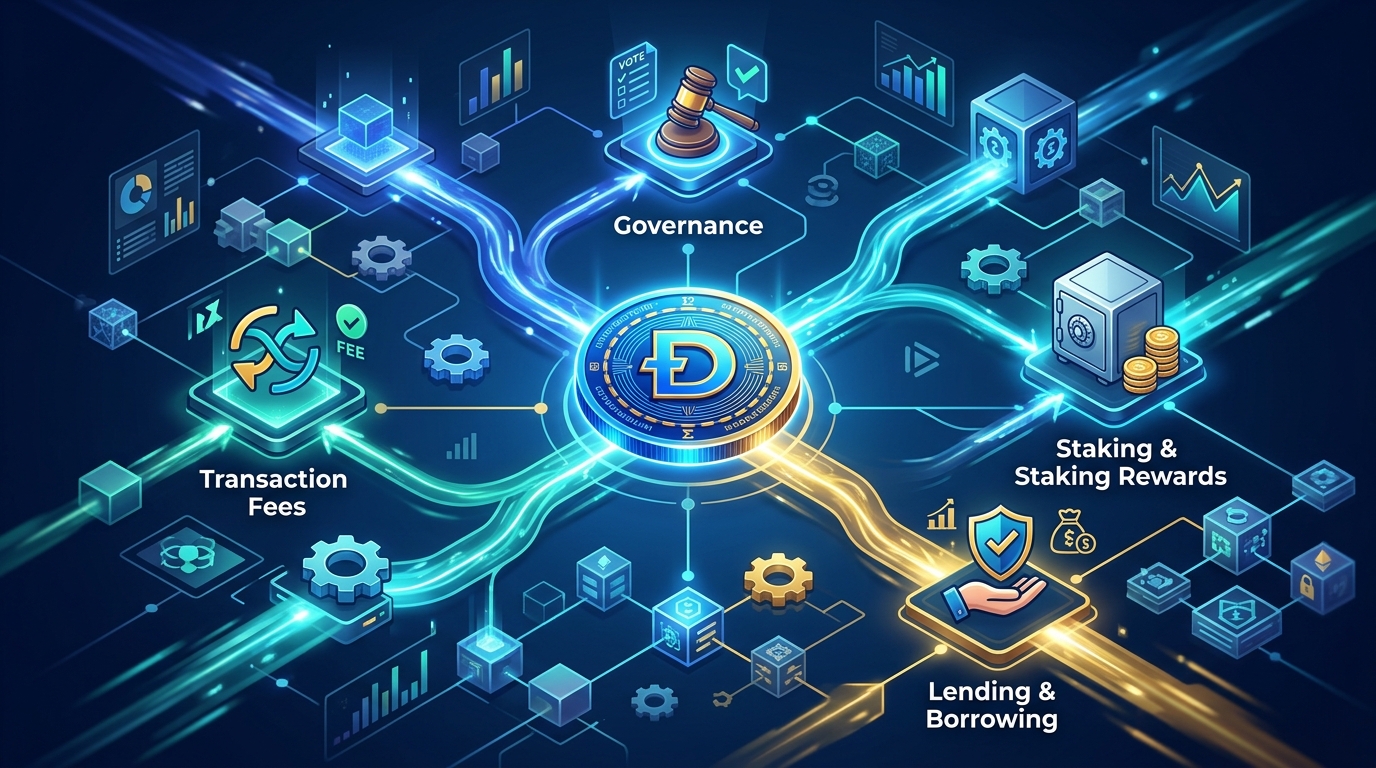
But utility tokens in DeFi break that mold completely. A single token might let you vote on protocol changes, earn staking rewards, pay transaction fees, provide liquidity, and unlock premium features all at once. This isn’t feature creep. It’s intentional design that makes protocols more resilient and valuable.
Multi-utility tokens combine several functions like governance, staking, fee discounts, and liquidity provision into one asset. This design creates stronger token demand, aligns user incentives with protocol success, and builds more sustainable DeFi ecosystems. Understanding these utilities helps you evaluate tokenomics and identify projects with genuine long-term value beyond speculation.
Why Single-Purpose Tokens Struggle in DeFi
Early DeFi projects often launched tokens with one job. Governance only. Or just staking rewards.
These tokens faced a problem. Limited utility meant limited demand. Users bought them, voted once, then sold. Or they staked for rewards but had no other reason to hold.
The result? Constant selling pressure. Declining prices. Frustrated communities.
Projects learned that sustainable tokenomics requires multiple reasons for users to acquire and hold tokens. Not just one.
The Core Utilities That Power DeFi Tokens
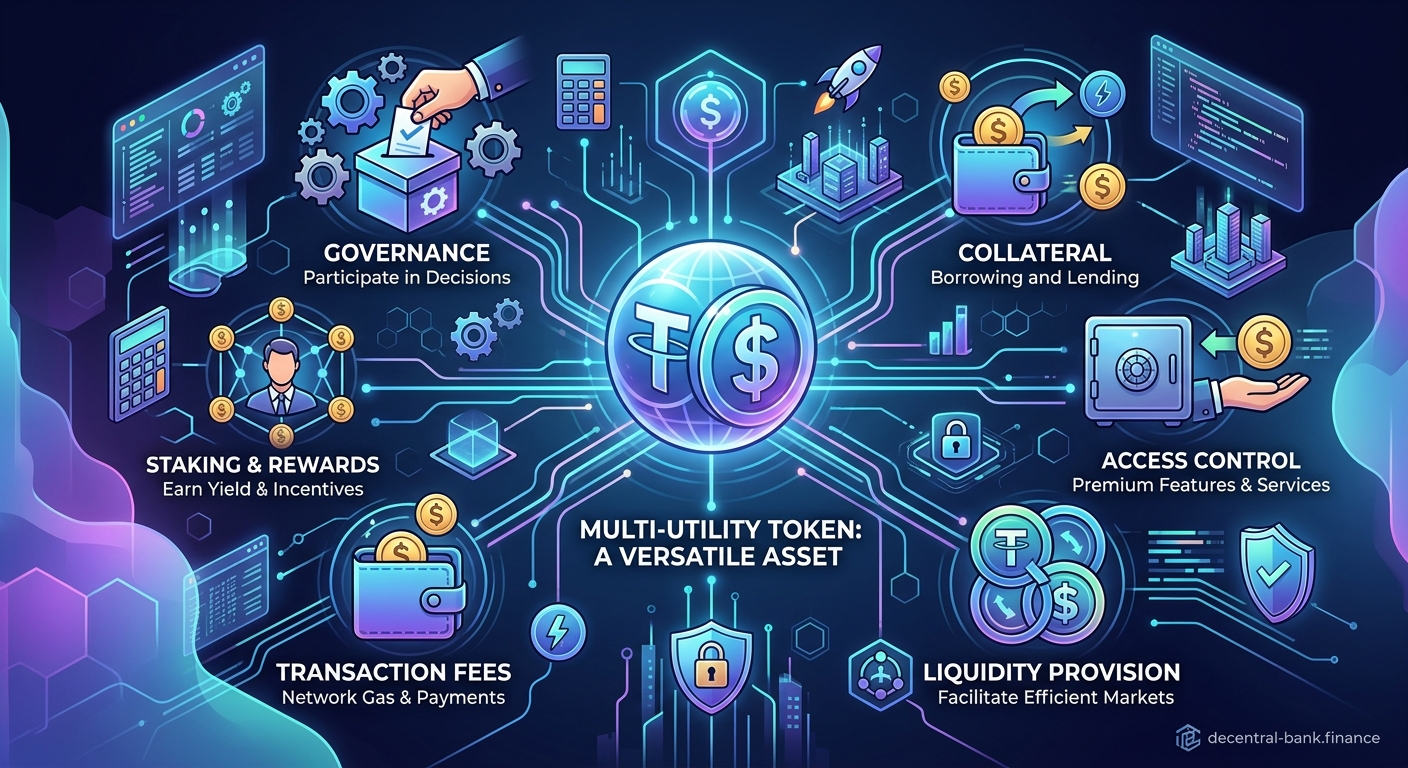
Most successful DeFi tokens combine three to five distinct functions. Each serves a different user need.
Governance Rights
Token holders vote on protocol upgrades, fee structures, treasury spending, and parameter changes. This isn’t symbolic. Real decisions with real financial consequences.
Protocols like Compound and Aave give token holders genuine control over billions in locked value. Your vote weight scales with your token holdings.
Governance tokens actually give you control over everything from interest rates to new market listings.
Staking and Rewards
Many protocols let you stake tokens to earn yield. Sometimes that yield comes from protocol fees. Sometimes from inflation.
Staking creates opportunity cost. When tokens are locked, circulating supply drops. Selling pressure decreases.
Fee Discounts and Payment
Platforms often give token holders reduced trading fees, lower borrowing rates, or priority access. Binance pioneered this with BNB fee discounts.
Some protocols require their native token for certain transactions. This creates consistent buy pressure from active users.
Liquidity Provision Incentives
DeFi protocols need deep liquidity to function. They often reward users who provide liquidity with their native tokens.
These rewards serve dual purposes. They bootstrap liquidity and distribute tokens to engaged community members.
Access to Premium Features
Some protocols gate advanced features behind token holdings. Higher lending limits. Advanced trading tools. Early access to new products.
This creates natural demand from power users who extract the most value from the platform.
How Multiple Utilities Create Network Effects
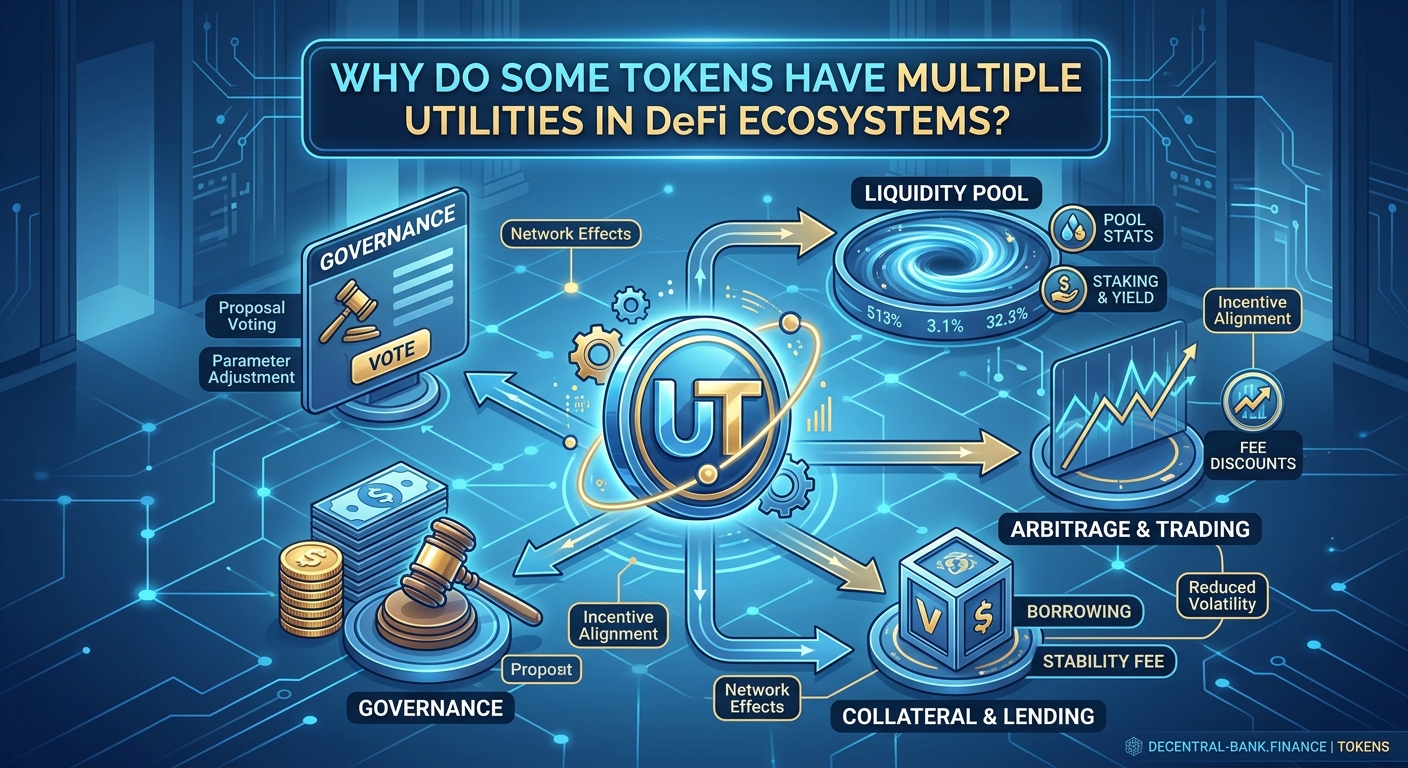
When tokens serve multiple purposes, something interesting happens. The utilities start reinforcing each other.
Consider this sequence:
- You provide liquidity to earn trading fees
- You receive governance tokens as rewards
- Those tokens give you voting rights
- You stake them to earn additional yield
- Staked tokens give you fee discounts
- Lower fees make providing liquidity more profitable
- You provide more liquidity
Each utility creates a reason to acquire more tokens. Each holding period extends. Velocity drops. Price stability improves.
This isn’t accidental. It’s engineered token design.
Real Examples of Multi-Utility Token Design
Uniswap (UNI)
UNI holders can vote on protocol upgrades and fee structures. They can also provide liquidity in UNI pairs to earn trading fees. The protocol has discussed fee switches that would share revenue with token holders.
Three utilities. Governance, liquidity provision, and potential fee sharing.
Curve (CRV)
CRV offers one of the most complex multi-utility designs. Token holders can:
- Vote on gauge weights that direct CRV emissions
- Lock tokens as veCRV for boosted rewards
- Earn protocol fees
- Receive bribes from protocols seeking votes
The lock mechanism creates time-based utility. Longer locks mean stronger voting power and better rewards.
Aave (AAVE)
AAVE tokens serve as governance, staking collateral for protocol safety, and fee discount mechanisms. Stakers earn protocol fees but also take on risk. If the protocol suffers a shortfall, staked AAVE can be slashed.
This creates genuine skin in the game for security.
The Economics Behind Multi-Utility Design
Why do protocols bother with complex token designs? Because simple tokenomics often fails.
Here’s what happens with single-utility tokens:
| Token Type | Primary Risk | Typical Outcome |
|---|---|---|
| Governance only | Low engagement after voting | Constant selling pressure |
| Rewards only | Mercenary capital | Farm and dump behavior |
| Fee discount only | Limited holder base | Insufficient demand |
| Multi-utility | Complexity for users | Sustainable holding periods |
Multi-utility tokens face higher initial friction. Users need to understand multiple mechanisms. But once they do, they have more reasons to stay engaged.
The token distribution models that pair multiple utilities with fair launches tend to outperform over time.
How to Evaluate Multi-Utility Token Designs
Not all multi-utility tokens are created equal. Some combine genuine functions. Others stack superficial features that don’t create real value.
Ask these questions:
Does each utility serve a real user need?
Governance matters if users actually care about protocol decisions. Staking matters if rewards are sustainable. Fee discounts matter if users trade frequently.
Do the utilities reinforce each other?
The best designs create flywheel effects. Each function makes the others more valuable.
Are the utilities sustainable long term?
Reward emissions eventually end. Fee discounts cut into revenue. Governance requires active participation. Make sure the economics work beyond the launch phase.
Is the complexity justified?
More utilities aren’t always better. If users can’t understand how the token works, they won’t engage with it.
Common Multi-Utility Combinations
Certain utility pairings appear repeatedly because they work well together.
Governance + Staking
Staking locks tokens and reduces selling pressure. Governance gives staked tokens meaningful use. This combination appears in dozens of successful protocols.
The staking process becomes more attractive when staked tokens retain voting power.
Fee Sharing + Governance
When token holders vote on fee structures and also receive those fees, incentives align perfectly. They’re motivated to grow protocol revenue.
Liquidity Mining + Governance
Distributing governance tokens to liquidity providers ensures the people most invested in protocol success have decision-making power.
Collateral + Governance
Using governance tokens as collateral in lending protocols creates additional utility. Borrowers can access capital without selling. Lenders earn yield.
But this adds risk. If governance decisions tank the token price, collateral gets liquidated.
The Risks of Over-Complicated Token Models
More utilities can backfire. Some projects create token designs so complex that nobody understands them.
Users face analysis paralysis. They can’t evaluate if the token is worth buying. They can’t calculate expected returns. They can’t predict behavior.
This happened with several algorithmic stablecoin projects. They stacked so many mechanisms that even experienced DeFi users couldn’t model the outcomes.
Keep token utility simple enough that engaged users can understand it in 10 minutes. Complexity beyond that point usually subtracts value rather than adding it.
The clearest token designs explain each utility in plain language. They show how utilities interact. They provide calculators for expected returns.
How Token Utility Affects Long-Term Value
Tokens with genuine multi-utility tend to hold value better during market downturns. Why?
Because users need them for multiple reasons. Even if speculation dries up, utility demand remains.
Compare two scenarios:
Token A: Governance only
– Market crashes
– Speculation disappears
– Governance proposals slow down
– No reason to hold
– Price collapses
Token B: Governance + staking + fee discounts
– Market crashes
– Speculation disappears
– But staking still earns yield
– Fee discounts still save money
– Governance still controls protocol
– Price drops but stabilizes
The multi-utility token has a higher floor. Not because of fundamentals alone. Because of ongoing use cases.
Identifying Genuine Utility vs Marketing Fluff
Many projects claim multi-utility tokens. Fewer deliver real value.
Red flags to watch for:
- Utilities that don’t launch until months after token sale
- Governance that only controls trivial parameters
- Staking rewards funded entirely by inflation
- Fee discounts on services nobody uses
- Access to features that could be free
Green flags that signal genuine utility:
- Each utility has clear, measurable value
- Utilities are live and functional at launch
- Token holders actively use multiple features
- Protocol revenue supports reward mechanisms
- Governance decisions have meaningful impact
The Future of Multi-Utility Token Design
DeFi token design keeps evolving. New utility combinations emerge constantly.
Recent innovations include:
Time-weighted governance
Lock tokens longer to gain more voting power. This aligns short-term holders with long-term protocol health.
Utility NFTs
Stake tokens to mint NFTs that provide access to features. The NFT becomes tradeable utility.
Cross-protocol utility
Tokens that work across multiple protocols in an ecosystem. One token, many uses across different platforms.
Reputation-weighted utility
Token utility that scales with your protocol participation history. Long-time users get better benefits.
These mechanisms add nuance to multi-utility design. They create more sophisticated incentive structures.
Security Considerations for Multi-Utility Tokens
More utilities mean more smart contract complexity. More complexity means more attack surface.
Each utility needs secure implementation. Governance systems need protection from manipulation. Staking contracts need safeguards against exploits. Fee mechanisms need checks against gaming.
The security risks multiply with each added utility. Projects should undergo thorough audits before launching complex token designs.
Users should check:
- Has the token contract been audited?
- Are governance mechanisms protected against flash loan attacks?
- Do staking contracts have emergency pause functions?
- Can individual utilities be upgraded without affecting others?
Practical Steps for Evaluating Multi-Utility Tokens
When researching a new DeFi token, follow this process:
- List every utility the project claims
- Verify which utilities are currently live
- Calculate the value of each utility independently
- Assess how utilities interact and reinforce each other
- Check if token distribution aligns with stated utilities
- Review smart contract audits for each utility
- Test actual usage of at least one utility
- Compare the design to similar successful projects
This systematic approach prevents you from falling for marketing hype. It focuses attention on actual, measurable utility.
The difference between utility and security tokens matters for legal reasons too. Multi-utility designs can blur these lines.
When Single-Utility Tokens Still Make Sense
Multi-utility isn’t always better. Some use cases work perfectly with single-purpose tokens.
Pure governance tokens make sense for DAOs focused solely on decision-making. Adding staking or fees would complicate governance without adding value.
Wrapped assets like WBTC serve one purpose. Bringing Bitcoin to Ethereum. No need for governance or staking.
Meme tokens succeed or fail on community and culture. Adding utilities often dilutes the brand.
The key is matching token design to protocol needs. Not adding utilities for their own sake.
Why Multi-Utility Design Matters for DeFi’s Future
As DeFi matures, token designs need to mature with it. Single-utility tokens worked during the speculation phase. They don’t work for sustainable protocols.
Multi-utility tokens create:
- Stronger holder conviction
- Lower volatility
- Better alignment between users and protocols
- More sustainable tokenomics
- Clearer value propositions
These benefits compound over time. Protocols with well-designed multi-utility tokens tend to survive market cycles. They build loyal communities. They generate real revenue.
Understanding how DeFi works without traditional intermediaries helps you appreciate why token design matters so much. Tokens replace the incentive structures that banks and brokers provided.
Building Your Multi-Utility Token Strategy
As an investor or user, how should you approach multi-utility tokens?
Focus on protocols you actually use. The best way to understand token utility is to experience it. Try governance voting. Test staking mechanisms. Use fee discounts.
Calculate real returns. Don’t just look at APY numbers. Factor in all utilities. What’s the governance worth? How much do fee discounts save? What’s the expected value of future utility additions?
Consider your time horizon. Multi-utility tokens reward longer holding periods. If you’re trading actively, simpler tokens might suit you better.
Diversify across utility types. Some tokens emphasize governance. Others focus on yield. Others prioritize access. A balanced portfolio includes different utility profiles.
Stay informed about changes. Token utilities evolve through governance. Follow protocol announcements. Participate in discussions. Vote on proposals that affect utility.
Making Multi-Utility Work for You
The shift from single-purpose to multi-utility tokens represents DeFi growing up. Early speculation gave way to sustainable value creation.
Tokens that serve multiple genuine needs create stronger protocols. They align incentives better. They weather volatility more effectively. They build lasting communities.
Your job as a DeFi participant is learning to recognize genuine multi-utility design. Not every token claiming multiple uses delivers real value. But those that do tend to succeed over the long term.
Start by examining the tokens you already hold. What utilities do they offer? Which do you actually use? Which create measurable value? This analysis helps you separate substance from hype.
Then look at new projects through the same lens. Don’t get distracted by promises of future utility. Focus on what works today. Build from there.
Multi-utility tokens aren’t perfect. They add complexity. They require more user education. They create more potential failure points. But when designed well, they create DeFi protocols that can compete with traditional finance on sustainability, not just innovation.