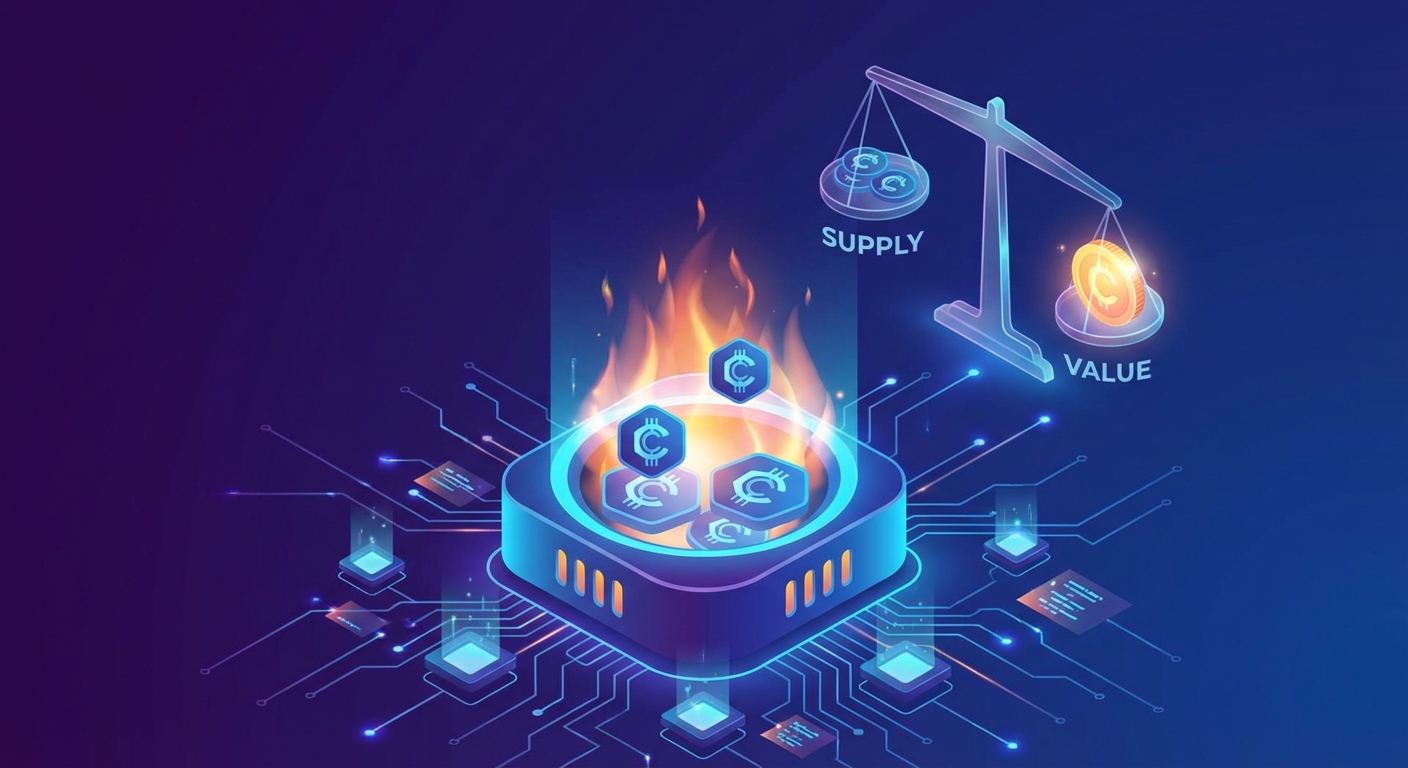
Imagine a company announcing it just destroyed millions of dollars worth of its own product. In traditional finance, that sounds like corporate suicide. In cryptocurrency, it’s called token burning, and it happens regularly across major blockchain projects. This deliberate destruction of digital assets has become a fundamental tool in crypto economics, influencing everything from Bitcoin’s scarcity to Ethereum’s fee structure.
Token burning permanently removes cryptocurrency from circulation by sending it to an inaccessible wallet address. Projects burn tokens to reduce supply, increase scarcity, reward holders, comply with regulations, or demonstrate commitment to tokenomics. Understanding this mechanism helps investors evaluate project fundamentals and anticipate potential price impacts from scheduled or algorithmic burns.
Understanding the mechanics of token destruction
Token burning refers to the permanent removal of cryptocurrency tokens from the available supply. Think of it like taking paper money and feeding it through a shredder, except there’s no way to tape the pieces back together.
The process works through blockchain technology. Developers or users send tokens to a wallet address specifically designed to be inaccessible. These addresses, often called “burn addresses” or “eater addresses,” have no private keys. Without a private key, nobody can ever access or spend the tokens sent there.
The most common burn address format contains obvious patterns that signal its purpose. Ethereum’s standard burn address is 0x000000000000000000000000000000000000dEaD. Bitcoin uses addresses like 1BitcoinEaterAddressDontSendf59kuE. The transparent nature of blockchain means anyone can verify these burns by checking the public ledger.
Once tokens arrive at a burn address, they remain visible on the blockchain but become functionally extinct. They still exist in the code, but they’re locked away forever. This creates verifiable scarcity that anyone can audit.
Different blockchains handle burns slightly differently. Some protocols have built-in burn mechanisms that automatically destroy tokens as part of transaction processing. Others require manual burns initiated by project teams or community votes.
Why cryptocurrency projects choose to burn tokens
Projects burn tokens for several strategic reasons, each tied to economics, governance, or market positioning.
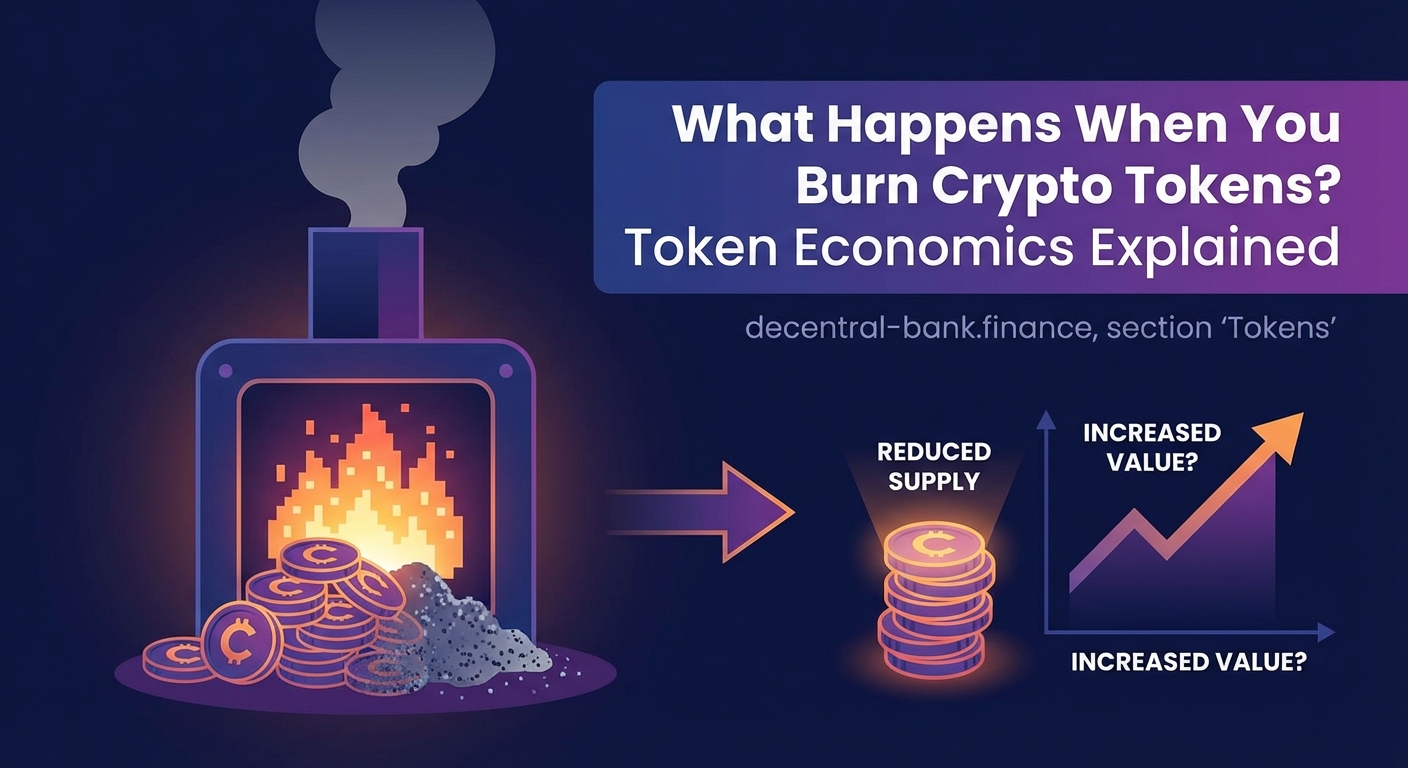
Supply reduction stands as the most common motivation. Basic economics teaches that decreasing supply while maintaining or increasing demand should theoretically raise prices. Projects with large initial supplies often implement burn schedules to gradually reduce circulation and create scarcity.
Value accrual for holders represents another key driver. When a project burns tokens, the remaining tokens represent a larger percentage of the total supply. If the project’s overall value stays constant or grows, each remaining token becomes more valuable.
Fee management has emerged as a sophisticated use case. Ethereum’s EIP-1559 upgrade burns a portion of transaction fees instead of paying them entirely to miners. This creates deflationary pressure during high network activity. When Ethereum processes many transactions, more ETH gets burned, potentially making the asset deflationary.
Regulatory compliance occasionally requires burns. Some projects launched with token allocations that later became problematic for securities regulations. Burning unsold tokens from initial offerings can help demonstrate that a project isn’t holding excessive reserves.
Demonstration of commitment matters for project credibility. When development teams burn their own token allocations, they signal confidence and alignment with community interests. It shows they’re willing to reduce their own holdings to benefit the ecosystem.
Buyback and burn programs mirror traditional stock buybacks. Projects use treasury funds or revenue to purchase tokens from the open market, then burn them. Binance pioneered this approach in crypto, regularly burning BNB tokens based on trading volume and profits.
Common token burning methods and schedules
Projects implement burns through various mechanisms, each with different implications for investors.
-
Scheduled burns follow predetermined timelines announced in advance. Projects commit to burning specific amounts at regular intervals, such as quarterly or annually. This predictability allows markets to price in future burns.
-
Algorithmic burns happen automatically based on protocol activity. Transaction fees, smart contract interactions, or other network events trigger these burns without human intervention. This creates a direct link between network usage and token scarcity.
-
Manual burns require deliberate action from project teams or governance votes. These often coincide with milestones, fundraising events, or strategic decisions. The discretionary nature means they can be delayed, modified, or cancelled.
| Burn Type | Predictability | Transparency | Market Impact |
|---|---|---|---|
| Scheduled | High | High | Gradual, priced in |
| Algorithmic | Medium | Very High | Correlates with usage |
| Manual | Low | Medium | Sudden, announcement driven |
| Buyback and Burn | Medium | High | Depends on purchase timing |
The frequency and amount of burns vary dramatically. Some projects burn tokens every block. Others conduct annual mega-burns. The structure matters because it affects how markets respond.
Proof of burn represents a specialized category where users intentionally burn tokens to receive benefits. Some blockchains use this as a consensus mechanism or to mint tokens on another chain. Users prove they destroyed value on one blockchain to gain rights or assets elsewhere.
Real world examples of token burns in action
Major cryptocurrency projects have implemented burns with varying results and motivations.
Binance Coin (BNB) operates one of crypto’s most established burn programs. Binance commits to burning BNB quarterly until 50% of the total supply is destroyed. They calculate burn amounts based on trading volume and BNB price. As of early 2024, Binance had burned over 40 million BNB tokens worth billions of dollars.
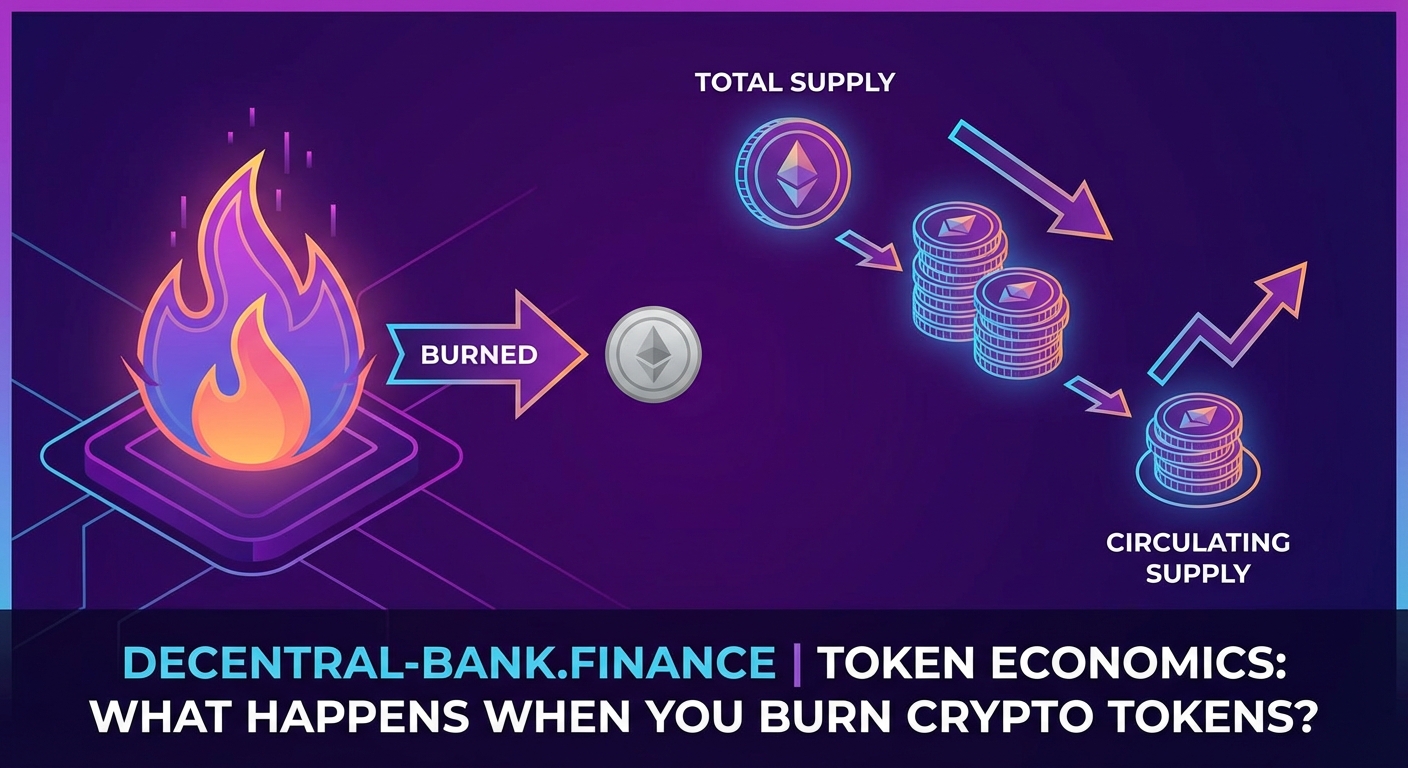
Ethereum (ETH) transformed from inflationary to potentially deflationary after the EIP-1559 upgrade in August 2021. The protocol now burns the base fee from every transaction. During periods of high network activity, Ethereum burns more ETH than it issues to validators, creating net deflation. This mechanism ties token economics directly to network utility.
Shiba Inu (SHIB) launched with a quadrillion token supply and executed a massive initial burn. The creator sent 50% of the supply to Ethereum founder Vitalik Buterin, who then burned 90% of what he received. The project continues community-driven burns, though the enormous remaining supply means burns must be substantial to impact scarcity meaningfully.
Terra (LUNA) used algorithmic burns tied to its stablecoin mechanism before its 2022 collapse. The protocol automatically burned LUNA when users minted the UST stablecoin. This created deflationary pressure during growth phases but contributed to the death spiral when the system failed. The example shows burns alone don’t guarantee project success or stability.
Maker (MKR) burns tokens using surplus revenue from the MakerDAO protocol. When the system generates profits beyond what’s needed for stability, it uses those funds to buy and burn MKR from the market. This directly returns value to MKR holders.
How token burns actually affect value and markets
The relationship between burns and token value isn’t automatic or guaranteed. Several factors determine whether burns translate to price appreciation.
Market efficiency plays a crucial role. If burns follow a predictable schedule, efficient markets should price in future burns well before they happen. The actual burn event may not trigger immediate price movement because informed traders already adjusted their positions.
Burn size relative to supply matters enormously. Burning 1% of a token’s supply creates different dynamics than burning 0.001%. Projects with enormous supplies need proportionally larger burns to create noticeable scarcity.
Demand fundamentals ultimately determine value. Burns reduce supply, but if demand remains stagnant or declines, prices can still fall. A project burning tokens while losing users and developers won’t see burns rescue its value proposition.
Token burns create scarcity, but scarcity without utility just means less of something nobody wants. Evaluate burns within the broader context of project fundamentals, adoption metrics, and competitive positioning.
Perception and narrative influence short-term price action. Burn announcements often generate positive sentiment and media coverage. Traders may buy based on the news, creating temporary price pumps regardless of the burn’s actual economic impact.
Comparison to revenue helps assess sustainability. Projects funding burns through genuine revenue demonstrate healthier economics than those burning tokens from treasuries without income. Revenue-based burns can continue indefinitely, while treasury burns eventually deplete reserves.
The psychological element shouldn’t be ignored. Burns signal that a project takes tokenomics seriously and actively manages supply. This can build confidence even if the immediate economic impact is modest.
Evaluating burn programs as an investor
Smart investors look beyond burn announcements to assess whether these programs create genuine value.
Start by verifying burns actually happened. Check blockchain explorers to confirm tokens reached burn addresses. Some projects announce burns but delay implementation or use questionable methods.
Examine the burn mechanism’s sustainability. Ask whether burns depend on:
- Project revenue and genuine economic activity
- Pre-allocated token reserves that will eventually run out
- Market purchases that require treasury funds
- Automatic protocol mechanisms tied to usage
Calculate the burn rate relative to total and circulating supply. A project burning 100,000 tokens sounds impressive until you learn it has 100 billion in circulation. Do the math to understand actual impact.
Consider the burn’s purpose within broader tokenomics. Does the project have inflation through staking rewards or continuous token generation? Burns might simply offset inflation rather than creating net deflation.
Research the project’s track record with previous burns. Have they followed through on commitments? Changed burn schedules? Provided transparent reporting?
Look for governance mechanisms around burns. Can the team unilaterally change burn rates, or do token holders vote? Decentralized governance over burns provides better protection against arbitrary changes.
Assess whether burns address a real problem. Projects launched with excessive supplies might legitimately benefit from burns. Those with already limited supplies might use burns more for marketing than economic necessity.
Common misconceptions about cryptocurrency burns
Several myths about token burning persist in crypto communities, leading to flawed investment decisions.
Myth: Burns always increase price. Reality shows burns affect supply but don’t guarantee demand increases. Plenty of projects have burned tokens while prices declined due to broader market conditions, competition, or fundamental weaknesses.
Myth: Bigger burns are always better. Burning 50% of supply sounds dramatic but can signal poor initial tokenomics planning. Well-designed projects shouldn’t need to destroy half their tokens. Massive burns might indicate the team created too many tokens initially.
Myth: Burned tokens are gone from the blockchain. The tokens remain visible in burn addresses on the blockchain. They’re inaccessible, not deleted. This distinction matters for understanding how blockchain ledgers work.
Myth: All burn addresses are equally secure. While standard burn addresses like Ethereum’s 0x000…dEaD are provably inaccessible, some projects use addresses they claim are burned but potentially retain access to. Always verify burn addresses match community-recognized standards.
Myth: Burns prove a project is valuable. Any project can burn tokens. The burn itself doesn’t validate the project’s technology, team, adoption, or competitive position. Scam projects sometimes use burns as marketing tactics.
Myth: Deflationary tokens always outperform inflationary ones. Bitcoin remained inflationary for over a decade while becoming the most valuable cryptocurrency. Moderate inflation can incentivize network security and participation. Extreme deflation can discourage spending and usage.
Risks and limitations of token burn strategies
Token burns carry risks that investors should understand before treating them as universally positive signals.
Reduced liquidity can result from aggressive burn programs. Fewer tokens in circulation mean less trading volume and potentially wider bid-ask spreads. This makes entering and exiting positions more expensive.
Governance concentration increases when circulating supply shrinks. If large holders don’t participate in burns but small holders do, power becomes more centralized. This matters for projects with token-based voting.
Marketing over substance describes burns executed primarily for publicity. Projects might announce burns during price downturns to generate positive news, but if fundamentals haven’t improved, the effect is temporary.
Opportunity cost affects projects burning tokens they could have used for development, marketing, or ecosystem growth. Treasury tokens burned today can’t fund tomorrow’s crucial partnership or developer grant.
Regulatory uncertainty surrounds some burn mechanisms. Buyback and burn programs might face scrutiny similar to stock buybacks. Algorithmic burns tied to transaction fees could attract regulatory attention as financial engineering.
Irreversibility means burned tokens can’t be recovered if circumstances change. Projects that burn too aggressively might later wish they had those tokens for legitimate purposes.
False scarcity occurs when projects burn tokens while maintaining ability to mint new ones. Check whether smart contracts allow future token creation that could offset burns.
Token burning fits into broader crypto economics
Understanding burns requires seeing how they interact with other tokenomic elements.
Staking rewards often create inflation that burns help offset. Ethereum issues new ETH to validators while burning transaction fees. The net effect depends on network activity. During low usage, issuance exceeds burns. During high usage, burns can exceed issuance.
Vesting schedules for team and investor tokens affect how burns impact circulating supply. A project might burn tokens while large allocations to insiders are about to unlock. The burn’s impact gets diluted by new tokens entering circulation.
Utility requirements determine whether reduced supply matters. If a token’s primary use is governance voting, holders might keep tokens rather than sell regardless of supply. If the token is primarily speculative, supply changes matter more.
Competitive dynamics influence burn effectiveness. If competitors offer better technology or economics, burns won’t overcome fundamental disadvantages. Token scarcity matters most when the token provides genuine utility.
Market capitalization provides better value assessment than price per token. A project could burn 90% of supply, causing price to rise, but if market cap stays flat, no real value was created. The remaining tokens just represent the same total value.
Emission schedules interact with burns to determine net supply changes. Bitcoin’s emission rate halves every four years without burns. Ethereum burns while issuing. Compare total supply trajectories rather than focusing solely on burns.
Making informed decisions about burn-focused investments
Token burns should factor into investment analysis without dominating it. Here’s how to incorporate burn considerations appropriately.
Treat burns as one data point among many. Evaluate team quality, technology, adoption metrics, competitive positioning, and market conditions alongside tokenomics.
Prefer projects where burns result from genuine economic activity rather than arbitrary decisions. Algorithmic burns tied to network usage demonstrate product-market fit. Manual burns from treasuries might indicate the team is trying to prop up prices.
Calculate whether burn rates can realistically impact your investment timeline. If you plan to hold for two years, estimate total burns during that period and their effect on supply.
Compare burn programs across similar projects. If one DeFi protocol burns 5% of fees while competitors burn 20%, ask why. Higher burns aren’t always better but might indicate different value distribution philosophies.
Monitor whether projects follow through on burn commitments. Delays, reductions, or cancellations of announced burns signal potential issues with project management or finances.
Consider tax implications in your jurisdiction. Some tax authorities might treat burns differently than other token transactions, potentially affecting your reporting obligations.
Stay skeptical of projects that emphasize burns over product development. Healthy projects focus on building useful technology and growing adoption. Burns should support these goals, not substitute for them.
Understanding burns helps you see through the hype
Token burning represents a legitimate economic tool when used appropriately within well-designed tokenomics. It creates verifiable scarcity, can return value to holders, and demonstrates project commitment to long-term value creation.
But burns aren’t magic. They don’t fix broken projects, guarantee price appreciation, or substitute for genuine utility and adoption. The most successful cryptocurrency projects balance supply management through burns with continuous innovation, user growth, and ecosystem development.
As you evaluate projects, look past burn announcements to understand the mechanism, sustainability, and strategic purpose. Ask whether burns address real economic needs or serve primarily as marketing. Verify that burns actually happen and assess their magnitude relative to total supply.
Your investment decisions should weigh burns alongside technology quality, team execution, competitive advantages, and market demand. Projects that excel across these dimensions and implement thoughtful burn mechanisms offer better prospects than those relying on burns alone to drive value.
Understanding what crypto token burning actually means and how it works gives you an analytical advantage in separating substantive tokenomics from empty hype.