
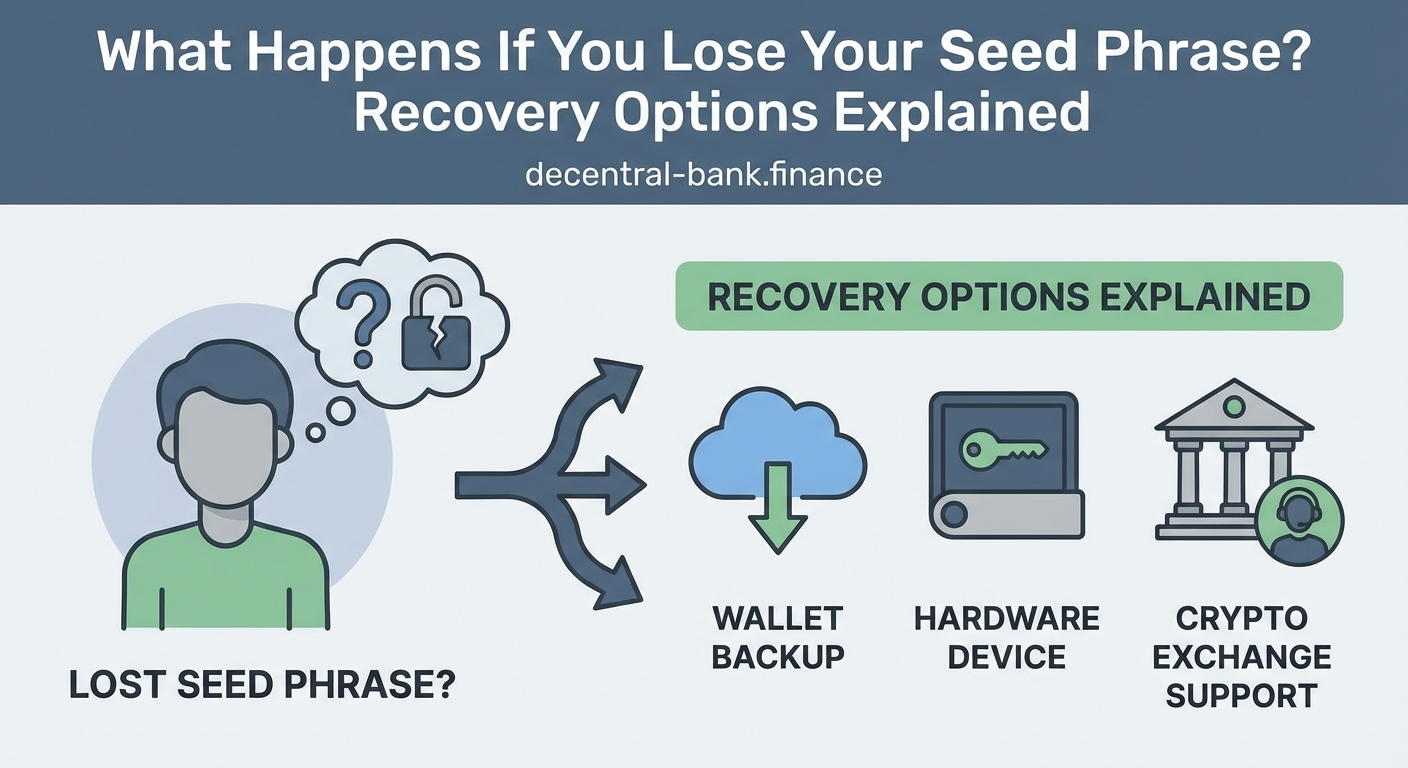
Losing your seed phrase is one of the most devastating mistakes in cryptocurrency. There’s no customer service hotline to call, no password reset button, and no backup system to save you. Your funds become permanently inaccessible, locked away forever on the blockchain. This isn’t a scare tactic. It’s the reality of self-custody in decentralized finance.
If you lose your seed phrase without a backup, your cryptocurrency becomes permanently inaccessible. No company, developer, or government can recover it. The blockchain doesn’t recognize ownership claims, only cryptographic proof. Prevention through secure storage and multiple backups is your only defense. Once lost, your funds are gone forever, even if you can see them on the blockchain.
Your funds become permanently inaccessible
When you lose your seed phrase, you lose the cryptographic key that proves ownership of your cryptocurrency. The blockchain doesn’t care about your identity, purchase receipts, or how much money you’ve lost. Without the seed phrase, you cannot generate the private keys needed to sign transactions.
Your wallet address still exists on the blockchain. Anyone can see your balance. But you cannot move, sell, or access those funds. They become frozen in digital amber, visible but untouchable.
This happens because cryptocurrency wallets don’t actually store your coins. They store the private keys that control blockchain addresses. Your seed phrase is the master key that generates all those private keys. Lose the seed phrase, lose the keys. Lose the keys, lose access forever.
No wallet provider can help you. MetaMask, Trust Wallet, Ledger, and every other non-custodial wallet cannot recover your seed phrase. They never stored it in the first place. That’s the entire point of self-custody in how DeFi actually works without banks or middlemen.
Why recovery is mathematically impossible
The security that protects your cryptocurrency from hackers is the same security that prevents recovery. Your seed phrase generates private keys through a one-way mathematical function. You can go from seed phrase to private key easily. Going backwards from private key to seed phrase is computationally impossible.
A standard 12-word seed phrase has 2,048 possible words per position. That creates 2,048^12 possible combinations, roughly 5.4 × 10^39 possibilities. To put that in perspective, trying one billion combinations per second would take longer than the age of the universe to guess correctly.
Even if you remember some words, the odds remain astronomical. Missing just three words from a 12-word phrase still leaves 2,048^3 combinations, over 8.5 billion possibilities. Missing word order makes it worse. The sequence matters as much as the words themselves.
Quantum computers won’t save you either. Current quantum technology can’t crack seed phrase encryption. Even theoretical quantum computers powerful enough to break current cryptography would take years to crack a single seed phrase.
What you can still access without your seed phrase
Some cryptocurrency holders confuse wallet access methods. Understanding what you can and cannot access helps you assess your situation accurately.
If you’re still logged into a software wallet on your device, you can still send transactions. The app cached your private keys in device memory. But this access is temporary and fragile. Deleting the app, losing your phone, or factory resetting your device will lock you out permanently.
If you wrote down individual private keys for specific addresses, you can access only those addresses. This is rare because most people only back up their seed phrase, not individual private keys for each address. Private keys look like long strings of random characters, completely different from seed phrases.
If you used a custodial exchange like Coinbase or Binance, you never had a seed phrase for those funds. The exchange controls the private keys. You can recover access through their password reset process. But these aren’t self-custody wallets. You’re trusting the company to hold your cryptocurrency.
If you set up multi-signature security, you might have recovery options. Multi-sig wallets require multiple private keys to authorize transactions. Losing one seed phrase doesn’t necessarily mean total loss if you control other required signatures.
Steps to take immediately after realizing your seed phrase is lost
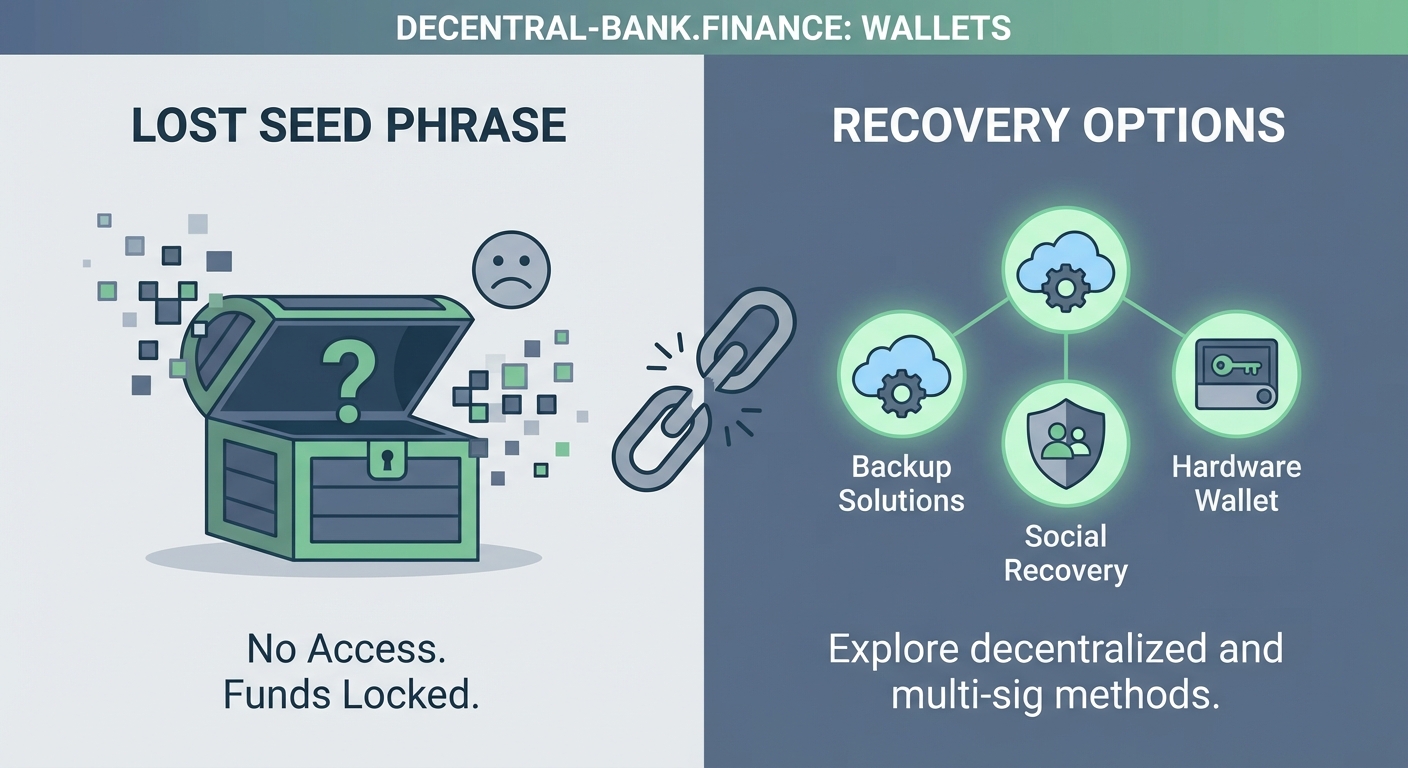
Time-sensitive actions can minimize damage and potentially save some funds. Act fast and methodically.
-
Check if you still have active wallet access on any device. Open your wallet app immediately. If it still works, you have a narrow window to save your funds. Don’t close the app or restart your device until you’ve moved everything.
-
Create a new wallet with a new seed phrase and back it up properly. Generate a fresh wallet using trusted software. Write down the new seed phrase on paper immediately. Store it in multiple secure locations before doing anything else.
-
Transfer all accessible funds to your new wallet address. Send everything from your compromised wallet to addresses controlled by your new seed phrase. Start with small test transactions if you’re unfamiliar with the process. Once confirmed, send the remaining balance.
-
Document what you’ve lost for tax purposes. If funds are permanently inaccessible, you may be able to claim a loss for tax purposes. Requirements vary by jurisdiction. Consult a tax professional familiar with cryptocurrency regulations.
-
Search thoroughly for any possible backup. Check old emails for wallet setup confirmations. Look through cloud storage, password managers, and encrypted notes. Search photos for images of paper backups. Check safe deposit boxes and home safes.
-
Accept the loss and focus on prevention for future holdings. Dwelling on lost funds won’t recover them. Channel that energy into implementing better security practices. Learn from the mistake without letting it paralyze you.
“The hardest lesson in cryptocurrency is learning that code doesn’t care about your story. The blockchain will never make an exception, grant an appeal, or show mercy. Your seed phrase is your ownership. Nothing else matters.”
Common scenarios that lead to permanent loss
Understanding how people lose seed phrases helps you avoid the same mistakes. These scenarios happen more often than you’d think.
Single point of failure storage. Writing your seed phrase on one piece of paper and storing it in one location creates catastrophic risk. House fires, floods, burglaries, and accidental disposal destroy single backups regularly. One disaster erases your access forever.
Digital-only backups without encryption. Screenshots, cloud documents, and email drafts seem convenient. But they’re vulnerable to hacking, account compromise, and cloud service failures. Unencrypted digital storage is worse than no backup at all because it adds theft risk.
Overly complex hiding places you forget. Hiding your seed phrase so well that you forget the location defeats the purpose. People hide backups in walls, yards, and storage units, then forget exactly where. Years later, the location is a mystery.
Trusting someone else to store it. Giving your seed phrase to family members, friends, or romantic partners creates dependency and risk. Relationships change. People die unexpectedly. Trustworthy people make mistakes. Your financial security shouldn’t depend on someone else’s memory or integrity.
Memorization without physical backup. Human memory is unreliable. Brain injuries, medical conditions, stress, and simple forgetting can erase memorized seed phrases. Unless you have perfect recall and no risk of cognitive impairment, memorization alone is insufficient.
Partial backups with missing words. Some people write down only some words, thinking partial information is safer. This provides zero security benefit while creating total recovery risk. Missing even one word makes recovery practically impossible.
Secure storage methods that prevent loss
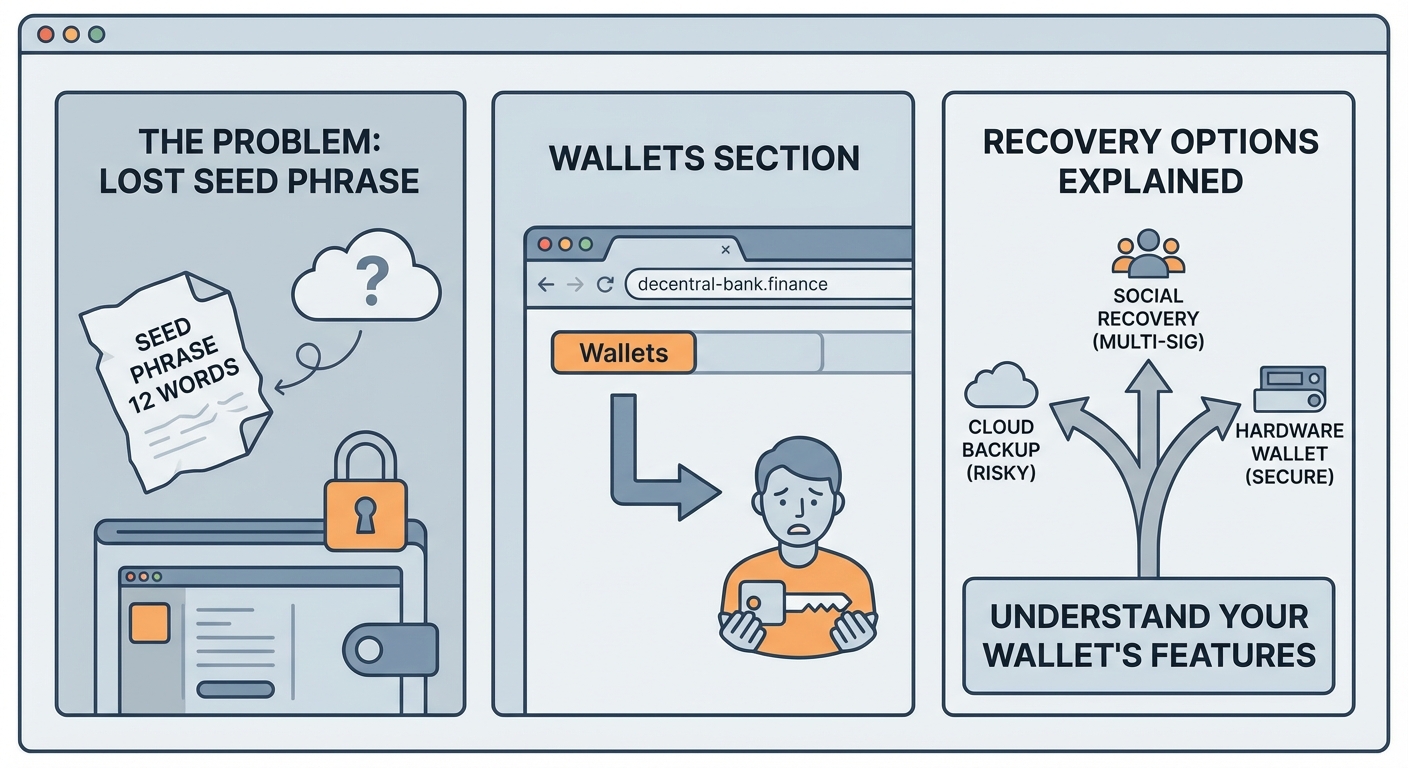
Prevention is the only solution. Once your seed phrase is gone, no amount of regret or effort will recover it. Implementing multiple secure storage methods protects against every common failure scenario.
Physical backups on durable materials
Paper degrades, burns, and water-damages easily. Metal backups resist fire, water, and physical damage. Stainless steel plates designed for seed phrase storage can survive house fires exceeding 1,000 degrees Fahrenheit and complete water submersion.
Engrave or stamp your seed phrase into metal rather than using stickers or ink. Physical impressions last decades without fading. Store metal backups in fireproof safes, safe deposit boxes, or buried containers in stable locations.
Create multiple identical metal backups. Store them in geographically separate locations. If one location suffers disaster, your other backups remain intact.
Encrypted digital backups with strong passwords
Digital backups provide convenience and redundancy if encrypted properly. Use strong encryption software like VeraCrypt to create encrypted containers for your seed phrase. The encryption password should be long, unique, and memorable.
Store encrypted files in multiple locations: external hard drives, USB drives, and trusted cloud services. The encryption protects your seed phrase even if someone gains access to the file.
Never store the encryption password in the same location as the encrypted file. Memorize it, write it separately, or use a password manager with strong master password protection.
Geographic distribution of backups
Single-location storage creates single points of failure. Distribute backups across multiple physical locations to protect against localized disasters.
Store one backup at home in a fireproof safe. Keep another at a trusted family member’s house in a different city. Place a third in a bank safe deposit box. Consider a fourth with a lawyer or in a secure storage facility.
Geographic distribution ensures that regional disasters like hurricanes, wildfires, or floods cannot destroy all your backups simultaneously.
Multi-signature wallet configurations
Multi-signature wallets require multiple private keys to authorize transactions. A 2-of-3 multi-sig setup means you need any two of three seed phrases to access funds.
This configuration protects against single seed phrase loss. Lose one seed phrase, and you still have access using the other two. Store each seed phrase in different locations with different security methods.
Multi-sig adds complexity but provides institutional-grade security for significant holdings. It’s worth the setup effort for amounts you cannot afford to lose.
Comparison of storage methods and their vulnerabilities
Different storage methods offer different trade-offs between security, durability, and accessibility. Choose methods that match your risk tolerance and technical ability.
| Storage Method | Fire Resistance | Water Resistance | Theft Risk | Complexity | Best For |
|---|---|---|---|---|---|
| Paper in safe | Low | Low | Medium | Low | Small amounts, temporary storage |
| Metal plate | High | High | Medium | Medium | Long-term primary backup |
| Encrypted USB | Medium | Low | Low | Medium | Secondary backup, geographic distribution |
| Password manager | N/A | N/A | Medium | Low | Convenient access, encrypted backup |
| Safe deposit box | High | High | Low | Low | Long-term secure storage |
| Multi-sig wallet | High | High | Low | High | Large amounts, institutional security |
| Memorization only | N/A | N/A | Low | Low | Never recommended, too risky |
What legitimate recovery services can and cannot do
The cryptocurrency space has spawned an industry of recovery services. Most are scams. Some offer limited legitimate help. Understanding what’s possible helps you avoid false hope and financial exploitation.
Legitimate recovery services can help if you have partial information. If you remember most of your seed phrase but forgot word order or a few words, specialized software can attempt combinations. This works only with significant existing information.
They can recover funds from damaged hardware wallets if the device still powers on and you know the PIN. Physical chip extraction and data recovery techniques can sometimes retrieve stored seed phrases from damaged devices.
They cannot recover seed phrases from blockchain addresses alone. No amount of technical skill can reverse the cryptographic functions that generate private keys from seed phrases. Anyone claiming otherwise is running a scam.
They cannot hack the blockchain or convince developers to reverse transactions. The blockchain is immutable by design. No recovery service has special access or influence over blockchain protocols.
Before engaging any recovery service, research thoroughly. Check reviews, verify credentials, and never pay large upfront fees. Legitimate services typically charge only if successful or charge reasonable diagnostic fees regardless of outcome.
Why prevention beats recovery every time
Recovery is a fantasy in most seed phrase loss scenarios. Prevention is the only reliable strategy. The effort you invest in secure storage today prevents catastrophic loss tomorrow.
Setting up proper backups takes an afternoon. Losing your cryptocurrency lasts forever. The time investment is trivial compared to the protection it provides.
Security practices become habits with repetition. The first time you create metal backups and distribute them geographically feels tedious. The tenth time feels routine. Build these habits now, before you’re managing significant value.
Consider your future self. The cryptocurrency you hold today might increase 10x or 100x in value. Security measures that seem excessive for current holdings become essential as value grows. Implement strong security from the beginning.
How wallet types affect your recovery options
Different wallet types create different risk profiles and recovery possibilities. Understanding these differences helps you choose appropriate storage for different use cases.
Software wallets like MetaMask and Trust Wallet store encrypted private keys on your device. They derive these keys from your seed phrase. Losing your seed phrase means permanent loss unless you’re still logged in. These wallets prioritize convenience over maximum security, making them suitable for smaller amounts you need to access frequently when choosing between hot wallets and cold wallets for your crypto.
Hardware wallets like Ledger and Trezor store private keys on physical devices isolated from internet-connected computers. The seed phrase backup is your only recovery method. Losing both the device and seed phrase means permanent loss. Hardware wallets offer better security for larger holdings.
Custodial wallets on exchanges don’t give you a seed phrase. The exchange controls the private keys. You recover access through their account recovery process. This isn’t true self-custody, but it does provide recovery options if you forget passwords.
Smart contract wallets can implement social recovery, allowing trusted contacts to help recover access. These wallets use on-chain logic rather than traditional seed phrases. They’re more complex but offer recovery features impossible with standard wallets.
The psychology of seed phrase security
Human psychology works against good security practices. Understanding these psychological barriers helps you overcome them.
Optimism bias makes us believe bad things happen to others, not us. We read about people losing seed phrases and think we’re too careful for that mistake. This bias leads to inadequate backups and careless storage.
Present bias prioritizes immediate convenience over future security. Writing down a seed phrase feels tedious right now. The future catastrophe of loss feels abstract and distant. We skip proper backups because the immediate effort feels harder than the distant risk.
Complexity aversion makes us avoid security measures that seem complicated. Multi-location backups, metal storage, and encryption feel overwhelming. We choose simple, inadequate solutions instead.
Combat these biases through deliberate action. Schedule specific time for security setup. Treat it like any important appointment. Break the process into small steps. Complete one step at a time rather than facing the entire task at once.
Create accountability by telling someone you trust about your security plan. Social commitment increases follow-through. Knowing someone will ask about your progress makes you more likely to complete the task.
Building a comprehensive backup strategy
A complete backup strategy addresses every failure mode. Redundancy, geographic distribution, and multiple storage types create resilient protection.
Start with your primary backup. Create a metal seed phrase backup using stamped or engraved stainless steel. Store this in a fireproof safe at your primary residence. This backup protects against everyday risks and provides accessible recovery if needed.
Create a secondary backup using the same metal method. Store this at a trusted family member’s home in a different city or state. Geographic separation protects against regional disasters. Choose someone reliable who understands the importance without needing access to your funds.
Create a tertiary backup in a bank safe deposit box. This provides institutional security and protection against home invasions or disasters. Access requires physical presence, adding security against remote theft.
Consider an encrypted digital backup as a fourth layer. Encrypt your seed phrase using strong encryption software. Store the encrypted file in cloud storage and on multiple physical USB drives. Store these drives in different locations from your physical backups.
Document your backup locations in a secure way that helps your heirs without compromising security. Use a sealed letter with your estate planning documents that describes backup locations without revealing the actual seed phrase.
Test your backups periodically. Verify you can access each storage location and read each backup. Annual verification ensures your backups remain accessible and legible.
Teaching others to avoid your mistakes
If you’ve lost cryptocurrency to seed phrase loss, channel that experience into helping others. Your story provides powerful motivation for proper security practices.
Share your experience honestly without shame. Cryptocurrency communities benefit from real stories about real losses. Your transparency might save someone else from the same fate.
Focus on specific mistakes rather than general warnings. “I stored my seed phrase in a screenshot on my phone and lost everything when my phone was stolen” teaches more than “be careful with seed phrases.”
Help newcomers implement proper security from day one. Offer to guide them through creating metal backups and setting up secure storage. Hands-on help is more effective than abstract advice.
Create simple checklists for seed phrase security. Break down the process into actionable steps. Share these with friends, family, and online communities. Make security accessible rather than intimidating.
Your crypto security starts with your seed phrase
Losing your seed phrase means permanent, irreversible loss of your cryptocurrency. No technology, service, or appeal can recover it. The blockchain doesn’t recognize ownership claims, only cryptographic proof. Prevention through multiple secure backups is your only defense. Implement proper storage today, before loss becomes your teacher. Your future self will thank you for the effort.