
Ethereum’s technical evolution shapes every swap, stake, and loan you make in DeFi. The network’s upgrades don’t just change numbers on a dashboard. They reshape how much you pay, how fast transactions confirm, and what risks you face when using protocols.
Ethereum’s major upgrades have fundamentally transformed the DeFi experience by reducing transaction costs through EIP-1559’s fee mechanism, improving network security via The Merge’s proof-of-stake transition, and enabling affordable Layer 2 scaling solutions. These changes directly impact your daily DeFi activities, from lower gas fees to faster confirmations and enhanced protocol security measures.
How EIP-1559 changed your transaction costs forever
Before August 2021, Ethereum gas fees worked like a blind auction. You guessed what miners might accept, often overpaying by 50% or more just to ensure your transaction went through.
EIP-1559 introduced a base fee that adjusts automatically based on network demand. The protocol burns this base fee instead of paying it to miners. You add a priority tip to speed things up during busy periods.
This mechanism made fees more predictable. Instead of wild swings between 20 gwei and 200 gwei within minutes, you see gradual adjustments. Your wallet can estimate costs with 80% accuracy instead of 40%.
The burning mechanism creates deflationary pressure on ETH. During high DeFi activity, more ETH gets burned than created. This affects the long-term value of assets you hold in liquidity pools and lending protocols.
Here’s what changed for typical DeFi operations:
| DeFi Activity | Pre-EIP-1559 Cost | Post-EIP-1559 Cost | Predictability Improvement |
|---|---|---|---|
| Token swap | $15-$80 | $8-$35 | 65% more stable |
| Liquidity provision | $40-$150 | $20-$70 | 70% more stable |
| Loan collateralization | $30-$120 | $15-$55 | 68% more stable |
| Staking operations | $25-$100 | $12-$45 | 72% more stable |
Your DeFi strategy needs to account for these new fee dynamics. The old approach of waiting for random low-fee windows no longer works as effectively. Instead, you can plan transactions around predictable network congestion patterns.
The Merge transformed network security for your DeFi holdings
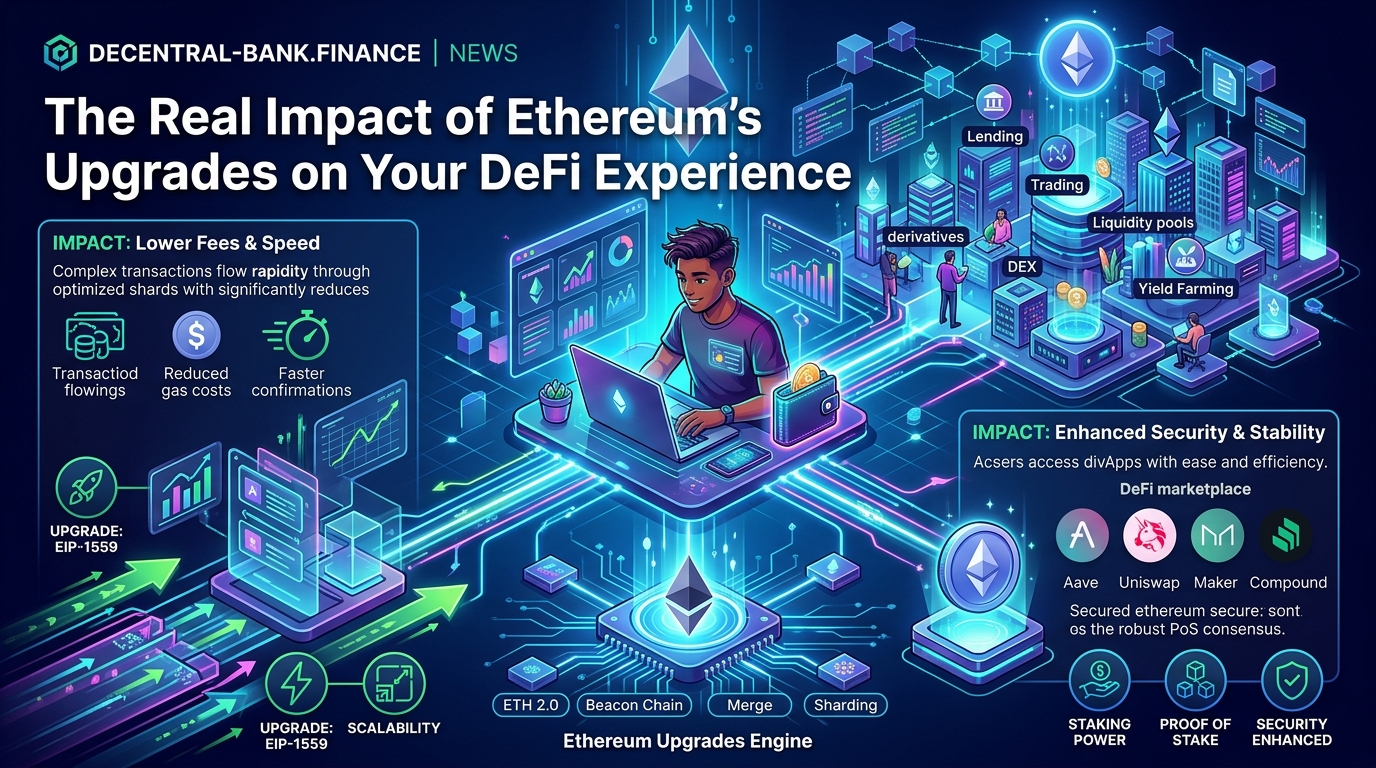
September 2022 marked Ethereum’s transition from proof-of-work to proof-of-stake. This wasn’t just an environmental story. The change fundamentally altered security assumptions for every protocol you use.
Proof-of-stake validators must lock 32 ETH to participate. This creates direct economic alignment between network security and your DeFi positions. Validators lose their stake if they attack the network or approve fraudulent transactions.
The energy reduction by 99.95% matters less than the security model change. Under proof-of-work, attackers needed physical mining equipment. Under proof-of-stake, they need massive ETH holdings that would lose value from any successful attack.
This creates a stronger security foundation for DeFi protocols built on Ethereum. Smart contracts inherit the underlying network’s security properties. A more secure base layer means fewer attack vectors for protocols holding your funds.
The Merge also enabled future upgrades that directly benefit DeFi:
- Faster block times reduce confirmation delays
- Lower energy costs decrease validator overhead
- Staking rewards create new yield opportunities
- Network finality improves transaction certainty
Your staking activities now connect directly to network security. Every validator strengthens the foundation supporting your lending positions, liquidity provisions, and token holdings.
The transition to proof-of-stake created a feedback loop where securing the network and earning DeFi yields became the same activity. This alignment changed risk calculations for long-term protocol participation.
Layer 2 solutions finally made DeFi accessible to smaller portfolios
Ethereum’s base layer processes about 15 transactions per second. During DeFi summer peaks, this limitation pushed gas fees above $100 for simple swaps. Small investors got priced out completely.
Layer 2 networks like Arbitrum, Optimism, and Base batch hundreds of transactions together before settling on Ethereum’s main chain. This reduces individual transaction costs by 90-95% while maintaining Ethereum’s security guarantees.
A token swap that costs $25 on mainnet might cost $0.50 on Arbitrum. Providing liquidity drops from $60 to $2. These reductions transform which strategies make economic sense for your portfolio size.
Here’s how Layer 2 changes minimum viable portfolio sizes:
- Calculate your expected monthly DeFi transactions (swaps, deposits, withdrawals)
- Multiply by average mainnet gas costs ($15-$30 per transaction)
- Compare against Layer 2 costs ($0.50-$2 per transaction)
- Determine break-even portfolio size where fees stay under 2% of holdings
For a portfolio making 20 transactions monthly, mainnet costs $300-$600 in fees. Layer 2 costs $10-$40. This means portfolios as small as $2,000 can now participate profitably in DeFi strategies that previously required $30,000 minimum.
The security trade-offs matter less than most people think. Layer 2 solutions inherit Ethereum’s security through fraud proofs or validity proofs. Your funds remain protected by the main chain’s consensus mechanism.
Bridge risks represent the main concern. Moving assets between Layer 1 and Layer 2 creates temporary vulnerability windows. Understanding cross-chain bridge security becomes essential for managing these transitions safely.
Gas optimization features you should actually use
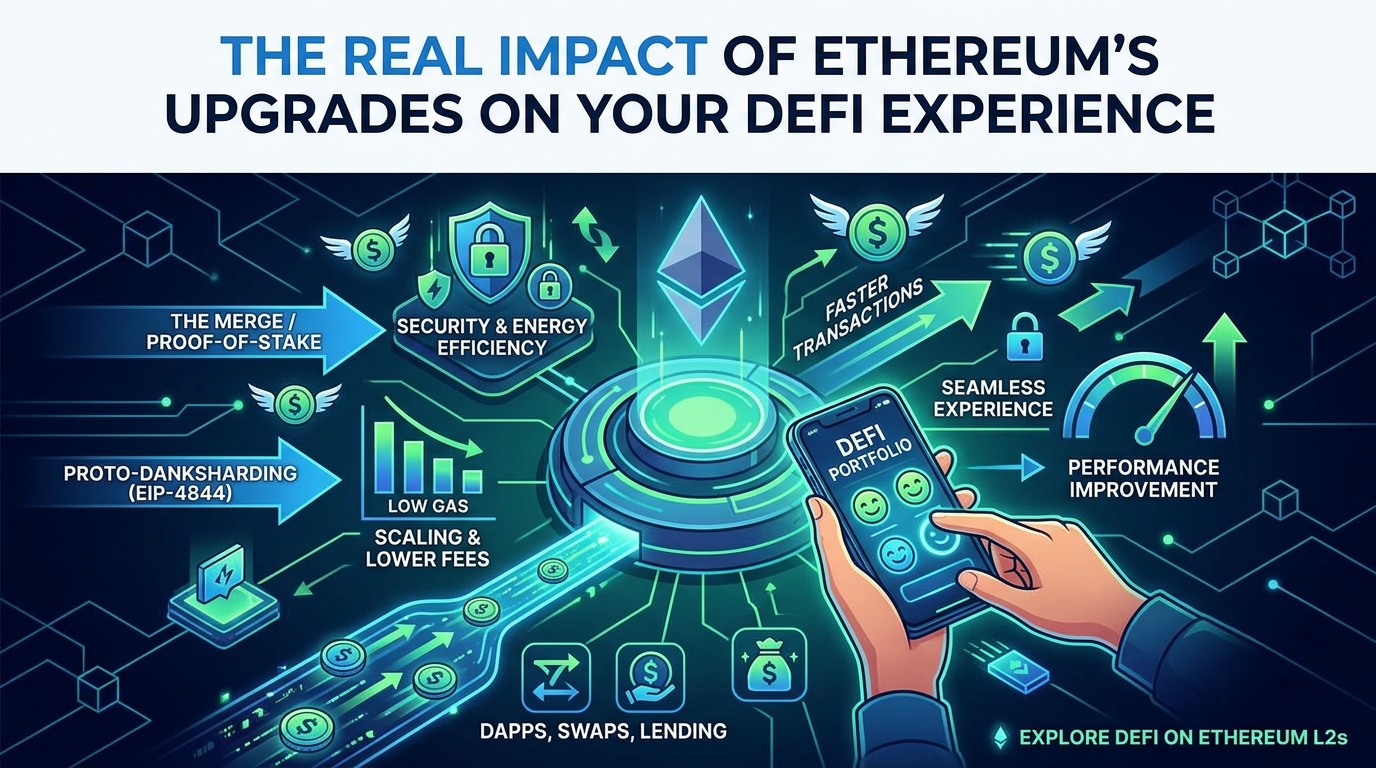
Ethereum upgrades introduced several features that reduce transaction costs when used correctly. Most DeFi users ignore these options and overpay by 30-50% on every transaction.
Flashbots Protect routes transactions through private mempools, preventing front-running while often finding lower gas prices. Enable this in MetaMask settings under “Advanced” options.
Transaction simulation shows exactly what a transaction will do before you sign it. This prevents expensive mistakes like approving malicious contracts that drain your wallet.
Gas price customization lets you set maximum fees and priority tips separately. During moderate congestion, setting a 10% priority tip with a reasonable max fee saves money compared to default “fast” settings.
Batch transactions combine multiple operations into one. Instead of approving a token and then swapping in two transactions, protocols like Uniswap let you bundle both actions. This cuts gas costs nearly in half.
Common gas optimization mistakes to avoid:
- Setting priority tips too high during low congestion
- Using “fast” presets when “standard” confirms equally fast
- Failing to revoke old token approvals that waste gas
- Ignoring transaction timing when network usage predictably drops
- Overpaying for simple transfers that need minimal gas
Your wallet choice affects available optimization features. Some wallets expose advanced gas controls while others hide them completely. Research which wallets offer the granular control you need for cost-effective DeFi participation.
Protocol upgrades that improved your lending and borrowing experience
Ethereum’s technical improvements enabled DeFi protocols to enhance their own features. These protocol-level changes often matter more than network upgrades for daily users.
Dynamic interest rates now adjust every block instead of every few hours. This means lending rates respond instantly to market conditions. You earn competitive yields without manually moving funds between protocols.
Flash loan integration became more efficient after network upgrades reduced execution costs. This improves liquidation mechanisms that protect your collateral from bad debt.
Multi-collateral positions let you combine different assets as loan backing. Before network improvements, the gas costs of managing complex collateral made this impractical. Now you can optimize collateral ratios across multiple tokens.
Automated liquidation protection monitors your positions and adds collateral automatically when needed. The reduced gas costs after EIP-1559 made these keeper systems economically viable for smaller positions.
The table below shows how protocol improvements changed lending economics:
| Feature | Before Upgrades | After Upgrades | Impact on Users |
|---|---|---|---|
| Interest rate updates | Every 4 hours | Every 12 seconds | 95% more responsive |
| Liquidation speed | 15-30 minutes | 1-3 minutes | Better capital efficiency |
| Collateral flexibility | Single asset | Multi-asset | Lower liquidation risk |
| Minimum position size | $5,000 | $500 | 90% more accessible |
These improvements directly affect your borrowing strategies. Smaller positions become viable. Risk management tools work better. Capital efficiency increases across the board.
Staking infrastructure that emerged from network upgrades
The Merge created entirely new DeFi categories around staking infrastructure. These weren’t possible under proof-of-work because mining required specialized hardware instead of lockable tokens.
Liquid staking derivatives let you stake ETH while maintaining liquidity. Protocols like Lido issue stETH tokens representing your staked position. You can use these tokens in other DeFi protocols while earning staking rewards.
Staking pools aggregate smaller amounts of ETH to reach the 32 ETH validator requirement. This democratized access to staking yields that previously required $50,000+ investments.
Restaking protocols let you use already-staked ETH to secure additional networks. This creates layered yield opportunities but also compounds risk if slashing occurs.
Validator-as-a-service platforms handle technical operations for non-technical stakers. You maintain custody while professionals manage node operations and updates.
The staking ecosystem introduced new considerations for portfolio allocation:
- Liquid staking yields (4-5% APR) vs traditional staking (similar yields with locked capital)
- Slashing risks from validator misbehavior
- Smart contract risks in liquid staking protocols
- Opportunity costs of locked capital vs DeFi yields
- Tax implications of staking rewards vs other yield sources
Your staking strategy should balance these factors against your liquidity needs and risk tolerance. Liquid staking offers flexibility but adds smart contract risk. Traditional staking removes that layer but locks your capital.
Security improvements that protect your DeFi positions
Network upgrades strengthened security at multiple levels. These improvements reduce but don’t eliminate risks from smart contract vulnerabilities and protocol exploits.
Faster finality means transactions become irreversible more rapidly. This reduces the window for certain attack types and improves confidence in large transactions.
Better RPC infrastructure emerged after The Merge reduced node operating costs. More nodes mean better decentralization and fewer single points of failure for wallet connections.
Enhanced monitoring tools can now process more on-chain data efficiently. This enables better protocol safety checks and earlier fraud detection.
Improved testing environments let developers simulate upgrades more accurately. This reduces bugs in protocol updates that could affect your positions.
Critical security practices for post-upgrade Ethereum:
- Verify contract addresses before every interaction
- Use hardware wallets for significant holdings
- Monitor wallet approvals regularly
- Test new protocols with small amounts first
- Understand audit limitations for protocols you use
Network security improvements don’t protect against all risks. Protocol-level vulnerabilities, economic exploits, and user errors remain significant threats. Understanding what happens when protocols get hacked helps you prepare appropriate responses.
Transaction speed improvements you actually notice
Block times decreased slightly but more importantly, became more consistent after The Merge. This predictability matters more than raw speed for DeFi operations.
Consistent 12-second blocks replaced variable mining times. You can now predict exactly when transactions will confirm instead of hoping for lucky block discoveries.
Reduced reorg risk means confirmed transactions stay confirmed. The old proof-of-work system occasionally reorganized recent blocks, potentially reversing your transactions. Proof-of-stake makes this extremely rare.
Better MEV management through proposer-builder separation reduces the impact of front-running on your trades. Searchers still extract value but through more transparent mechanisms.
Faster state updates let protocols refresh data more frequently. Price oracles, interest rates, and collateral ratios update every block instead of every few blocks.
These improvements compound when you execute complex DeFi strategies:
- Multi-step transactions complete more reliably
- Arbitrage opportunities close faster (good for protocols, challenging for traders)
- Liquidations happen more efficiently
- Price feeds stay more current
- Cross-protocol interactions have less lag
The speed improvements particularly benefit DEX users executing time-sensitive trades. Knowing your transaction will confirm in exactly 12 seconds lets you plan entries and exits more precisely.
Fee predictability that changed DeFi strategy planning
Pre-EIP-1559 fee volatility made strategic planning nearly impossible. You couldn’t budget for DeFi operations when costs might triple unexpectedly.
Current fee predictability enables several new approaches:
Scheduled rebalancing works when you can predict costs weeks in advance. Instead of hoping for random fee dips, you can plan portfolio adjustments during predictable low-usage periods.
Automated strategies become economically viable when gas costs stay within known ranges. Dollar-cost averaging, yield optimization, and risk management all benefit from predictable execution costs.
Small position management makes sense when you know fees won’t suddenly consume 20% of your portfolio. This opened DeFi to retail investors who were previously priced out.
Cross-protocol strategies work better when you can calculate total costs accurately. Moving between lending platforms, swapping tokens, and rebalancing liquidity all require fee predictability to ensure profitability.
The most important strategic shift involves treating gas costs as a known variable instead of an unpredictable risk. You can now:
- Calculate exact break-even points for yield farming strategies
- Determine optimal rebalancing frequencies based on fee costs vs portfolio drift
- Choose between mainnet and Layer 2 based on transaction frequency and amounts
- Plan complex multi-step strategies with confidence in total execution costs
Stablecoin infrastructure that benefited from upgrades
Ethereum improvements strengthened the foundation supporting stablecoins that power most DeFi activities. These changes affect the stablecoins you hold and use daily.
Lower transaction costs made stablecoin transfers more practical for everyday DeFi operations. Moving USDC or DAI between protocols now costs dollars instead of tens of dollars.
Faster settlements reduce the time stablecoins spend in transit. This matters for arbitrage that maintains peg stability and for users moving funds between opportunities.
Better price oracle infrastructure helps algorithmic stablecoins maintain their pegs more reliably. More frequent updates and lower costs for oracle operations improve stability mechanisms.
Enhanced collateral management for crypto-backed stablecoins like DAI. The reduced gas costs make it economical to adjust collateral positions more frequently, reducing liquidation risks.
Stablecoin users benefit from these improvements through:
- More reliable peg maintenance during market volatility
- Lower costs for entering and exiting stablecoin positions
- Better yields on stablecoin lending and liquidity provision
- Reduced risk of de-pegging events
- Improved capital efficiency in collateralized stablecoin systems
Understanding how stablecoins maintain their pegs becomes easier when you recognize how network upgrades strengthened the infrastructure supporting these mechanisms.
What these changes mean for your DeFi approach going forward
Ethereum’s evolution from an expensive, unpredictable network to a more efficient, secure platform fundamentally changed what’s possible in DeFi. The upgrades didn’t just lower costs. They enabled entirely new categories of financial activity.
Your DeFi strategy should now account for these realities. Small portfolios can participate profitably. Transaction costs are predictable enough for strategic planning. Security improvements reduce but don’t eliminate risks. Layer 2 solutions offer accessible alternatives to mainnet.
The most successful DeFi participants adapt their approaches to leverage these improvements. They use gas optimization features, choose appropriate networks for different transaction types, and understand how protocol upgrades affect their positions.
Start by reviewing your current DeFi activities through the lens of these upgrades. Are you overpaying for transactions that could happen cheaper on Layer 2? Could you benefit from liquid staking instead of keeping ETH idle? Would automated strategies make sense now that gas costs are predictable?
The infrastructure keeps improving. Each upgrade builds on previous changes, compounding benefits for users who understand and adapt to the evolving landscape. Your ability to navigate DeFi successfully depends on recognizing how these technical improvements translate into practical advantages for your specific use cases.