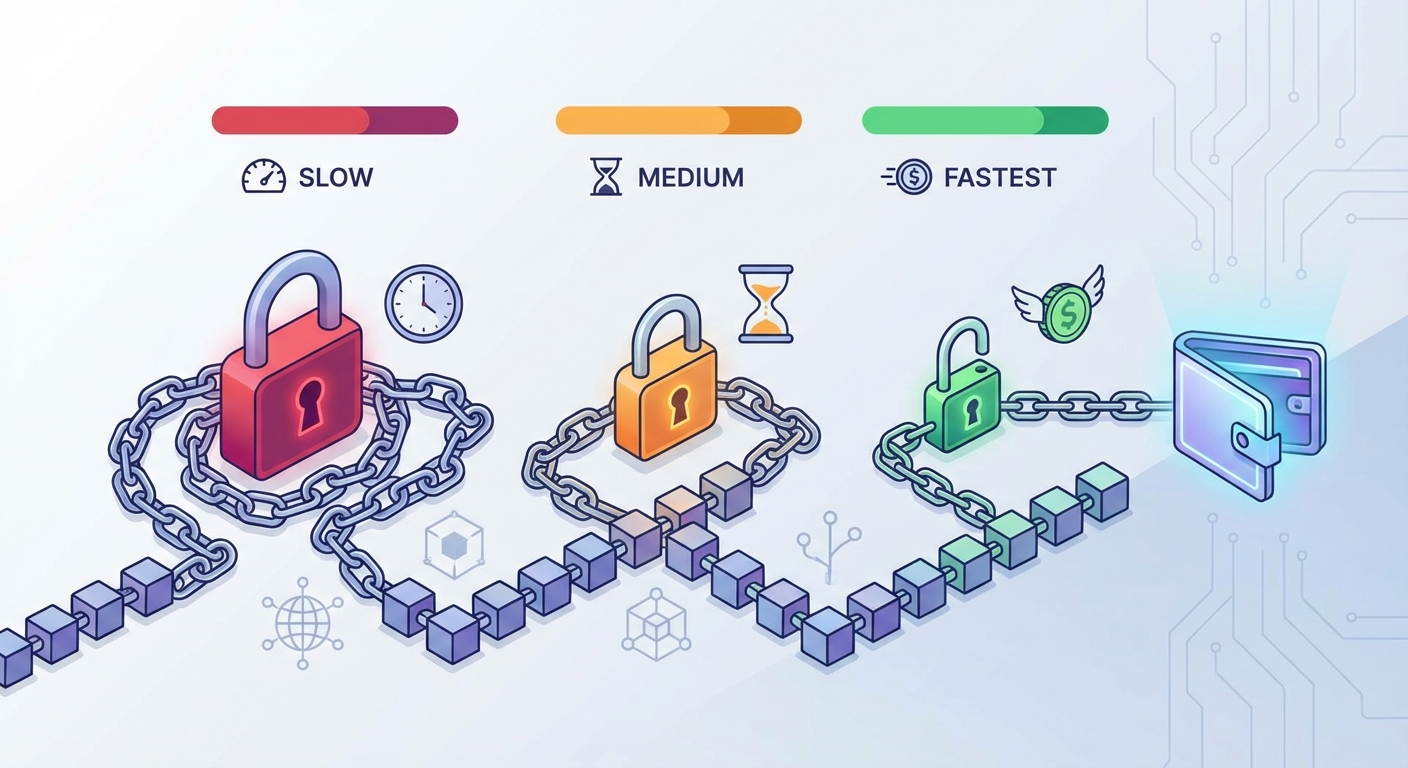
Staking your crypto can feel like a commitment you’re not ready to make. You want the rewards, but what if you need your funds back in a hurry? The answer depends entirely on which network you choose. Some blockchains let you withdraw in hours. Others force you to wait weeks or even months before you can touch your assets again.
Crypto staking lock up periods vary dramatically by blockchain. Ethereum requires around 27 hours, Solana takes 2 to 3 days, Cardano needs 15 to 20 days, and Polkadot can lock funds for 28 days. Flexible staking and liquid staking solutions offer instant access but typically deliver lower rewards. Understanding unbonding periods helps you match your liquidity needs with staking strategies.
Understanding Lock Up Periods and Unbonding
When you stake cryptocurrency, you’re committing your tokens to help secure a blockchain network. In return, you earn rewards. But there’s a catch. Most proof-of-stake networks don’t let you withdraw instantly.
The waiting period between requesting your funds and actually receiving them is called the unbonding period or unstaking period. This delay exists for security reasons. Networks need time to ensure validators aren’t maliciously manipulating the system by rapidly staking and unstaking.
Think of it like giving notice at a job. You can’t just walk out the door. The network needs time to adjust validator sets and finalize your exit.
Different blockchains implement wildly different timelines. Some prioritize flexibility. Others prioritize network security at the expense of liquidity.
If you’re someone who values access to your capital, understanding these periods before you commit is essential. Let’s break down how major networks compare.
Networks With the Shortest Lock Up Periods

Ethereum
Ethereum’s unbonding period currently sits around 27 hours after the Shapella upgrade. This is one of the faster options among major networks.
When you request to unstake ETH, your funds enter an exit queue. The actual time depends on how many other validators are also exiting. During periods of high network activity or mass exits, this can extend slightly.
But compared to earlier versions of Ethereum staking, where your ETH was locked indefinitely, this is a massive improvement.
Solana
Solana offers a relatively short unbonding window of 2 to 3 days. This makes it attractive for stakers who want flexibility without sacrificing too much yield.
The exact timing depends on the current epoch schedule. Solana operates in epochs, and your unstaking request processes at the end of the current epoch.
If you submit your request right after an epoch starts, you might wait closer to 3 days. Submit near the end, and you could see your funds in under 2 days.
Avalanche
Avalanche allows stakers to choose their own lock up period when they begin staking. Minimum staking duration is 2 weeks, but you can opt for longer periods up to one year.
The benefit? You know exactly when your funds will be available. There’s no surprise waiting period after you decide to unstake because you committed to a specific timeline upfront.
This model works well if you have a clear investment horizon. You can align your staking period with your personal liquidity needs.
Networks With Longer Unbonding Times
Cardano
Cardano’s unbonding period ranges from 15 to 20 days. This is significantly longer than Ethereum or Solana.
Cardano operates on an epoch system similar to Solana, but epochs last 5 days. Your unstaking request needs to process through multiple epochs before funds become available.
The trade-off? Cardano offers relatively stable staking rewards and doesn’t require you to lock tokens at all during the staking process. You maintain custody and can move tokens anytime. The 15 to 20 day window only applies when you want to completely stop earning rewards.
Polkadot
Polkadot implements one of the longest unbonding periods at 28 days. This extended timeline reflects the network’s emphasis on security and validator stability.
When you unbond DOT tokens, they remain locked for exactly 28 days. You can’t cancel the process once started. Your tokens won’t earn rewards during this period either.
This makes Polkadot less suitable for traders who need frequent access to capital. But for long-term holders focused on network security, the trade-off might be acceptable.
Cosmos
Cosmos has a 21-day unbonding period for ATOM tokens. Like Polkadot, this is a fixed waiting period with no flexibility.
During these 21 days, your tokens don’t earn staking rewards. They’re essentially frozen. You can’t restake them, sell them, or use them in DeFi protocols.
The lengthy period helps protect the network from certain attack vectors, but it definitely limits liquidity.
Flexible Staking Options That Bypass Lock Ups

Not every staking method requires traditional unbonding periods. Several alternatives offer more flexibility, though often with trade-offs.
Exchange Staking
Many centralized exchanges offer flexible staking products with no lock up period at all. You can unstake and withdraw funds within minutes or hours.
Platforms like Coinbase, Kraken, and Binance provide these options for popular cryptocurrencies. The convenience comes at a cost. Exchanges typically take a larger cut of staking rewards compared to native staking.
You’re also trusting the exchange with custody of your assets. If the exchange faces issues, your funds could be at risk. This is where understanding wallet security becomes critical.
Liquid Staking Protocols
Liquid staking solutions like Lido, Rocket Pool, and Marinade Finance let you stake assets while maintaining liquidity. When you stake through these protocols, you receive a liquid staking token in return.
For example, staking ETH through Lido gives you stETH. This token represents your staked ETH plus accrued rewards. You can trade, sell, or use stETH in DeFi applications immediately without waiting for unbonding.
The catch? Liquid staking tokens can trade at a slight discount to the underlying asset during market stress. You’re also introducing smart contract risk and protocol risk into your staking strategy.
If you’re new to staking entirely, consider reading about how to start staking crypto before jumping into liquid staking derivatives.
Soft Staking
Some networks offer “soft staking” where tokens never actually lock. You can withdraw anytime without unbonding.
Algorand is a prime example. ALGO tokens earn rewards simply by holding them in a compatible wallet. There’s no staking action required and no lock up period.
The trade-off is typically lower reward rates compared to networks with mandatory lock ups.
How to Choose Based on Your Liquidity Needs
Selecting the right network depends on your personal situation. Here’s a framework to help you decide.
-
Assess how long you can comfortably leave funds untouched. Be honest about your financial situation and potential emergency needs.
-
Compare the APY offered across networks with different lock up periods. Calculate whether higher rewards justify longer waiting periods for your specific circumstances.
-
Consider liquid staking alternatives if you want both rewards and flexibility. Weigh the additional risks against the benefit of instant liquidity.
-
Factor in your overall portfolio allocation. If this is a small portion of your holdings, longer lock ups might be acceptable. If it’s a significant chunk, prioritize flexibility.
-
Research the specific network’s unbonding mechanism. Understand whether delays are fixed or variable based on network conditions.
“The biggest mistake new stakers make is not accounting for unbonding periods in their liquidity planning. Always assume you won’t have access to staked funds for at least twice the stated unbonding period to build in a safety margin.”
Comparing Lock Up Periods Across Major Networks
| Network | Unbonding Period | Type | Flexibility |
|---|---|---|---|
| Ethereum | ~27 hours | Variable | High |
| Solana | 2-3 days | Epoch-based | High |
| Avalanche | 2 weeks to 1 year | User-selected | Medium |
| Cardano | 15-20 days | Epoch-based | Medium |
| Cosmos | 21 days | Fixed | Low |
| Polkadot | 28 days | Fixed | Low |
| Algorand | Instant | No lock up | Very High |
Common Mistakes That Cost Stakers Money
Many investors make predictable errors when dealing with staking lock up periods. Avoid these pitfalls:
-
Staking emergency funds. Never stake money you might need within the unbonding period. Build a separate emergency fund first.
-
Ignoring epoch timing. On epoch-based networks, submitting unstaking requests right after an epoch starts maximizes your wait time. Time your requests strategically.
-
Assuming liquid staking tokens are perfectly safe. Smart contract exploits and depegging events can affect liquid staking derivatives. Understand the risks before using them.
-
Forgetting about gas fees. Unstaking often requires transaction fees. On networks like Ethereum during high congestion, these fees can be substantial.
-
Not reading the fine print on exchange staking. Some exchanges implement their own lock up periods on top of network requirements. Always check terms before committing funds.
Security Considerations During Unbonding
Your tokens remain vulnerable during unbonding periods. They’re not earning rewards, but they’re also not fully in your control yet.
During this window, you can’t move tokens to a different wallet. If you suspect your wallet has been compromised, you can’t immediately move funds to safety.
This is one reason why security practices matter so much in staking. Use hardware wallets when possible. Enable all available security features. Never share seed phrases.
If you’re staking through a validator, research their security track record. A validator getting slashed can result in losing a portion of your staked assets, even during unbonding.
Tax Implications of Staking Rewards and Unbonding
Staking rewards are typically taxable as income in most jurisdictions. The timing of when you receive rewards versus when you unstake can create complex tax situations.
In some countries, rewards are taxed when earned, not when withdrawn. This means you could owe taxes on staking rewards even if your funds are still locked up.
Unbonding itself usually isn’t a taxable event. But if you’re using liquid staking tokens and trading them, each trade could trigger capital gains or losses.
Keep detailed records of staking start dates, reward receipt dates, and unstaking dates. This documentation becomes essential during tax season.
Consult with a tax professional familiar with cryptocurrency. Rules vary significantly by jurisdiction and change frequently.
Balancing Rewards Against Access
Higher APY rates often come with longer lock up periods. This correlation isn’t accidental. Networks offering better rewards need to ensure validator stability, which longer unbonding periods help provide.
You’ll need to decide what matters more: maximizing returns or maintaining flexibility. There’s no universal right answer. Your choice should reflect your financial situation and risk tolerance.
For many investors, a hybrid approach works best. Stake a portion of holdings on high-yield, longer-lockup networks. Keep another portion in flexible staking or liquid staking for emergencies.
This strategy lets you capture higher rewards while maintaining some liquidity. Adjust the ratio based on your comfort level and financial needs.
Finding the Right Balance for Your Situation
Crypto staking lock up periods range from instant access to month-long waits. The network you choose should match your liquidity requirements, not just chase the highest APY.
Short unbonding periods like Ethereum’s 27 hours or Solana’s 2 to 3 days offer flexibility for active investors. Longer periods like Polkadot’s 28 days suit buy-and-hold strategies where access isn’t urgent.
Flexible staking and liquid staking provide alternatives when you need both rewards and instant liquidity. Just remember these solutions introduce their own risks and typically offer lower returns.
Before staking any amount, map out your financial needs for the next few months. Make sure you can comfortably wait through the full unbonding period without stress. Your future self will thank you for planning ahead.