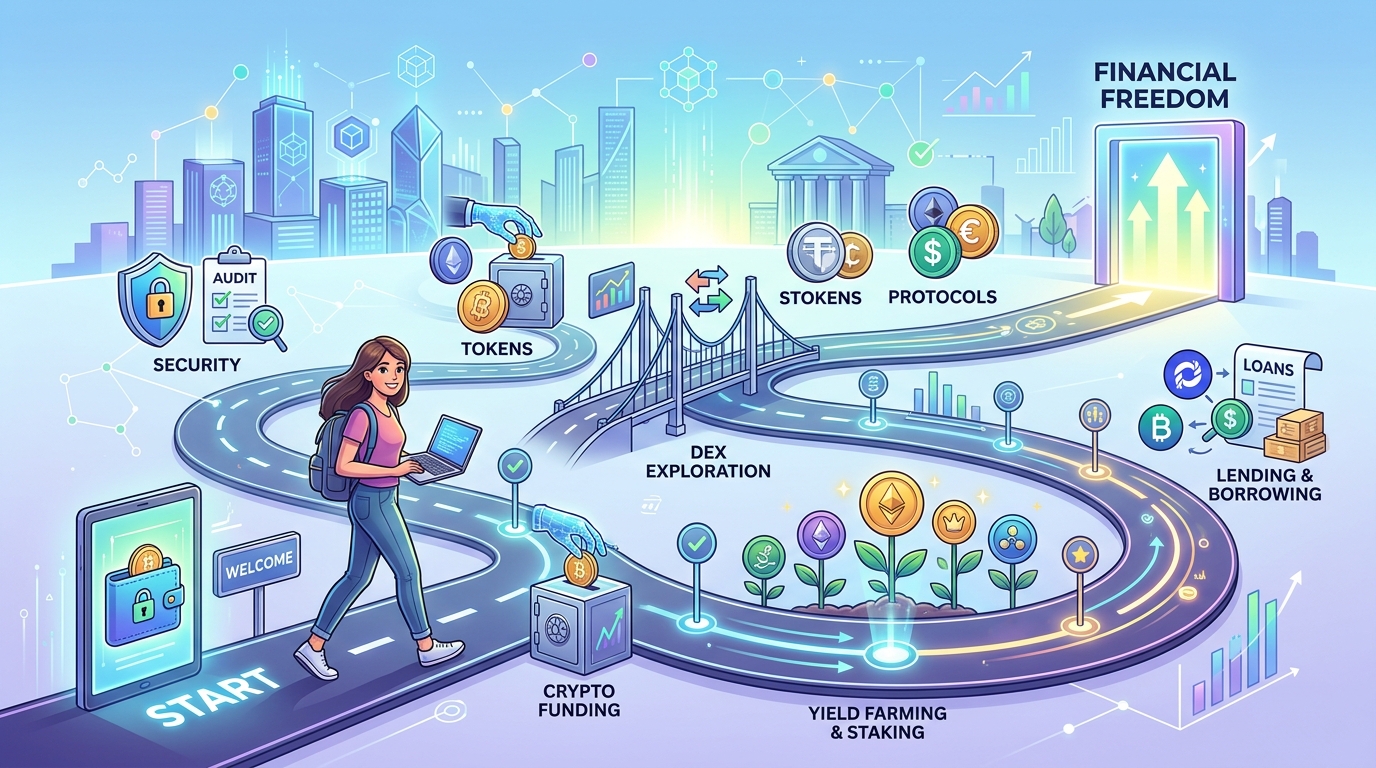
You’ve heard about people earning yields on their crypto, trading without exchanges, and borrowing without credit checks. The world of decentralized finance sounds promising, but where do you actually begin? If you’re coming from traditional banking or just bought your first cryptocurrency, the path into DeFi can feel overwhelming. This guide breaks down exactly how to get started with DeFi, from understanding the basics to taking your first safe steps.
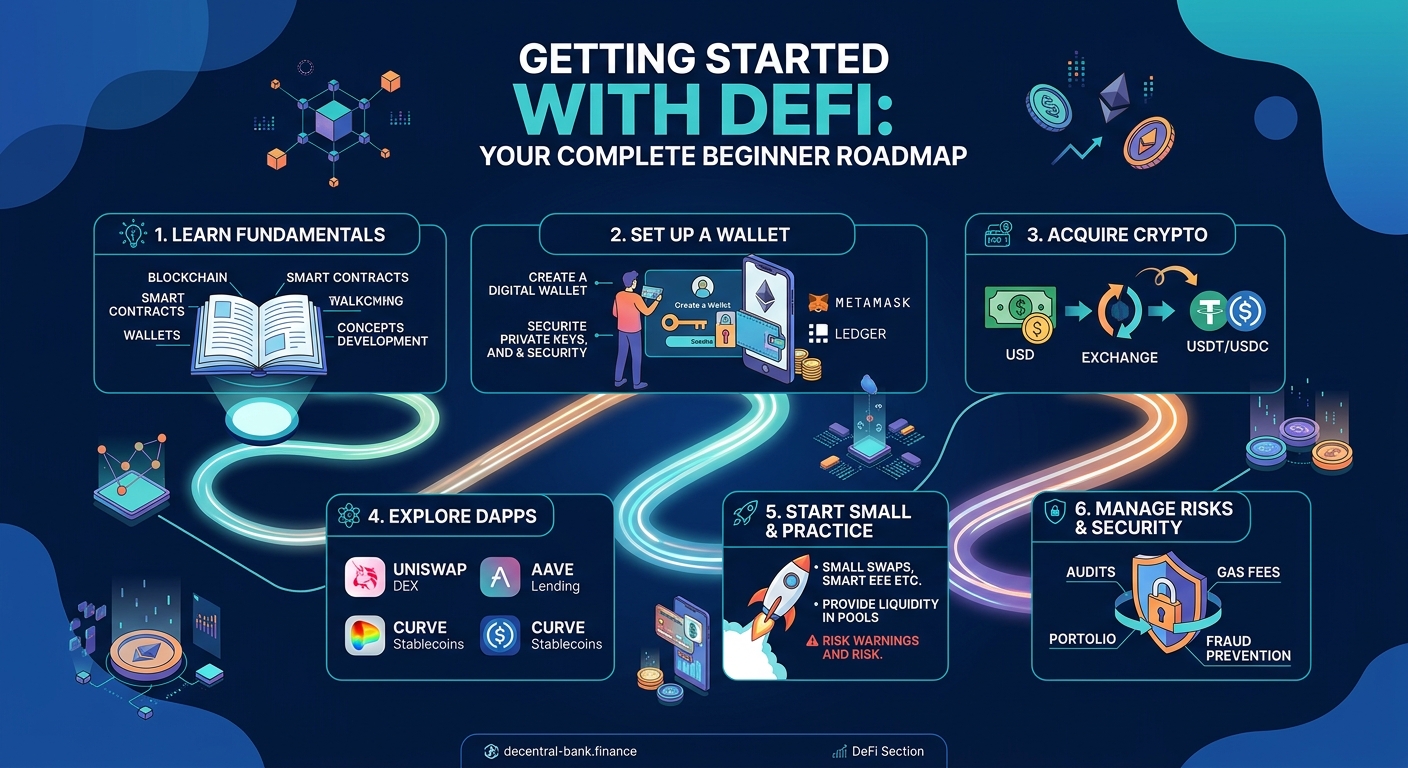
Getting started with DeFi requires three foundational steps: understanding how blockchain-based finance works, setting up a non-custodial wallet with proper security, and starting with simple protocols before advancing to complex strategies. Begin with small amounts, prioritize security education, and gradually build your knowledge through hands-on experience with established platforms.
Understanding what DeFi actually means
Decentralized finance removes traditional intermediaries from financial services.
Instead of banks processing your transactions, smart contracts execute them automatically on blockchains. Instead of brokers holding your assets, you maintain full custody through your wallet. Instead of institutions setting interest rates, algorithms adjust them based on supply and demand.
How does DeFi actually work without banks or middlemen? The short answer: code replaces corporate infrastructure. Smart contracts are programs that run exactly as written, without human intervention. When you lend money in DeFi, a smart contract holds your funds and automatically pays you interest. When you trade, another contract swaps your tokens instantly.
This fundamental shift creates both opportunities and responsibilities.
You gain complete control over your money. No one can freeze your account or deny your transaction. But you also accept complete responsibility for security. Lose your password, and no customer service team can reset it. Make a mistake, and no bank will reverse the transaction.
Traditional finance vs DeFi: understanding the key differences becomes clear when you compare specific features. Banks require identification, credit checks, and approval processes. DeFi requires only a wallet address. Banks operate during business hours. DeFi runs 24/7. Banks can reverse fraudulent transactions. DeFi transactions are permanent.
Before you proceed, accept this reality: you become your own bank. That means you handle security, backup, and risk management yourself.
Learning essential DeFi terminology
You cannot participate effectively without understanding the language.
Start with these core concepts that appear in every DeFi interaction:
- Wallet: Your personal interface to blockchain networks, storing your private keys
- Gas fees: Transaction costs paid to network validators for processing your actions
- Smart contract: Self-executing code that automates financial agreements
- Token: Digital asset representing value, utility, or ownership rights
- Protocol: Set of smart contracts providing specific financial services
- Liquidity: Available funds in a pool that enable trading and borrowing
- Yield: Returns earned from lending, staking, or providing liquidity
7 common DeFi terms every beginner should know before getting started covers additional vocabulary you’ll encounter frequently.
Each term connects to practical actions you’ll take.
When you “approve” a token, you give a smart contract permission to move specific assets from your wallet. When you “stake” tokens, you lock them in a protocol to earn rewards. When you “swap” tokens, you exchange one cryptocurrency for another through a decentralized exchange.
Understanding these terms prevents costly mistakes. New users often confuse “sending to a contract” with “approving a contract,” leading to lost funds. They misunderstand gas fees and waste money on failed transactions.
Spend time reading definitions. Test your understanding by explaining concepts to someone unfamiliar with crypto. The effort pays off when you avoid preventable errors.
Setting up your first DeFi wallet
Your wallet is your gateway to every DeFi protocol.
Unlike exchange accounts, DeFi wallets give you complete control through a seed phrase: a list of 12 or 24 words that generates all your private keys. Anyone with this phrase controls your funds. No exceptions.
Here’s how to set up a wallet properly:
- Choose a reputable wallet like MetaMask, Rainbow, or Rabby for beginners
- Download only from official websites or verified app stores
- Create a new wallet and write down your seed phrase on paper
- Store this paper in a secure location, never digitally
- Verify your backup by restoring the wallet in a test environment
- Set a strong password for daily access
- Enable all available security features
How to choose between hot wallets and cold wallets for your crypto explains the tradeoffs between convenience and security for different wallet types.
Never skip the backup verification step. Write your seed phrase incorrectly, and you’ll discover the error only when trying to recover your wallet after your device fails. By then, your funds are gone forever.
What happens if you lose your seed phrase? Recovery options explained makes clear why this backup matters so much.
Common wallet setup mistakes include:
| Mistake | Consequence | Prevention |
|---|---|---|
| Storing seed phrase digitally | Vulnerable to hacking | Write on paper only |
| Skipping backup verification | Discover errors too late | Test recovery immediately |
| Using weak passwords | Easy unauthorized access | Generate strong unique passwords |
| Sharing screen during setup | Seed phrase exposed | Set up privately offline |
5 critical mistakes beginners make when setting up their first DeFi wallet provides detailed examples of how these errors lead to fund loss.
After setup, send a small test amount to your new wallet. Practice sending it back to an exchange or another wallet you control. This builds confidence with the interface before handling significant amounts.
Acquiring your first crypto assets
You need cryptocurrency before you can use DeFi protocols.
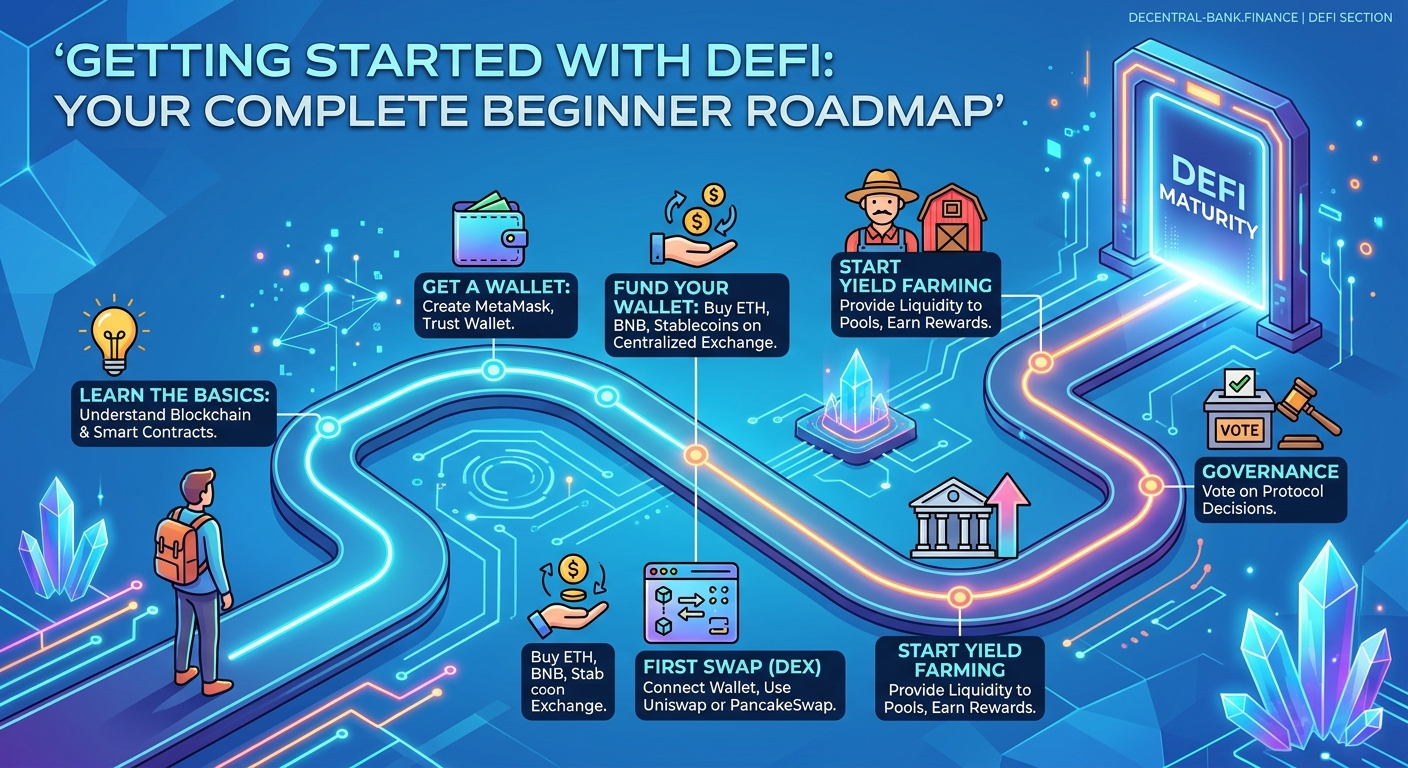
Most beginners start by purchasing crypto through centralized exchanges like Coinbase, Kraken, or Binance. These platforms accept traditional payment methods and handle the complexity of converting fiat currency to crypto.
The process typically follows these steps:
- Create an account on a reputable exchange
- Complete identity verification requirements
- Add a payment method like a bank account or debit card
- Purchase a widely accepted cryptocurrency like ETH or USDC
- Withdraw your purchase to your personal wallet address
- Confirm the transaction arrived in your wallet
Always withdraw funds to your personal wallet after purchasing. Keeping crypto on exchanges defeats the purpose of DeFi. You’re trusting a centralized company instead of controlling your own assets.
For your first DeFi experiences, consider starting with stablecoins like USDC or DAI. These maintain a stable value around $1, removing price volatility from your learning process. You can focus on understanding protocols without worrying about your asset value changing dramatically.
USDT vs USDC vs DAI: which stablecoin should beginners trust? compares the most popular options and their risk profiles.
You’ll also need the native token of whichever blockchain you’re using. On Ethereum, that’s ETH. On Polygon, it’s MATIC. On Arbitrum, it’s ETH again. These tokens pay for gas fees when you interact with smart contracts.
Keep a small buffer of native tokens in your wallet. Running out of gas in the middle of a transaction series creates frustrating delays.
Choosing your first DeFi protocol
Start with established protocols that have proven track records.
Newer users should prioritize safety over maximum yields. The highest returns often come with the highest risks. Protocols offering 100% annual yields usually involve significant dangers like smart contract vulnerabilities or unsustainable token emissions.
Reliable starting points include:
- Aave: Lending and borrowing platform with strong security history
- Uniswap: Decentralized exchange for token swaps
- Compound: Another trusted lending protocol
- Curve: Specialized in stablecoin trading with low slippage
- Lido: Liquid staking for earning yields on ETH
These protocols have been audited multiple times, manage billions in value, and have operated for years without major exploits.
Before connecting your wallet to any protocol, research its history. Check when it launched, whether it’s been audited, and if it’s experienced any security incidents. 5 free tools to check if a DeFi protocol is safe shows you where to find this information.
When you’re ready to interact with a protocol, start with their official documentation. Every legitimate project maintains guides explaining exactly how their platform works. Read these guides completely before connecting your wallet.
Start with protocols that do one thing well rather than platforms promising everything. Specialized protocols often have simpler, more secure code than complex platforms trying to offer every financial service.
Your first interaction should involve minimal funds. Treat it as a learning experience, not an investment strategy. The goal is understanding how transactions work, what confirmations look like, and how to navigate the interface.
Taking your first DeFi action safely
Let’s walk through a simple, low-risk first transaction: swapping tokens on a decentralized exchange.
This process demonstrates core DeFi mechanics without exposing you to lending risks or complex strategies. You’ll learn about gas fees, transaction confirmations, and smart contract interactions.
Here’s the step-by-step process:
- Visit the official website of a decentralized exchange like Uniswap
- Click “Connect Wallet” and select your wallet type
- Approve the connection request in your wallet popup
- Select the token you want to swap from your holdings
- Choose the token you want to receive
- Review the exchange rate and estimated gas fee
- Check the slippage tolerance setting (start with 0.5% to 1%)
- Click “Swap” and review the transaction details carefully
- Confirm the transaction in your wallet
- Wait for blockchain confirmation (usually 15 seconds to 2 minutes)
What is slippage and why does it eat your profits? explains why that tolerance setting matters for your transaction success.
Your wallet will show a pending transaction while the network processes it. Once confirmed, your new tokens appear in your wallet balance. The gas fee gets deducted from your native token balance.
If the transaction fails, you still pay the gas fee. The network processed your request even though it didn’t complete. This happens when gas limits are too low, slippage tolerance is too tight, or liquidity is insufficient.
Why your DEX trade failed: understanding gas fees and transaction reverts covers common reasons for failed transactions and how to avoid them.
After your first successful swap, examine the transaction on a blockchain explorer. You’ll see exactly what happened: which smart contracts you interacted with, how much gas you paid, and the precise exchange rate you received.
This transparency is DeFi’s core feature. Every action is publicly verifiable.
Understanding DeFi risks before going further
DeFi offers opportunities, but it also presents risks absent from traditional finance.
Smart contract vulnerabilities can drain funds from protocols overnight. What happens when a DeFi protocol gets hacked? documents real incidents where users lost millions due to code exploits.
You face several risk categories:
Smart contract risk: Bugs in protocol code can be exploited by attackers. Even audited contracts sometimes contain undiscovered vulnerabilities. Why do smart contract audits still miss critical bugs? explains the limitations of security reviews.
Liquidation risk: When borrowing against collateral, price drops can trigger automatic liquidation of your assets. What happens during a DeFi liquidation and how to avoid it shows how quickly this can occur during volatile markets.
Impermanent loss: Providing liquidity to trading pools can result in losses compared to simply holding tokens. Understanding impermanent loss: the hidden cost of providing liquidity breaks down this counterintuitive phenomenon.
Rug pulls and scams: Malicious developers can drain protocol funds or disappear with user deposits. How to spot a rug pull before you lose your crypto teaches you warning signs to watch for.
Stablecoin depegging: Even supposedly stable assets can lose their peg during market stress. What happens when stablecoins lose their peg? Real examples explained documents historical incidents.
Manage these risks through diversification, starting small, and continuous education. Never invest more than you can afford to lose completely. DeFi protocols can fail, and unlike banks, no insurance protects your deposits.
Exploring different DeFi categories
Once comfortable with basic swaps, you can explore other DeFi services.
Lending and borrowing: Platforms like Aave let you deposit crypto to earn interest or borrow against your holdings. How to borrow crypto without selling your assets explains when this makes sense and how to do it safely.
Interest rates adjust automatically based on supply and demand. When many people want to borrow a token, rates increase. When few borrowers exist, rates drop. This dynamic pricing happens without any central authority.
Staking: Lock tokens to support network operations and earn rewards. How to start staking crypto: a complete beginner’s walkthrough covers the process from start to finish.
Staking typically offers more predictable returns than lending, but your tokens remain locked for specific periods. 7 common staking mistakes that could cost you your crypto helps you avoid preventable errors.
Liquidity providing: Supply token pairs to decentralized exchanges and earn trading fees. This advanced strategy requires understanding impermanent loss and pool dynamics. How to provide liquidity on Uniswap without losing money walks through the process with risk awareness.
Yield farming: Move assets between protocols to maximize returns. This sophisticated strategy involves higher risks and requires constant monitoring. Beginners should avoid yield farming until they fully understand simpler DeFi activities.
Each category serves different financial goals. Lending works for passive income on idle assets. Borrowing enables leverage without selling. Staking supports networks you believe in. Liquidity providing serves traders while earning fees.
Match your DeFi activities to your risk tolerance and time commitment. Passive strategies require less attention but offer lower returns. Active strategies demand constant monitoring but potentially higher yields.
Building your DeFi knowledge systematically
Education should continue throughout your DeFi journey.
The space evolves rapidly. New protocols launch weekly. Existing platforms add features. Risks emerge and get addressed. Staying informed protects your investments and reveals new opportunities.
Follow these learning practices:
Read protocol documentation: Before using any platform, study their official guides and FAQs. Documentation explains exactly how features work and what risks exist.
Join community forums: Discord servers and Reddit communities for specific protocols provide real-time updates and user experiences. Learn from others’ mistakes and successes.
Follow security researchers: Twitter accounts and blogs from smart contract auditors highlight vulnerabilities and best practices. They often warn about suspicious projects before exploits occur.
Practice with testnets: Many protocols offer test versions where you can experiment with fake money. This builds confidence without risking real funds.
Track your transactions: Use portfolio trackers to monitor your positions, yields, and overall performance. Understanding your actual returns helps you make better decisions.
Study failed projects: Learning why protocols failed teaches you what to avoid. Can you lose more than you invest in DeFi? A guide to cascading risk examines how losses can exceed initial investments.
Consider creating a learning schedule. Spend 30 minutes daily reading about DeFi concepts, security practices, or new protocols. This consistent education compounds over time, dramatically improving your understanding.
Developing good security habits
Security determines success in DeFi more than any other factor.
Your practices around wallet management, transaction verification, and protocol interaction directly impact whether you keep or lose your funds. Develop these habits early, before bad experiences force you to learn them.
Double-check addresses: Always verify recipient addresses before sending transactions. One wrong character sends funds to the wrong place permanently. Copy addresses carefully and confirm the first and last few characters match.
Review transaction details: Before confirming any transaction, read exactly what you’re approving. What tokens are being moved? What amounts? Which smart contract receives permission? What happens when you approve a smart contract? explains why this matters so much.
Revoke unused approvals: Periodically check what permissions you’ve granted to smart contracts. What are token approval exploits and how can you revoke them? shows you how to audit and revoke unnecessary approvals.
Use hardware wallets for large amounts: Once your holdings exceed a few thousand dollars, consider moving to a hardware wallet for enhanced security. Should you use a hardware wallet? A beginner’s cost-benefit analysis helps you decide when the investment makes sense.
Separate wallets by purpose: Create different wallets for different activities. Use one for active trading, another for long-term holdings, and a third for testing new protocols. This limits damage if one wallet gets compromised.
Stay skeptical of high yields: If returns seem too good to be true, they probably are. Sustainable yields in DeFi typically range from 3% to 15% annually. Anything significantly higher involves substantial risk.
Verify official links: Phishing sites copy legitimate protocol interfaces perfectly. Always access protocols through bookmarked official links or verified app listings. Never click links from social media, emails, or Discord messages.
These habits feel tedious initially but become automatic with practice. The effort prevents devastating losses that end DeFi journeys before they really begin.
Starting your DeFi journey with confidence
Getting started with DeFi doesn’t require technical expertise or large capital.
You need curiosity, caution, and commitment to learning. Start with understanding core concepts. Set up a secure wallet properly. Practice with small amounts on established protocols. Build knowledge through hands-on experience while prioritizing security.
The learning curve feels steep initially. Wallets, gas fees, and smart contracts seem foreign compared to traditional banking. But each interaction builds understanding. Each successful transaction increases confidence.
Remember that everyone in DeFi started exactly where you are now. Those earning yields, trading efficiently, and navigating protocols comfortably all began by connecting their first wallet and making their first swap. The difference between them and beginners is simply time spent learning and practicing.
Take your first steps today. Set up a wallet. Buy a small amount of cryptocurrency. Make a simple swap. Each action moves you forward on your DeFi journey.