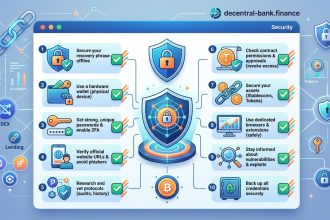
DeFi promises financial freedom, but it also comes with serious risks. Every week, millions of dollars disappear through hacks, scams, and user mistakes. The difference between profit and total loss often comes down to a few simple security habits.
Staying safe in DeFi requires understanding smart contract risks, using proper wallet security, verifying protocols before connecting, limiting approvals, and recognizing common scams. Most losses are preventable through careful research, controlled exposure, and defensive habits. Security is not optional when your funds are at stake in decentralized finance.
Understanding the real risks in decentralized finance
DeFi operates without banks or customer service departments. There are no chargebacks. No password resets. No fraud departments to call.
When you interact with a smart contract, you are trusting code that may contain bugs or malicious logic. Understanding how DeFi actually works without banks or middlemen helps you grasp why security responsibility falls entirely on you.
The biggest threats include:
- Smart contract exploits that drain protocol funds
- Phishing sites that steal your wallet credentials
- Malicious token approvals that empty your wallet
- Rug pulls where developers abandon projects with user funds
- Frontend attacks that redirect your transactions
Each risk requires a different defense strategy.
Choosing the right wallet setup for DeFi
Your wallet is your first line of defense. Most DeFi users need multiple wallets for different purposes.
Use a hardware wallet for large holdings. Keep it disconnected except when signing transactions. Choosing between hot wallets and cold wallets for your crypto becomes critical when protecting significant funds.
Create a separate hot wallet for active DeFi use. Fund it with only what you need for current transactions. Think of it like carrying cash in your pocket rather than your entire bank account.
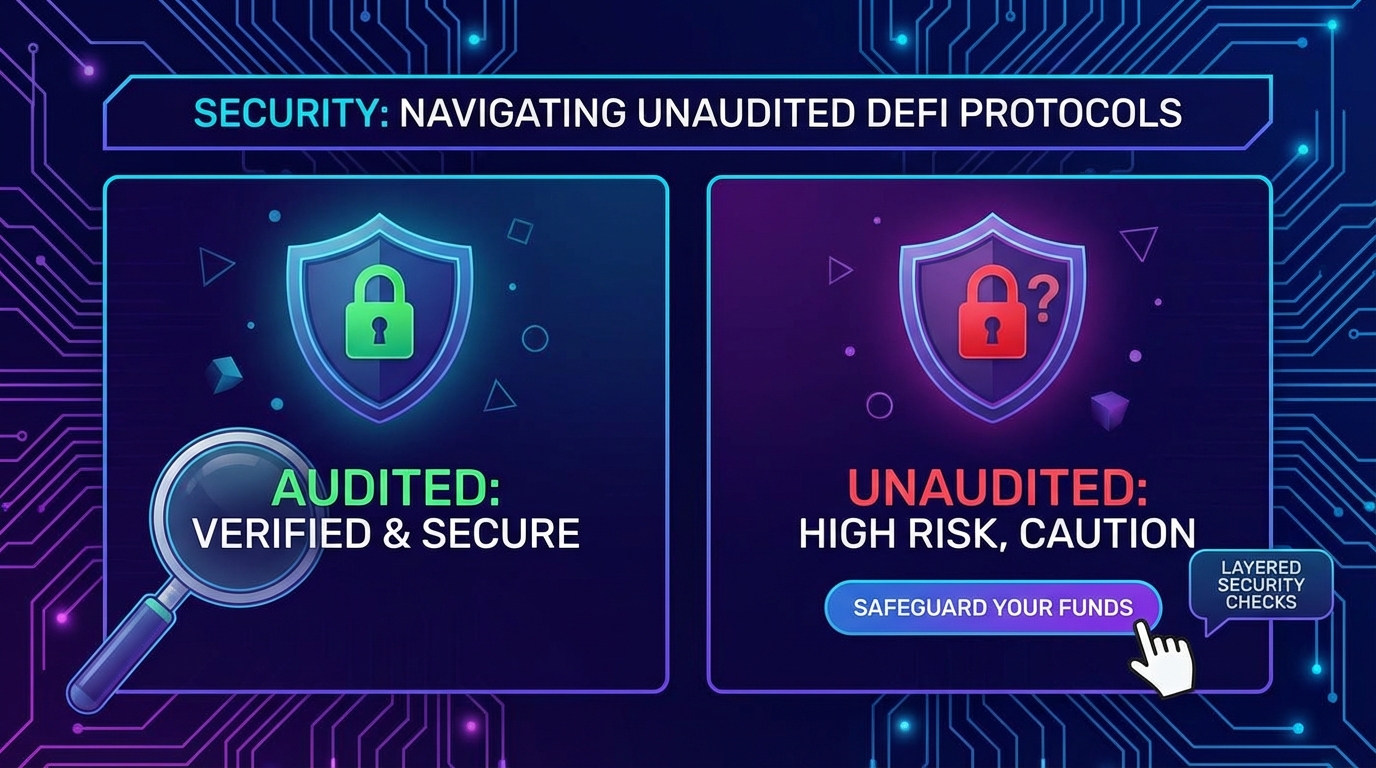
Never use your main holding wallet to interact with new or unaudited protocols. This separation limits damage if something goes wrong.
Wallet security checklist
Before connecting any wallet to DeFi protocols:
- Verify you downloaded the wallet from official sources
- Enable all available security features
- Back up your seed phrase offline in multiple secure locations
- Test recovery with a small amount before trusting large funds
- Use unique passwords that are not reused anywhere else
Hardware wallets add physical security that software wallets cannot match. The extra steps are worth the protection.
Researching protocols before you connect
Every protocol interaction starts with due diligence. Skipping research is how people lose money.
Check these factors for every new protocol:
-
Audit status: Has a reputable firm audited the smart contracts? Read the actual audit report, not just marketing claims about being audited.
-
Time in operation: Newer protocols carry higher risk. Bugs often surface in the first few months. Established protocols like Aave and Compound have years of battle testing.
-
Total value locked: Higher TVL suggests more users trust the protocol, but it also attracts more attacker attention. Very low TVL might indicate lack of confidence or a honeypot.
-
Team transparency: Can you identify the developers? Anonymous teams are not automatically bad, but they add risk. Look for teams with track records.
-
Community feedback: Check forums, Discord, and Twitter for user experiences. Real users discuss problems openly.
Never trust a protocol just because an influencer promoted it or because the APY looks amazing. High returns often hide high risks. Do your own research every single time.
Managing token approvals and permissions
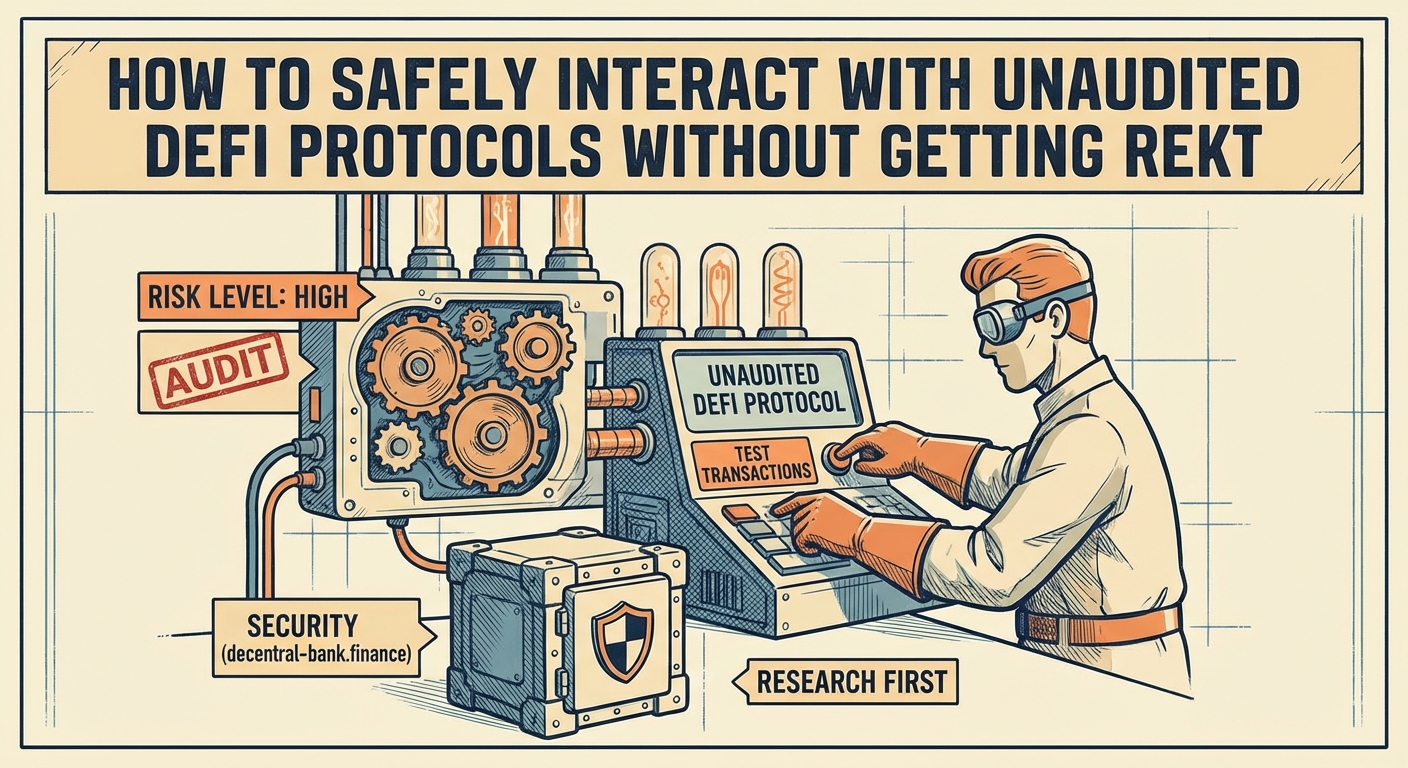
Token approvals are one of the most misunderstood security risks in DeFi.
When you approve a smart contract to spend your tokens, you are giving it permission to move those tokens anytime. Malicious contracts can drain approved tokens months after you forgot about the interaction.
How to handle approvals safely
Limit every approval to the exact amount needed. Many wallets default to unlimited approvals for convenience. Change this.
Use approval management tools to review and revoke old permissions regularly. Services like Revoke.cash let you see every approval your wallet has granted and cancel them.
Before approving any contract:
- Verify the contract address matches the official protocol
- Check what tokens you are approving and for what amount
- Understand why the protocol needs this specific approval
- Consider if unlimited approval is truly necessary
Treat approvals like signing legal contracts. Read what you are agreeing to.
Recognizing and avoiding common DeFi scams
Scammers constantly develop new tactics, but most fall into recognizable patterns.
Learning how to spot a rug pull before you lose your crypto protects you from one of the most common scams. Developers create tokens, attract investors, then drain liquidity and disappear.
Watch for these red flags:
- Anonymous teams with no history
- Locked or missing liquidity
- Concentrated token ownership in a few wallets
- Unrealistic return promises
- Pressure to invest immediately
- Poor documentation or copied whitepapers
- No working product despite months of development
Phishing attempts target DeFi users constantly. Fake websites copy real protocols perfectly. Always bookmark official sites and verify URLs before connecting your wallet.
Never click links in Discord DMs, Telegram messages, or emails claiming to be from protocols. Official teams will never ask for your seed phrase or private keys.
Testing transactions with small amounts first
The best security practice is also the simplest: test everything with tiny amounts first.
Send $10 worth of tokens before sending $10,000. The small loss if something goes wrong is worth the peace of mind.
This applies to:
- New protocol interactions
- Bridge transactions between chains
- Wallet address transfers
- Smart contract deployments
- Staking and farming operations
Testing catches mistakes like wrong addresses, unexpected fees, or failed transactions before they become expensive problems.
Understanding smart contract risk levels
Not all DeFi protocols carry equal risk. Understanding the differences helps you allocate funds appropriately.
| Risk Level | Characteristics | Examples | Recommended Exposure |
|---|---|---|---|
| Lower | Multiple audits, years of operation, large TVL, established team | Aave, Uniswap, Compound | Larger positions acceptable |
| Medium | Recent audits, months of operation, growing TVL, known team | Newer lending protocols, established forks | Moderate positions with monitoring |
| Higher | Unaudited, new launches, low TVL, anonymous team | New yield farms, experimental protocols | Small test amounts only |
| Highest | No audit, brand new, promises unrealistic returns | Obvious scams, honeypots | Avoid completely |
Even lower risk protocols can have problems. Nothing in DeFi is completely safe.
Protecting yourself from DeFi rug pulls and exit scams requires constant vigilance regardless of protocol reputation.
Setting up transaction monitoring and alerts
Active monitoring helps you catch problems early.
Enable wallet notifications for all transactions. Unauthorized activity should trigger immediate alerts.
Use blockchain explorers to verify transactions completed as expected. Check that tokens arrived at the correct address and in the right amount.
For larger DeFi positions:
- Set price alerts for significant movements
- Monitor protocol news and announcements
- Join official Discord or Telegram for updates
- Follow protocol Twitter accounts for security announcements
- Check TVL and usage metrics regularly
Catching a problem hours earlier can mean the difference between recovering funds and losing everything.
Limiting exposure across multiple protocols
Concentration risk applies to DeFi just like traditional investing.
Spread funds across different protocols and strategies. If one protocol gets hacked, you lose only a portion of your holdings.
Consider diversifying across:
- Different protocol types (lending, DEXs, yield farms)
- Multiple blockchains
- Various risk levels
- Different token types
Providing liquidity on Uniswap without losing money is one strategy, but do not put all funds in a single liquidity pool.
Never invest more in DeFi than you can afford to lose completely. The technology is still experimental.
Keeping your seed phrase secure
Your seed phrase is the master key to everything. Anyone with access can take complete control of your wallet.
Store it offline. Never type it into any website or app. Never take a photo of it. Never store it in cloud services or email.
Write it on paper or metal. Keep copies in multiple secure physical locations. Consider a fireproof safe or safety deposit box for significant holdings.
If someone asks for your seed phrase, they are trying to steal from you. No legitimate service ever needs it.
Staying informed about security threats
The DeFi security landscape changes constantly. What was safe last month might be vulnerable today.
Follow security researchers and audit firms on Twitter. They often announce vulnerabilities before they become widely exploited.
Read post-mortems of major hacks. Understanding how others lost funds helps you avoid the same mistakes.
Major DeFi protocols are responding to new regulatory frameworks in 2024, which affects security practices and compliance requirements.
Join security-focused communities where users share threat intelligence. Being informed is being protected.
Building defensive habits that last
Security in DeFi is not about one big action. It is about consistent small habits.
Develop a pre-transaction checklist:
- Verify the protocol URL and contract address
- Review what permissions you are granting
- Check the transaction details before signing
- Test with small amounts first
- Monitor the transaction completion
Make these steps automatic. Rushing leads to mistakes.
Take breaks when making important decisions. Scammers create urgency to prevent careful thinking. Legitimate opportunities will still be there tomorrow.
Stay skeptical of anything that seems too good. If you cannot explain why returns are so high, you probably should not invest.
Your security is your responsibility
DeFi gives you control over your money, but that control comes with total responsibility.
There are no safety nets. No insurance. No customer service to fix your mistakes.
The good news is that most losses are preventable. Following basic security practices, doing proper research, and staying cautious protects you from the majority of threats.
Start small. Learn the tools. Build good habits. Your future self will thank you for the care you take today.