
Billions of dollars flow across blockchain networks every month through cross-chain bridges. Yet these same bridges have become the biggest targets for hackers in DeFi, accounting for more than half of all stolen funds in recent years. The Ronin bridge lost $625 million. Wormhole lost $320 million. Poly Network lost $610 million. These weren’t small bugs or rare edge cases. They were fundamental security failures that could have been prevented.
Cross-chain bridge security depends on validator integrity, smart contract audits, and architectural design. Most exploits stem from compromised private keys, unaudited code, or centralized control points. Users can protect themselves by checking bridge trust models, using only audited protocols, starting with small test transfers, and understanding that no bridge is completely risk-free regardless of its marketing claims.
Understanding How Cross-Chain Bridges Actually Work
A cross-chain bridge lets you move assets from one blockchain to another. Think of it like exchanging currency at an airport, except the exchange happens between Ethereum, Binance Smart Chain, Polygon, or any other network.
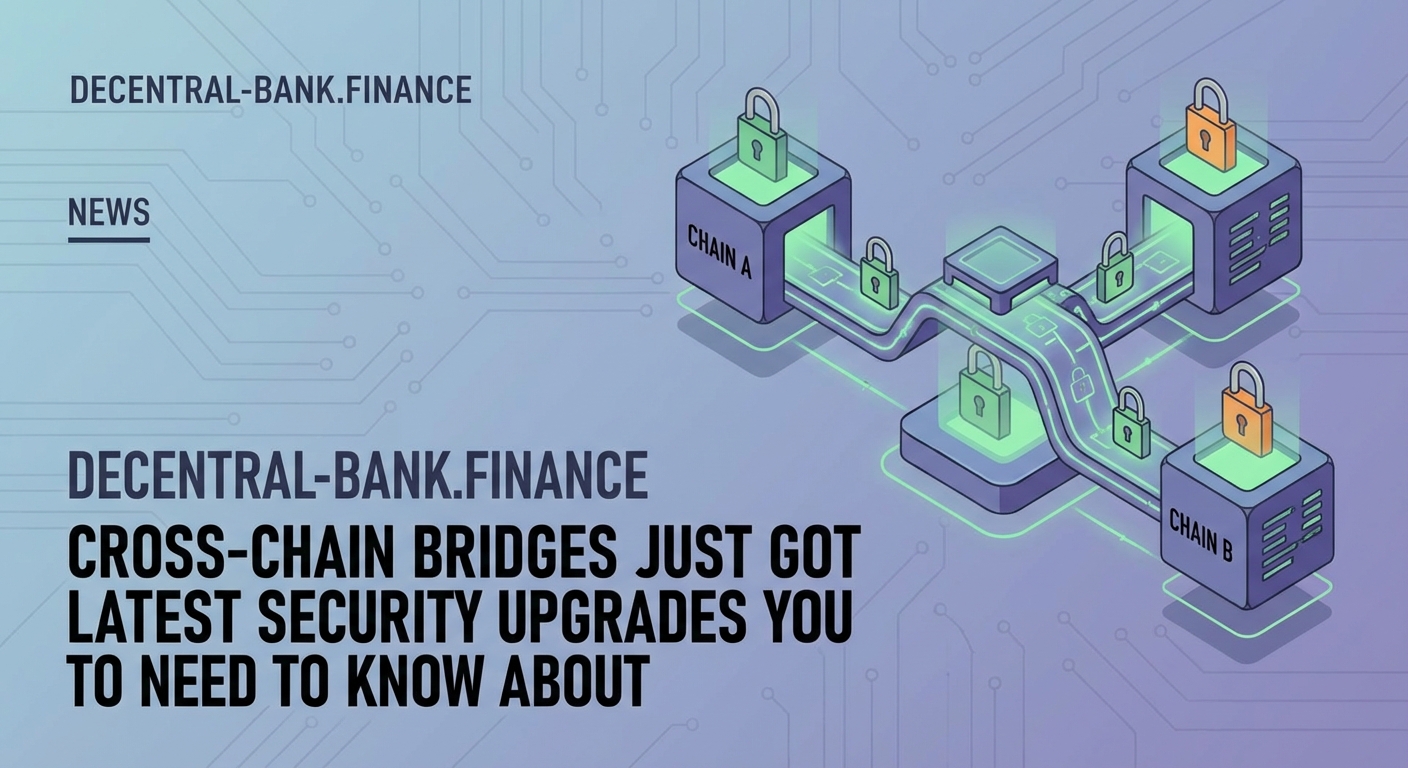
When you bridge assets, you typically lock tokens on the source chain. The bridge then mints equivalent tokens on the destination chain. When you want to move back, the destination tokens get burned and your original tokens unlock.
This process requires trust. Someone or something must verify that you actually locked tokens before minting new ones. That verification step is where most security problems begin.
Different bridges use different verification methods. Some rely on a small group of validators who sign off on transactions. Others use smart contracts with complex logic. A few newer bridges use optimistic verification, where transfers are assumed valid unless someone proves otherwise.
The architecture matters more than the marketing. A bridge with five validators controlled by one company is fundamentally less secure than a bridge with hundreds of independent validators, regardless of what the website claims.
Understanding how DeFi actually works helps you spot these trust assumptions faster.
The Five Most Common Bridge Vulnerabilities
1. Compromised Private Keys
Most bridge hacks start with stolen private keys. If attackers get the keys that control validator signatures or treasury wallets, they can authorize fraudulent transfers.
The Ronin bridge hack happened because attackers compromised five out of nine validator keys. That was enough to approve a massive withdrawal that never actually happened on the source chain.
2. Unaudited or Poorly Audited Smart Contracts
Smart contract bugs let attackers mint tokens without locking collateral, drain liquidity pools, or manipulate verification logic.
The Wormhole hack exploited a signature verification flaw. Attackers bypassed the normal validation process and minted 120,000 ETH out of thin air.
3. Centralized Control Points
Bridges with admin keys, upgrade functions, or centralized operators create single points of failure. If one entity can pause, upgrade, or control the bridge, that entity becomes a target.
Some bridges use multisig wallets where three out of five team members must approve changes. That sounds secure until you realize all five people work at the same company and share an office.
4. Lack of Rate Limits
Without rate limits, a single compromised transaction can drain the entire bridge in minutes.
The Poly Network hack moved $610 million across multiple chains in less than an hour. Rate limits could have capped the damage and given the team time to respond.
5. Missing Transaction Monitoring
Bridges without real-time monitoring can’t detect anomalies until it’s too late. By the time someone notices unusual activity, the funds are already gone.
Active monitoring systems flag suspicious patterns like unusual transfer sizes, rapid successive transactions, or transfers to known blacklisted addresses.
How to Evaluate Bridge Security Before You Transfer
Not all bridges publish clear security information. You need to dig for it.
Here’s what to check before using any bridge:
-
Read the audit reports. Look for audits from reputable firms like Trail of Bits, OpenZeppelin, or Certik. Check when the audit happened and whether the code changed since then.
-
Identify the validator set. Find out who runs the validators and how many signatures are required. More validators from different organizations means better security.
-
Check the bridge’s track record. Has it been hacked before? How long has it been running? Bridges that have operated for years without incidents have proven their security in practice.
-
Understand the trust model. Is the bridge trustless, optimistic, or validator-based? Each model has different security tradeoffs.
-
Look for insurance or compensation funds. Some bridges maintain insurance pools to cover potential losses. This doesn’t prevent hacks, but it shows the team takes security seriously.
“The best bridge security comes from eliminating trust requirements entirely. Use canonical assets when possible, verify everything on-chain, and never assume validators will act honestly under economic pressure.”
Bridge Security Models Compared
Different bridges use different security approaches. Here’s how the main models stack up:
| Security Model | How It Works | Main Risk | Best For |
|---|---|---|---|
| Validator-based | Small group signs transactions | Validator collusion or compromise | Speed over security |
| Optimistic | Assumes validity, allows challenges | Slow finality, liveness failures | Security over speed |
| Light client | Verifies source chain state on-chain | Complex implementation, high gas costs | Trustless transfers |
| Liquidity network | Relayers provide instant liquidity | Relayer solvency, liquidity depth | Fast, smaller amounts |
None of these models is perfectly secure. Each trades off security, speed, cost, and decentralization differently.
Validator-based bridges are fast but vulnerable to key compromise. Optimistic bridges are more secure but slower. Light client bridges are the most trustless but expensive to operate. Liquidity networks avoid most bridge risks but introduce counterparty risk with relayers.
Practical Steps to Protect Your Assets During Bridge Transfers
You can’t eliminate bridge risk completely, but you can manage it.
Start with a test transfer. Send $10 worth of tokens first. Make sure it arrives correctly before moving larger amounts. This catches configuration errors and helps you understand the process.
Use bridges with proven security. Stick to bridges that have been audited multiple times, have operated for at least a year without major incidents, and have transparent validator sets.
Avoid bridges with unlimited admin keys. If a single wallet can upgrade the contract or pause transfers, that’s a red flag. Look for time-locked upgrades or governance-based changes instead.
Check current bridge TVL. Total value locked shows how much other users trust the bridge. A sudden drop in TVL often signals security concerns.
Never bridge more than you can afford to lose. Treat bridge transfers like borrowing crypto without selling your assets: understand the risks before committing significant funds.
Store bridged assets appropriately. Once assets arrive on the destination chain, move them to secure storage. Choosing between hot wallets and cold wallets depends on whether you need frequent access or maximum security.
Red Flags That Signal Unsafe Bridges
Some warning signs are obvious once you know what to look for:
- Anonymous team with no public track record
- No published audit reports or audits from unknown firms
- Centralized validator set controlled by one entity
- Recent code changes without new audits
- Promises of “100% secure” or “unhackable” transfers
- Unclear documentation about how the bridge works
- No bug bounty program
- Missing transaction monitoring or alerting systems
These red flags don’t guarantee a bridge will get hacked. But they show the team isn’t taking security seriously enough.
Spotting a rug pull before you lose your crypto uses similar pattern recognition. Scammers and careless developers both skip the same security steps.
The Role of Smart Contract Audits in Bridge Security
Audits catch bugs before they become exploits. But not all audits are equal.
A good audit report includes:
- Detailed description of the bridge architecture
- List of all identified vulnerabilities with severity ratings
- Verification that critical issues were fixed
- Recommendations for ongoing security improvements
- Testing methodology and coverage metrics
Bad audits just check for common vulnerabilities without understanding the bridge’s specific trust model. They miss logic errors, economic attacks, and architectural flaws.
Multiple audits from different firms provide better coverage. Each firm has different expertise and catches different issues.
But even audited bridges get hacked. Audits only verify the code at one point in time. If the team updates the contract later, those changes might introduce new vulnerabilities.
What Changed in 2026 for Bridge Security
Recent improvements have made bridges safer, though not completely safe.
More bridges now use optimistic verification with fraud proofs. This adds a delay but removes the need to trust validators completely.
Cross-chain messaging standards like LayerZero and Axelar provide better security primitives for bridge builders. Instead of building everything from scratch, teams can use battle-tested messaging layers.
Insurance protocols like Nexus Mutual now cover bridge exploits. Users can buy coverage before making large transfers.
Monitoring tools have improved dramatically. Services like Forta detect suspicious bridge activity in real-time and alert users before exploits drain all funds.
Regulatory pressure has pushed bridge operators toward better security practices. Teams know that a major hack could bring regulatory scrutiny they can’t afford.
Common Mistakes Users Make With Bridge Transfers
Even on secure bridges, user errors cause losses.
Sending to the wrong address format. Ethereum addresses look similar to Binance Smart Chain addresses, but they’re on different networks. Sending to an address you don’t control on the destination chain means permanent loss.
Ignoring gas requirements. You need native tokens on the destination chain to move bridged assets. If you bridge all your funds and have zero gas tokens on the other side, your assets are stuck.
Rushing through confirmation screens. Bridge interfaces show you the source chain, destination chain, and receiving address. Verify each field before confirming.
Using bridges during network congestion. High gas fees and slow confirmations increase the risk of failed transactions. Wait for normal network conditions unless you need to transfer immediately.
Forgetting about token standards. Some tokens don’t bridge well because they use non-standard implementations. Rebasing tokens, tokens with transfer fees, and tokens with complex logic often break during bridge transfers.
Understanding Bridge Validator Economics
Validators secure bridges, but they also respond to economic incentives.
If stealing funds is more profitable than earning validator rewards, rational validators will steal. That’s not a moral judgment. It’s game theory.
Secure bridges align validator incentives with user safety. They require large stakes that get slashed if validators misbehave. They distribute validator power across many independent entities. They make attacking the bridge more expensive than the potential reward.
Weak bridges rely on validator reputation or small stakes. Reputation doesn’t matter when the potential profit exceeds the validator’s entire business value. Small stakes don’t deter attacks when millions of dollars sit in the bridge contract.
Check validator stakes before using a bridge. If total stake is less than total value locked, the bridge is economically insecure.
The Future of Cross-Chain Security
Bridge security is improving, but slowly.
Zero-knowledge proofs let bridges verify source chain state without trusting validators. This technology is still expensive and complex, but it’s getting cheaper.
Modular blockchain architectures reduce the need for bridges. If chains share security or settlement layers, moving assets becomes simpler and safer.
Native cross-chain protocols built into layer-1 blockchains eliminate third-party bridge risk entirely. Cosmos IBC and Polkadot’s parachain model show what’s possible when interoperability is a first-class feature.
But we’ll still need bridges for years. Ethereum, Bitcoin, and other established chains won’t add native interoperability anytime soon. Third-party bridges will remain the main way to move assets between these networks.
That means bridge security will remain critical for anyone using DeFi protocols across multiple chains or managing diversified crypto portfolios.
Security Practices Bridge Operators Should Follow
If you’re building or operating a bridge, these practices are non-negotiable:
- Get multiple independent audits before launch
- Use time-locked upgrades with public governance
- Maintain a bug bounty program with meaningful rewards
- Implement rate limits on all transfer functions
- Run active transaction monitoring with automated alerts
- Publish regular security updates and incident reports
- Distribute validator power across independent entities
- Require significant economic stakes from all validators
- Build in circuit breakers that pause transfers during anomalies
- Maintain insurance or compensation funds for potential exploits
Users should demand these practices from every bridge they use. Bridges that skip these steps are accidents waiting to happen.
Why Bridge Security Matters More Than Speed
Fast bridges often sacrifice security for speed. They use small validator sets, skip verification steps, or centralize control to minimize latency.
This creates a false tradeoff. Users think they’re choosing between fast transfers and slow transfers. Actually, they’re choosing between fast transfers and safe transfers.
A bridge that moves your assets in 30 seconds but has a 5% chance of getting hacked is worse than a bridge that takes 10 minutes but has a 0.1% chance of getting hacked.
Do the math. Would you use a bridge that’s probably safe but might lose all your money? Or would you wait a few extra minutes for much better security?
Speed matters for traders and arbitrageurs who need instant transfers. For everyone else, security should be the top priority.
Making Informed Decisions About Cross-Chain Transfers
Cross-chain bridge security isn’t perfect, but it’s getting better. Understanding the risks helps you make smarter decisions about when and how to bridge assets.
Check audit reports. Verify validator sets. Start with small test transfers. Use bridges with proven track records. Never bridge more than you can afford to lose.
These steps won’t eliminate risk completely. But they’ll help you avoid the worst bridges and reduce your exposure to common exploits. The bridges that survive long-term will be the ones that prioritize security over marketing, transparency over promises, and user protection over growth metrics.
Your assets are worth the extra research time.