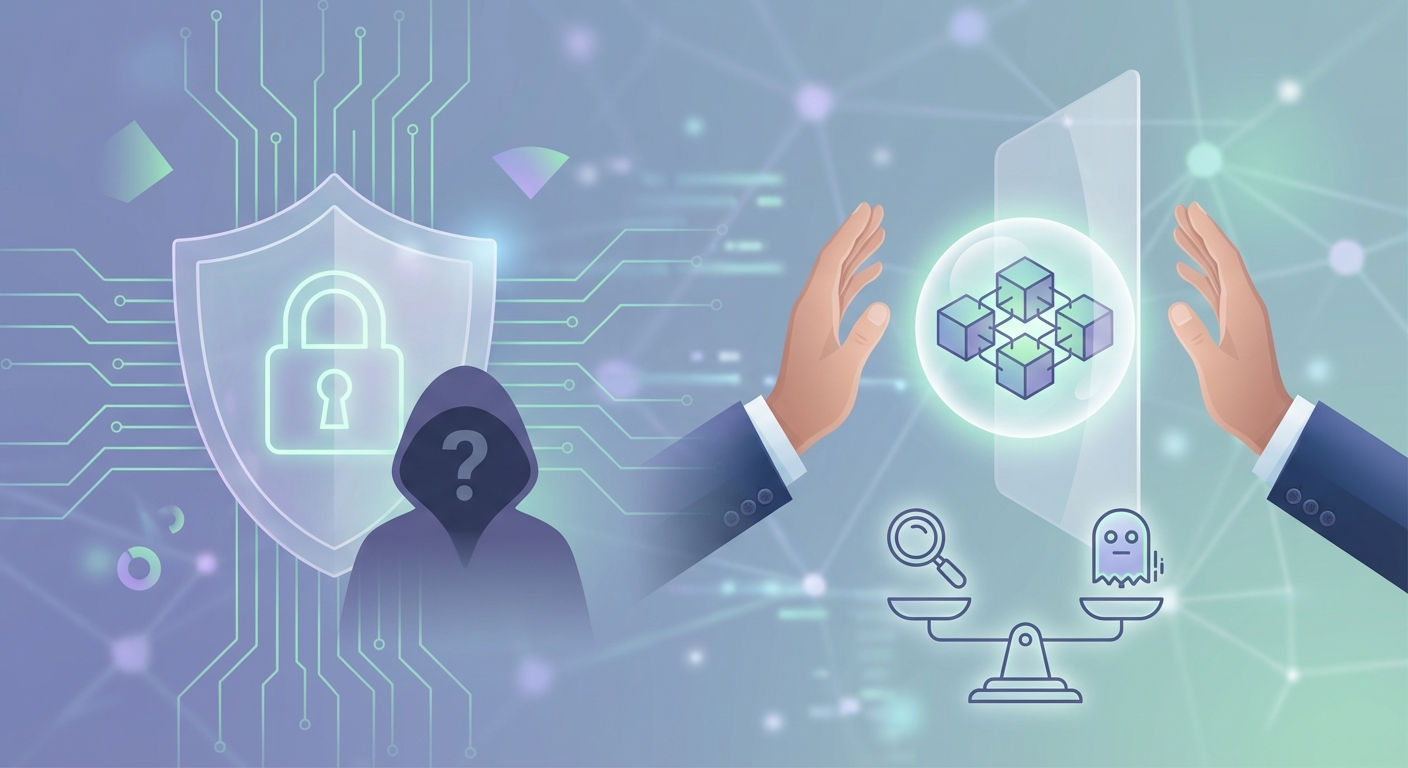
You’re looking at a promising DeFi protocol with incredible yields and innovative features. The code looks solid. The community seems engaged. But then you notice something: the entire development team operates under pseudonyms. No LinkedIn profiles. No public faces. Just anonymous usernames on Discord and GitHub.
Should you trust them with your money?
Anonymous team defi protocol projects carry unique risks but aren’t automatically scams. Success depends on verifying smart contract audits, checking code transparency, analyzing tokenomics, monitoring community governance, and understanding whether anonymity serves privacy or hides malicious intent. Many legitimate protocols operate with pseudonymous teams while maintaining strong security practices and accountability through decentralized governance structures.
Why DeFi teams choose anonymity
Anonymous teams aren’t new to crypto. Bitcoin’s creator, Satoshi Nakamoto, remains unknown to this day. Many developers choose pseudonymity for legitimate reasons.
Privacy concerns top the list. Building financial infrastructure can attract unwanted attention from hackers, governments, or competitors. Some developers live in jurisdictions where crypto work carries legal risks.
Others value ideological consistency. If you’re building truly decentralized finance, the argument goes, individual identities shouldn’t matter. The code should speak for itself.
Security plays a role too. Public figures in crypto face constant threats, from targeted phishing to physical security risks. Staying anonymous reduces these attack vectors.
But anonymity also creates a perfect environment for bad actors. Without reputation at stake, exit scams become easier. Understanding how DeFi actually works helps you separate legitimate privacy from suspicious secrecy.
Red flags that signal danger
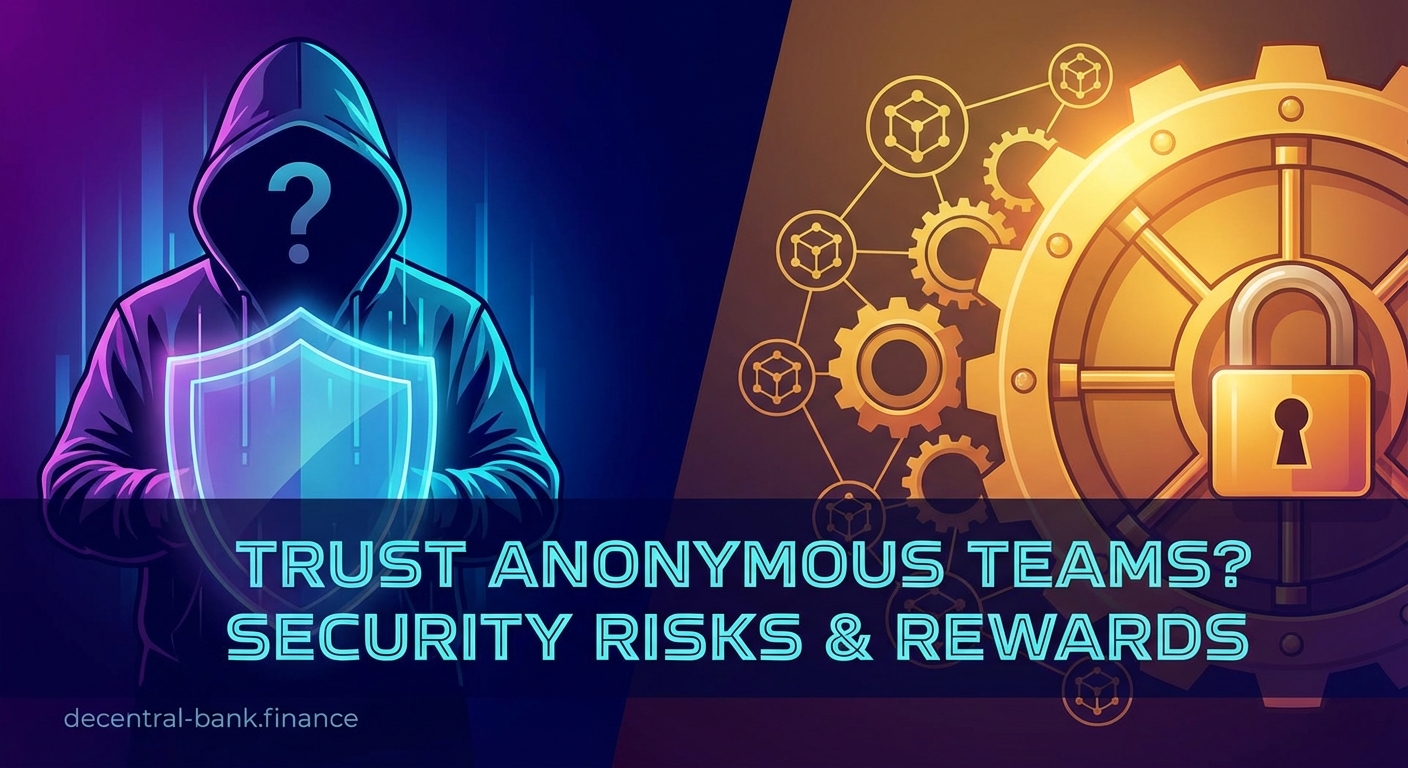
Not all anonymous teams deserve trust. Certain warning signs should make you extremely cautious.
Missing or rushed audits rank as the biggest red flag. Legitimate projects invest in multiple professional security audits before launch. Anonymous teams skipping this step are hiding something or rushing to market before anyone notices flaws.
Closed source code contradicts DeFi’s open ethos. If the team won’t publish their smart contracts on GitHub or similar platforms, you can’t verify what the code actually does. Transparency matters more than identity.
Unclear tokenomics often hide wealth extraction schemes. When anonymous developers control massive token allocations with no vesting schedule, they can dump on investors and disappear.
No time locks on critical functions mean the team can change protocol rules instantly. Admin keys without multi-signature requirements or time delays give anonymous controllers too much power.
Copied code without attribution suggests the team lacks technical skill or integrity. Many rug pulls simply fork existing protocols, change a few parameters, and hope nobody notices.
How to evaluate an anonymous team defi protocol
Smart investors follow a systematic process before committing funds to any anonymous project.
-
Read every audit report completely. Don’t just check if audits exist. Read the findings. Look for critical or high-severity issues. Check if the team fixed identified problems. Verify the auditing firm’s reputation.
-
Review the smart contract code yourself or hire someone who can. Even basic code literacy helps. Look for unusual admin functions, hidden minting capabilities, or suspicious transfer restrictions. Many common scam patterns appear in the code.
-
Test with small amounts first. Never invest your entire portfolio in an unproven protocol. Start with amounts you can afford to lose completely. Monitor how withdrawals work. Verify you can actually exit positions.
-
Track the team’s history and reputation. Anonymous doesn’t mean untraceable. Developers build reputations through their pseudonyms. Research their previous projects. Check their GitHub contributions. Look for community testimonials.
-
Analyze the governance structure. Strong protocols distribute power across many stakeholders. Multi-signature wallets requiring multiple approvals protect against single points of failure. Community governance through token voting adds accountability.
Security measures that build confidence
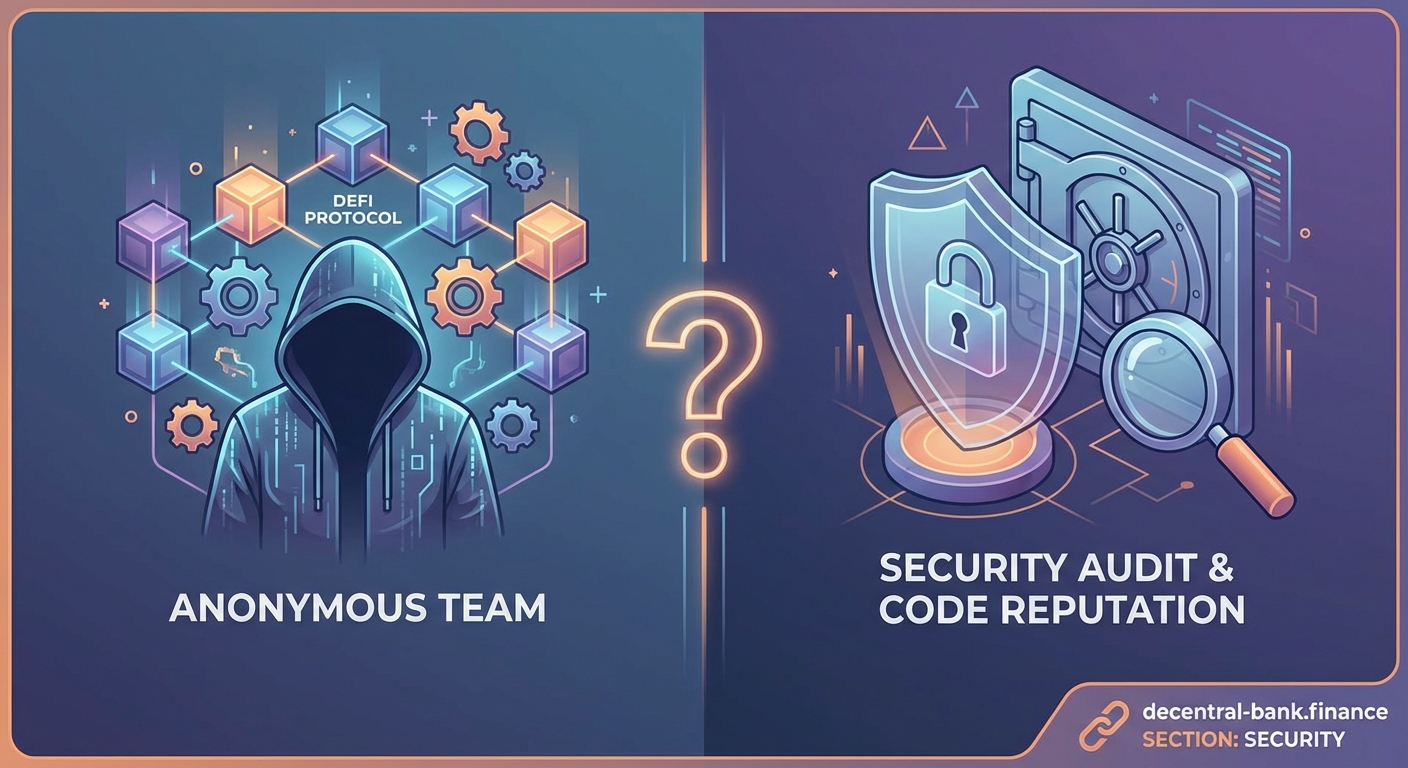
Legitimate anonymous teams implement specific security practices that demonstrate good faith.
- Time locks on treasury and admin functions prevent instant rug pulls
- Multi-signature wallets requiring 3 of 5 or 5 of 9 signatures for critical changes
- Vested team allocations that unlock gradually over years, not days
- Bug bounty programs paying security researchers to find vulnerabilities
- Regular security audits from multiple respected firms
- Open source code published on GitHub with detailed documentation
- Transparent on-chain activity viewable by anyone through block explorers
- Active community governance where token holders vote on major decisions
These mechanisms create accountability without requiring doxxed identities. The protocol’s structure provides checks and balances.
Comparing anonymous versus public teams
Understanding the tradeoffs helps you make informed decisions.
| Factor | Anonymous Team | Public Team |
|---|---|---|
| Legal recourse | Very limited | Possible through courts |
| Reputation risk | Pseudonymous only | Professional and personal |
| Regulatory pressure | Lower initially | Higher from start |
| Community trust | Harder to build | Easier to establish |
| Exit scam risk | Higher without safeguards | Lower but not zero |
| Innovation freedom | Greater in hostile jurisdictions | May face restrictions |
| Accountability | Depends on code and governance | Multiple layers available |
Neither approach guarantees safety. Public teams have executed scams. Anonymous teams have built lasting protocols.
Your evaluation should focus on the security architecture, not just team visibility. A transparent protocol with strong safeguards from an anonymous team beats a centralized project with a public CEO and no accountability measures.
Questions to ask before investing
Use this framework to guide your research into any anonymous team defi protocol.
About the code: Has it been audited by reputable firms? Is the source code public? Can you verify it matches the deployed contracts? Are there any admin keys or backdoors?
About the economics: Who holds the largest token allocations? Are team tokens vested? What percentage of supply can the team access immediately? How does the protocol generate sustainable revenue?
About governance: Can the team change critical parameters unilaterally? Do users vote on major decisions? Are there time locks preventing instant changes? How are emergency situations handled?
About the community: Does the project have active developers beyond the core team? Are there independent contributors? Do community members ask tough questions? How does the team respond to criticism?
About history: Has this team built other projects? What happened to those projects? Are there any connections to previous scams? What does the community say about their track record?
The best protection against anonymous team risks isn’t avoiding them entirely. It’s understanding how to verify trustless systems that don’t require trusting individuals. Smart contracts, time locks, and decentralized governance create accountability without identity.
When anonymity actually helps security
Paradoxically, anonymous teams sometimes build more secure protocols than public ones.
Without the ability to fall back on personal reputation, anonymous developers must build trust through code quality and security architecture. They can’t charm investors with charisma or credentials. The protocol must stand on its own merits.
This forces better practices. Anonymous teams typically implement stronger security measures because they know users will scrutinize everything. They use time locks because instant changes would trigger panic. They publish code because secrecy would kill adoption.
Consider how staking mechanisms work or how liquidity provision functions. These systems succeed because the code enforces rules, not because you trust specific individuals.
The strongest protocols become trust-minimized. You don’t need to trust the team because the smart contracts prevent them from stealing. Time locks give you warning before changes. Multi-signature requirements prevent unilateral action. Decentralized governance lets users override bad decisions.
Managing your risk exposure
Even after thorough research, anonymous team defi protocol investments carry elevated risk. Smart risk management protects your portfolio.
Diversify across multiple protocols. Never concentrate more than 5-10% of your crypto holdings in any single anonymous project. Spread risk across different teams, different security models, and different use cases.
Use appropriate wallet security. Store large holdings in cold wallets separate from your DeFi interaction wallet. Only connect wallets containing funds you’re actively using.
Monitor your positions regularly. Set up alerts for large transactions from protocol treasuries. Watch for unusual governance proposals. Track TVL changes that might signal problems.
Have exit strategies ready. Know how to withdraw your funds under normal conditions and emergency scenarios. Test withdrawal processes with small amounts. Understand any lock-up periods or exit penalties.
Stay informed about regulatory developments. Regulatory frameworks are evolving. Anonymous protocols may face different pressures than public ones. Understand how this affects your investments.
The role of community governance
Strong community governance transforms anonymous teams from liability into feature. When token holders control protocol decisions, individual team anonymity matters less.
Decentralized autonomous organizations (DAOs) distribute power across thousands of token holders. Major changes require community votes. Treasury spending needs approval. Parameter adjustments go through governance processes.
This creates accountability without identity. The team proposes. The community decides. Even anonymous developers must convince token holders their ideas serve the protocol’s interests.
Look for protocols where governance actually functions. Check voting participation rates. Review past proposals and their outcomes. Verify that controversial decisions went through proper governance channels.
Weak governance theater doesn’t count. Some protocols claim decentralization while the team retains effective control through large token holdings or technical backdoors. True decentralization means the community can override or replace the founding team.
Understanding token distribution
Token allocation reveals whether an anonymous team defi protocol prioritizes community or enrichment.
Fair launches distribute tokens broadly from day one. No pre-mine. No insider allocation. Everyone competes equally. While rare, fair launches demonstrate commitment to decentralization.
More commonly, teams take allocations but vest them over years. A four-year vesting schedule with one-year cliff means the team can’t access tokens immediately. This aligns incentives with long-term success.
Red flags include teams controlling 30-50% of supply with short vesting or no locks. They can dump on the market and disappear. Large allocations to “marketing” or “ecosystem development” often fund team spending without accountability.
Check token distribution on block explorers. Verify vesting contracts exist and function as claimed. Look for transparency about who holds what and when tokens unlock.
Real examples worth studying
Several successful protocols operate with anonymous or pseudonymous teams. Studying them reveals patterns.
Yearn Finance launched with an anonymous founder who later revealed his identity after the protocol matured. The project succeeded because of strong code, professional audits, and genuine innovation. The founder’s anonymity didn’t prevent building trust through transparency and results.
SushiSwap began as an anonymous fork of Uniswap. Despite early drama when the founder sold tokens, the protocol survived because governance shifted to the community. Decentralization saved the project when the anonymous founder’s actions threatened it.
These examples teach important lessons. Anonymity works when combined with strong security practices, genuine decentralization, and community governance. It fails when used to hide malicious intent or avoid accountability for bad decisions.
Building your evaluation checklist
Create a systematic approach for assessing any anonymous team defi protocol before investing.
Technical verification: Multiple audits from reputable firms. Open source code matching deployed contracts. No critical vulnerabilities in audit reports. Active development visible on GitHub.
Economic analysis: Reasonable token distribution. Team allocations properly vested. Sustainable revenue model. Clear value proposition beyond speculation.
Governance checks: Functional DAO with real power. Time locks on critical functions. Multi-signature requirements for treasury. Community voting on major decisions.
Community health: Active development community. Independent contributors. Critical discussion tolerated. Long-term focused participants.
Risk assessment: Position size appropriate for risk level. Exit strategy prepared. Monitoring systems in place. Diversification across protocols.
Use this checklist every time. Don’t skip steps because a project seems exciting or everyone’s talking about it. Systematic evaluation protects you from both obvious scams and subtle risks.
Making smart decisions with incomplete information
You’ll never have perfect information about anonymous teams. Learning to decide with uncertainty separates successful DeFi participants from victims.
Focus on what you can verify. Code is transparent. Audits are public. Token distribution lives on-chain. Governance processes leave records. These verifiable facts matter more than team identities.
Accept that some risk remains irreducible. Even the best research can’t guarantee safety. Size positions accordingly. Never invest more than you can afford to lose completely.
Trust the process, not individuals. Strong protocols work because of their architecture, not because of who built them. Understanding how lending works or how stablecoins maintain their peg matters more than knowing developer names.
Your path forward in anonymous DeFi
Anonymous team defi protocol projects will continue existing. The question isn’t whether to avoid them entirely, but how to evaluate them intelligently.
Start by understanding that anonymity itself isn’t the problem. Lack of accountability is. Protocols can build accountability through code, governance, and transparent operations without requiring doxxed developers.
Your job as an investor is verifying these accountability mechanisms exist and function properly. Check audits. Review code or hire experts. Test governance. Analyze tokenomics. Monitor the community.
Begin with small positions in well-established protocols that have proven their security models. As you gain experience evaluating anonymous projects, you’ll develop better instincts for separating legitimate privacy from suspicious secrecy. The skills you build protecting yourself in DeFi apply across all crypto investing, making you a more sophisticated participant in this evolving financial system.