
Traditional banks spent years dismissing decentralized finance as a fringe experiment. Now they’re racing to partner with the very protocols they once called risky. JPMorgan, Citibank, and HSBC have all announced blockchain initiatives or pilot programs involving DeFi infrastructure. What changed? The answer involves regulatory pressure, customer demand, and a genuine fear of becoming obsolete.
Traditional banks are forming DeFi partnerships to access 24/7 settlement infrastructure, reduce cross-border costs, and compete with fintech challengers. Regulatory clarity, institutional custody solutions, and proven protocol security have made collaboration feasible. Banks gain efficiency while DeFi gains legitimacy, creating a hybrid financial system that blends traditional oversight with decentralized technology.
The business case banks can’t ignore anymore
Banks operate on infrastructure built decades ago. Wire transfers take days. International payments cost 6% on average. Settlement windows close at 5 PM. DeFi protocols run continuously, settle instantly, and charge fractions of a percent.
The cost difference is massive. A traditional cross-border payment through correspondent banking might touch five intermediaries. Each takes a cut. Each adds delay. A stablecoin transfer on a blockchain settles in minutes with transparent fees.
Banks see this efficiency gap shrinking their margins. Corporate clients already use stablecoins for treasury management. Retail customers discover they can earn 4% on dollar-pegged tokens while bank savings accounts offer 0.5%. The threat isn’t theoretical anymore.
Traditional finance vs DeFi: understanding the key differences highlights why speed and cost matter more than ever in financial services.
Regulatory frameworks finally provide guardrails
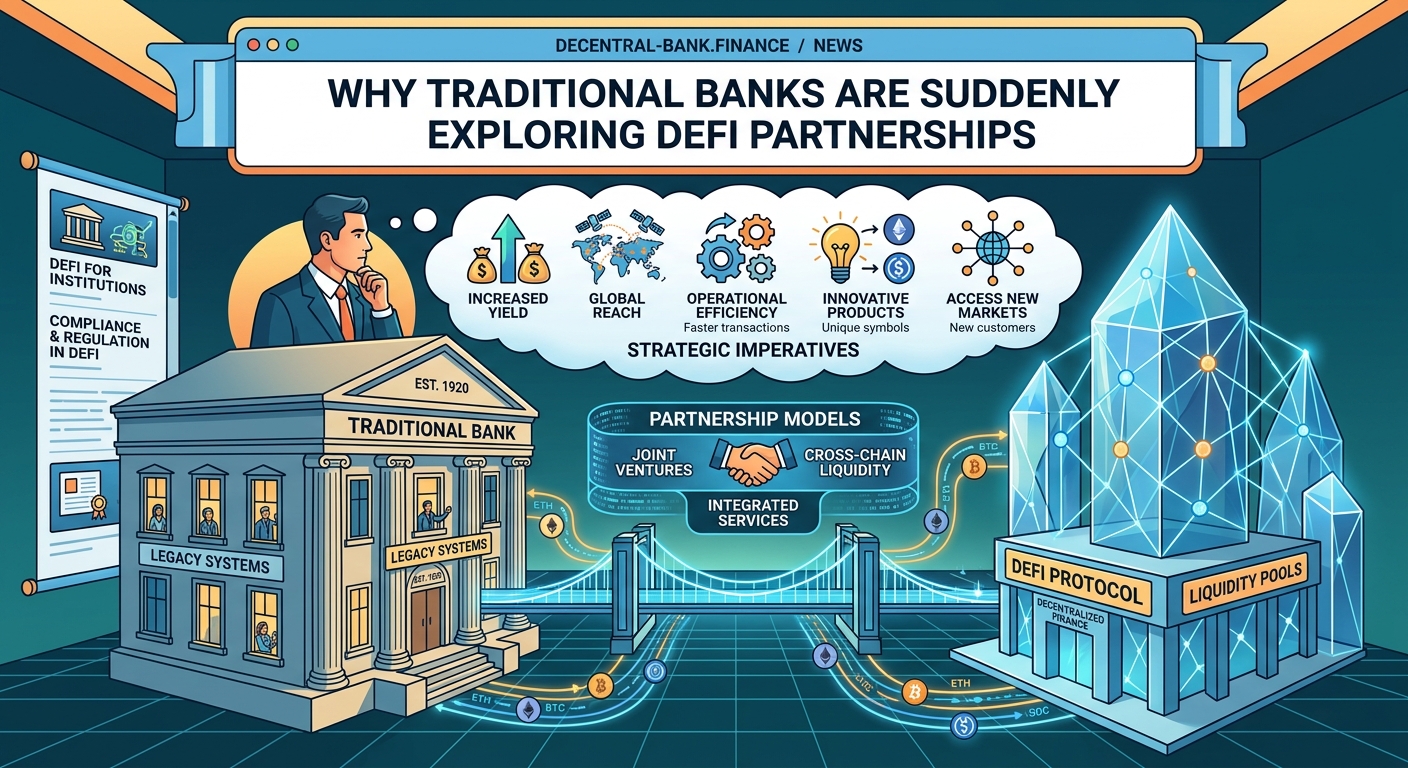
For years, banks avoided DeFi because regulators offered no clear guidance. Compliance teams couldn’t assess risk without knowing which rules applied. That uncertainty is lifting.
The European Union’s Markets in Crypto-Assets (MiCA) regulation provides specific frameworks for digital assets. The U.S. Office of the Comptroller of the Currency issued guidance allowing banks to use stablecoins for payment activities. Singapore’s Monetary Authority created licensing pathways for digital asset services.
These regulations don’t eliminate risk. They define it. Banks can now build compliance programs around known requirements rather than guessing. Legal departments can draft contracts. Risk committees can quantify exposure.
Regulatory clarity transforms DeFi from a compliance nightmare into a manageable business line. Banks that waited for this moment are now moving fast.
Customer demand is forcing banks to adapt
Younger customers expect financial services to work like their phones. Always on. Instant results. Low friction. Traditional banking feels outdated by comparison.
A 2024 survey found that 42% of millennials and Gen Z customers would switch banks for better digital asset services. These aren’t crypto enthusiasts. They’re mainstream users who want the option to hold, transfer, or earn yield on digital dollars alongside traditional accounts.
Banks that ignore this demand lose deposits to fintech competitors. Companies like Revolut and Wise already offer crypto services within their apps. Traditional banks risk becoming the legacy option that younger customers abandon.
Partnerships let banks add DeFi features without building everything from scratch. They can offer stablecoin accounts, crypto custody, or yield products by connecting to existing protocols through secure APIs.
How banks are actually structuring these partnerships
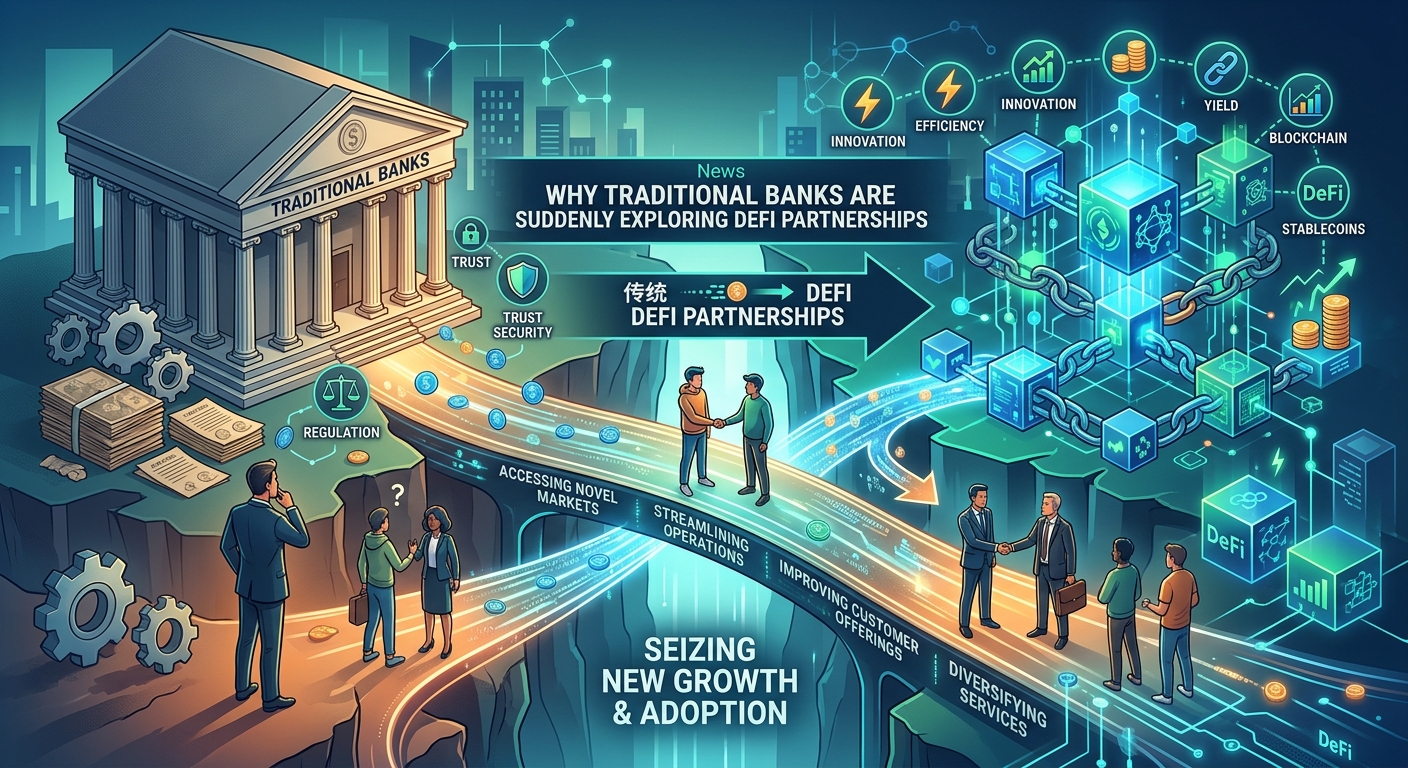
Traditional banks DeFi partnerships take several forms. Each addresses different business needs and risk tolerances.
Custody and infrastructure partnerships
Banks partner with regulated crypto custodians to hold digital assets on behalf of clients. BNY Mellon partnered with Fireblocks for institutional custody. State Street launched a digital asset platform using Copper’s infrastructure.
These partnerships let banks offer crypto services while outsourcing the technical complexity and security requirements. The custodian handles private key management, multi-signature wallets, and protocol interactions. The bank provides the client relationship and regulatory compliance.
Stablecoin integration for payments
Several banks now use stablecoins as payment rails. They convert fiat to USDC or EURC, transfer on blockchain, then convert back to fiat at the destination. The client never touches crypto directly, but benefits from faster settlement and lower costs.
This model works particularly well for cross-border payments and treasury operations. How does DeFi actually work without banks or middlemen? explains the underlying technology making these transfers possible.
Tokenization of traditional assets
Banks are tokenizing bonds, real estate, and other assets to trade on blockchain infrastructure. This creates 24/7 markets with instant settlement. JPMorgan’s Onyx platform has processed over $300 billion in tokenized repo transactions.
Tokenization partnerships typically involve both DeFi protocols for the technical infrastructure and traditional financial institutions for the underlying assets and regulatory compliance.
Yield and lending products
Some banks partner with DeFi lending protocols to offer higher yields on deposits. The bank acts as intermediary, taking deposits in fiat and deploying them into vetted DeFi protocols. Customers earn better rates without managing wallets or understanding smart contracts.
This model requires careful risk management. Banks must assess protocol security, smart contract audits, and collateralization ratios. Understanding collateral ratios: the key to safe DeFi borrowing covers the mechanics banks evaluate.
The technical challenges banks must solve
Integrating DeFi infrastructure with traditional banking systems isn’t simple. Banks face several technical hurdles.
Legacy system integration: Bank core systems run on decades-old technology. Connecting these systems to blockchain APIs requires middleware, data translation layers, and extensive testing. Many banks build separate digital asset divisions to avoid disrupting existing operations.
Security and key management: Banks must secure private keys with the same rigor they apply to vault access. This means hardware security modules, multi-signature requirements, and strict access controls. One compromised key could drain millions.
Transaction monitoring: Anti-money laundering rules require banks to monitor all transactions. Blockchain transactions are pseudonymous, making this harder. Banks need analytics tools that can trace fund flows across multiple protocols and addresses.
Scalability concerns: Ethereum mainnet can’t handle bank-scale transaction volumes at acceptable costs. Banks typically use Layer 2 solutions or private blockchains for high-frequency operations. Are Layer 2 solutions finally making DeFi affordable for everyone? examines these scaling technologies.
Risk management approaches banks are taking
Banks approach DeFi risk differently than retail users. Their frameworks include multiple layers of protection.
| Risk Type | Bank Mitigation Strategy | Traditional DeFi Approach |
|---|---|---|
| Smart contract bugs | Only use audited protocols with insurance | Users assess audits themselves |
| Market volatility | Limit exposure to stablecoins and over-collateralized positions | Users manage their own risk tolerance |
| Regulatory compliance | Partner only with compliant protocols | Permissionless access to any protocol |
| Custody risk | Institutional-grade multi-sig with insurance | Self-custody or trusted third parties |
| Liquidity risk | Maintain reserves and credit lines | Pool-dependent liquidity |
Banks also conduct extensive due diligence before partnering with any DeFi protocol. This includes reviewing smart contract audits, stress testing under extreme market conditions, and evaluating the protocol’s governance structure.
“We treat DeFi protocols like any other technology vendor. They go through the same security review, financial stability assessment, and ongoing monitoring as our traditional partners. The technology is new, but our risk framework isn’t.” — Chief Risk Officer at a major European bank
Three steps banks follow to launch DeFi partnerships
Banks that successfully integrate DeFi typically follow a structured approach.
-
Pilot with limited scope: Start with a single use case like stablecoin payments for a small client segment. This lets the bank test technology, compliance processes, and customer response without exposing the entire institution to risk. Most pilots run 6-12 months before expanding.
-
Build internal expertise: Hire blockchain developers, smart contract auditors, and crypto-native compliance specialists. Many banks create dedicated digital asset teams separate from traditional operations. This prevents knowledge gaps and cultural resistance from slowing progress.
-
Scale through modular expansion: After proving one use case, banks add adjacent services using the same infrastructure. A stablecoin payment system can expand to include crypto custody, then tokenized securities, then DeFi yield products. Each addition leverages existing compliance frameworks and technical capabilities.
This methodical approach reduces risk while building institutional knowledge. Banks that rush into DeFi without proper preparation often face security incidents or regulatory issues.
What banks gain beyond cost savings
Efficiency improvements drive initial interest, but banks discover additional benefits through DeFi partnerships.
Real-time treasury management: Banks can optimize their own balance sheets using DeFi protocols. Excess reserves can earn yield overnight in lending protocols. This improves capital efficiency without adding credit risk.
New revenue streams: Digital asset services attract high-value clients and generate fee income. Custody fees, transaction fees, and advisory services around crypto create profitable business lines.
Competitive positioning: Banks that offer seamless digital asset integration differentiate themselves from competitors still treating crypto as separate from traditional banking. This matters for attracting younger customers and tech-forward businesses.
Innovation laboratory: DeFi partnerships expose banks to cutting-edge financial technology. Lessons learned from blockchain integration often improve traditional operations. Several banks have applied DeFi concepts like automated market makers to improve internal liquidity management.
The challenges that still slow adoption
Despite growing interest, several obstacles limit how fast banks can move into DeFi.
- Regulatory uncertainty in some jurisdictions: While Europe and Singapore have clear frameworks, U.S. regulations remain fragmented across multiple agencies with sometimes conflicting guidance.
- Board and executive skepticism: Many bank leaders remember the 2017 crypto bubble and remain cautious. Convincing risk-averse boards to approve DeFi initiatives takes time and extensive education.
- Technology talent shortage: Banks compete with crypto-native companies for blockchain developers and smart contract experts. Compensation expectations often exceed traditional bank salary structures.
- Insurance gaps: Traditional insurance doesn’t cover smart contract failures or blockchain-specific risks. Specialized crypto insurance exists but remains expensive and limited in coverage.
- Customer education requirements: Even when banks offer DeFi services, customers need education to use them confidently. Getting started with DeFi: your complete beginner roadmap shows the learning curve users face.
Security considerations banks prioritize
Banks apply institutional-grade security to DeFi partnerships that exceeds typical protocol standards.
Multi-signature wallet requirements: Banks never use single-signature wallets. Most require 3-of-5 or higher multi-sig configurations with keys distributed across different geographic locations and security systems.
Hardware security modules: Private keys are stored in tamper-resistant hardware that meets banking security standards. These devices prevent key extraction even if the surrounding systems are compromised.
Transaction whitelisting: Banks often restrict which smart contracts their systems can interact with. Only pre-approved, audited protocols make the whitelist. This prevents accidental interaction with malicious contracts.
Continuous monitoring: Banks run 24/7 monitoring of all blockchain addresses and transactions. Unusual activity triggers immediate alerts and potential transaction freezes.
The complete DeFi security checklist for beginners covers many of these same principles at an individual level.
How DeFi protocols benefit from bank partnerships
These partnerships aren’t one-sided. DeFi protocols gain significant advantages from working with traditional banks.
Legitimacy and trust: Bank partnerships validate DeFi protocols in the eyes of regulators and institutional investors. A protocol that passes bank due diligence becomes more credible to other institutions.
Liquidity injection: Banks bring substantial capital. When a major institution deposits even a fraction of its assets into a DeFi protocol, it dramatically improves liquidity and reduces slippage for all users.
Regulatory guidance: Banks share their compliance expertise with protocol teams. This helps protocols design features that meet regulatory requirements, making them more sustainable long-term.
User base expansion: Bank customers who wouldn’t independently explore DeFi get exposure through trusted financial institutions. This brings millions of potential users into the ecosystem.
The hybrid model emerging from these partnerships
Traditional banks DeFi partnerships are creating a new financial architecture that combines elements of both systems.
Banks provide the customer interface, regulatory compliance, and fiat on/off ramps. DeFi protocols provide the infrastructure, settlement layer, and programmable financial logic. Neither replaces the other. They integrate.
This hybrid model offers advantages over pure DeFi or pure traditional finance. Users get the security and recourse of regulated institutions plus the efficiency and innovation of decentralized protocols.
The model also addresses DeFi’s biggest weakness: lack of legal recourse. When users interact with DeFi through a bank, they gain consumer protections and dispute resolution mechanisms. This makes DeFi accessible to risk-averse users who would never use protocols directly.
What this means for the future of finance
The convergence of traditional banking and DeFi represents more than incremental improvement. It fundamentally changes how financial services operate.
Settlement times that once took days now complete in minutes. Cross-border payments that cost 6% now cost 0.1%. Financial services that closed at 5 PM now run continuously. Assets that required minimum investments of $100,000 can be fractionalized to $10.
These improvements compound. Faster settlement enables new business models. Lower costs make services accessible to smaller customers. Continuous operation supports global commerce without timezone constraints.
Banks that embrace this transition position themselves for relevance in the next decade. Those that resist risk becoming infrastructure providers for fintech companies that own the customer relationship.
Navigating the transition as a banking professional
If you work in traditional finance, these partnerships create both opportunities and challenges for your career.
The opportunity: Banks need professionals who understand both traditional banking and DeFi. If you can bridge these worlds, you become invaluable. Learn how smart contracts work. Understand tokenization. Study successful DeFi protocols.
The challenge: Your current expertise may become less relevant if you don’t adapt. The banker who excels at correspondent banking relationships needs new skills when payments move to blockchain rails.
Start by experimenting with DeFi protocols personally. Set up a wallet. Make some swaps. Provide liquidity. You’ll gain practical knowledge that classroom learning can’t provide. 5 critical mistakes beginners make when setting up their first DeFi wallet can help you avoid common pitfalls.
Then look for opportunities to apply this knowledge professionally. Volunteer for digital asset initiatives. Propose pilot programs. Build relationships with colleagues working on blockchain projects.
Why the partnership model beats building from scratch
Some banks consider building their own blockchain infrastructure rather than partnering with existing DeFi protocols. This rarely succeeds.
DeFi protocols benefit from network effects. Liquidity attracts more liquidity. Users attract more users. A bank building its own system starts with zero liquidity and no user base.
DeFi protocols also benefit from open-source development. Hundreds of developers contribute improvements, security researchers identify vulnerabilities, and the community stress-tests every feature. A bank’s internal team can’t match this collective effort.
Partnerships let banks access mature, battle-tested infrastructure immediately. They can launch services in months rather than years. They avoid the technical risk of building complex systems from scratch.
The most successful bank digital asset initiatives almost always involve partnerships with established protocols rather than proprietary development.
Measuring success in bank DeFi partnerships
Banks track several metrics to evaluate whether DeFi partnerships deliver value.
Cost per transaction: How much does settlement cost compared to traditional rails? Successful partnerships show 70-90% cost reduction for appropriate transaction types.
Settlement speed: How long until funds are available? DeFi partnerships should reduce multi-day settlement windows to hours or minutes.
Customer adoption rate: What percentage of eligible customers use the new services? Low adoption suggests poor user experience or insufficient customer education.
Revenue generation: Do the services generate meaningful fee income? Early pilots may run at a loss, but scaled implementations should be profitable.
Risk incidents: How many security or compliance issues occur? Zero tolerance for major incidents, but banks expect to identify and resolve minor issues during rollout.
Competitive advantage: Does the partnership attract new customers or prevent attrition? This qualitative metric matters as much as quantitative measures.
The role of stablecoins in bank DeFi strategies
Stablecoins serve as the primary bridge between traditional banking and DeFi. They solve the volatility problem that makes pure crypto unsuitable for most banking operations.
Banks can move dollars as USDC without exposing themselves to Bitcoin or Ethereum price fluctuations. Corporate clients can hold digital dollars that settle instantly without cryptocurrency risk.
This makes stablecoins the foundation of most bank DeFi partnerships. Payment systems, treasury management, and cross-border transfers all typically use stablecoins as the settlement layer.
USDT vs USDC vs DAI: which stablecoin should beginners trust? compares the options banks evaluate for partnerships.
Banks increasingly prefer regulated, audited stablecoins with clear reserve backing. Circle’s USDC dominates bank partnerships because of its regulatory compliance and transparent reserve attestations.
What happens when traditional banks meet DeFi innovation
The collision of banking culture with DeFi culture creates interesting tensions. Banks move slowly, prioritize risk management, and maintain strict hierarchies. DeFi moves fast, prioritizes innovation, and operates through decentralized governance.
Successful partnerships require both sides to adapt. Banks must accept more rapid iteration than they’re comfortable with. DeFi protocols must implement compliance features and governance structures that meet banking standards.
This cultural integration takes time. Early partnerships often struggle with mismatched expectations and communication gaps. Banks expect detailed project plans and risk assessments. DeFi teams expect rapid experimentation and community-driven decisions.
The partnerships that work best establish clear communication protocols, shared risk frameworks, and mutual respect for each side’s constraints. Neither tries to force the other to completely abandon their approach.
Building blocks banks need before partnering with DeFi
Banks can’t successfully integrate DeFi without first establishing certain capabilities internally.
- Blockchain literacy across departments: Not just IT teams. Legal, compliance, risk, and business units all need basic understanding of how blockchain and smart contracts work.
- Digital asset custody infrastructure: Banks need secure ways to hold private keys and manage wallet access before they can interact with DeFi protocols.
- Updated compliance frameworks: Traditional AML/KYC processes don’t directly apply to blockchain transactions. Banks need new procedures for monitoring and reporting digital asset activity.
- Executive sponsorship: DeFi initiatives require significant investment and organizational change. They fail without strong support from senior leadership.
- Technology partnerships: Few banks have all necessary blockchain expertise internally. They need relationships with custody providers, analytics firms, and protocol developers.
Banks that rush into DeFi partnerships without these foundations face expensive failures and regulatory issues.
Where traditional banks DeFi partnerships go from here
The trend toward bank DeFi collaboration will accelerate over the next few years. Several developments will drive this.
More regulatory clarity: As more jurisdictions publish clear digital asset regulations, banks gain confidence to expand their DeFi activities. This removes a major barrier to adoption.
Improved infrastructure: Custody solutions, insurance products, and compliance tools continue maturing. Banks get access to enterprise-grade services that meet their security and regulatory requirements.
Customer pressure: As more people use digital assets, banks that don’t offer these services lose competitive position. Customer demand will force even reluctant banks to establish DeFi partnerships.
Proven success stories: Early bank DeFi partnerships are demonstrating clear ROI. As success stories spread, more banks will follow. The question shifts from “should we do this?” to “how fast can we move?”
Technology improvements: Scaling solutions like Layer 2 networks make DeFi more practical for bank-scale transaction volumes. The real impact of Ethereum’s upgrades on your DeFi experience explains recent technical improvements.
Making sense of the bank DeFi convergence
Traditional banks exploring DeFi partnerships represents one of the most significant shifts in financial services since online banking. It’s not about banks adopting crypto speculation. It’s about fundamentally more efficient financial infrastructure.
The banks moving fastest aren’t the ones trying to beat DeFi. They’re the ones recognizing that DeFi protocols solve real operational problems. Instant settlement, transparent pricing, and programmable logic create better financial services for everyone.
This doesn’t mean traditional banking disappears. Regulatory oversight, customer service, and dispute resolution remain valuable. But the underlying infrastructure is shifting to blockchain rails whether incumbent banks participate or not.
The smart money is on hybrid systems that combine the best of both worlds. Banks that embrace this transition will thrive. Those that resist will find themselves competing with more efficient alternatives they can’t match.