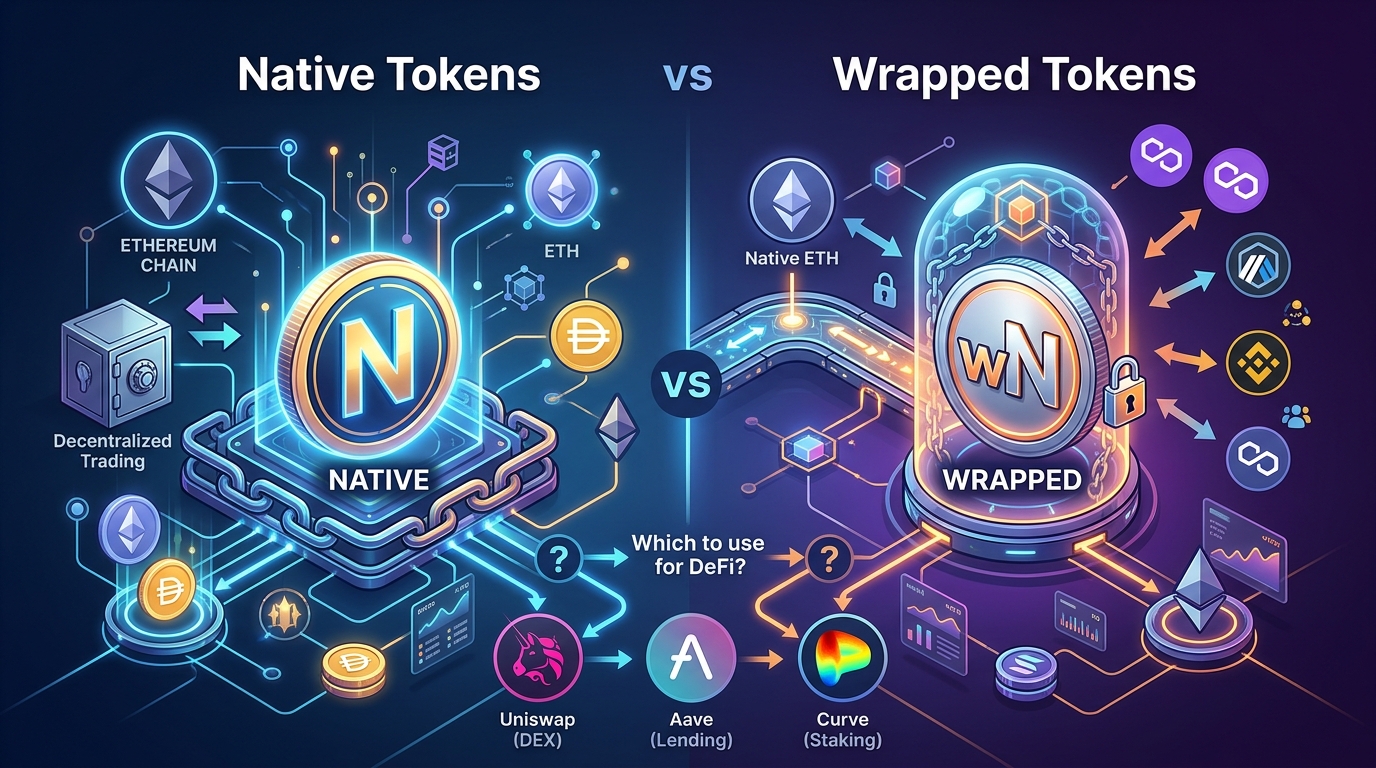
You’re about to swap some Bitcoin for a DeFi yield opportunity on Ethereum, but the protocol only accepts Wrapped Bitcoin. You pause. What exactly is the difference between the Bitcoin you hold and this wrapped version? More importantly, which one should you actually be using for your DeFi activities?
Native tokens are the original cryptocurrencies on their blockchain, while wrapped tokens are tokenized representations designed for cross-chain compatibility. Native tokens offer direct ownership and lower complexity, but wrapped tokens enable you to use assets across multiple blockchains. Your choice depends on your specific DeFi goals, risk tolerance, and which protocols you plan to use.
What makes a token native or wrapped
A native token lives on its home blockchain. Bitcoin exists on the Bitcoin blockchain. Ether exists on Ethereum. These tokens are built into the protocol itself and don’t require any special contracts to function.
Wrapped tokens are different. They’re representations of native tokens that exist on a different blockchain. Wrapped Bitcoin (WBTC) on Ethereum isn’t actual Bitcoin. It’s an ERC-20 token backed by real Bitcoin held in reserve by a custodian.
Think of it like exchanging dollars for euros before a trip to France. Your euros represent the same value as your dollars, but they work in a different system.
The wrapping process involves locking up the native token with a custodian or smart contract. In return, you receive an equivalent amount of the wrapped version. When you want your native tokens back, you burn the wrapped tokens and the original gets released.
When native tokens make more sense for your DeFi activities
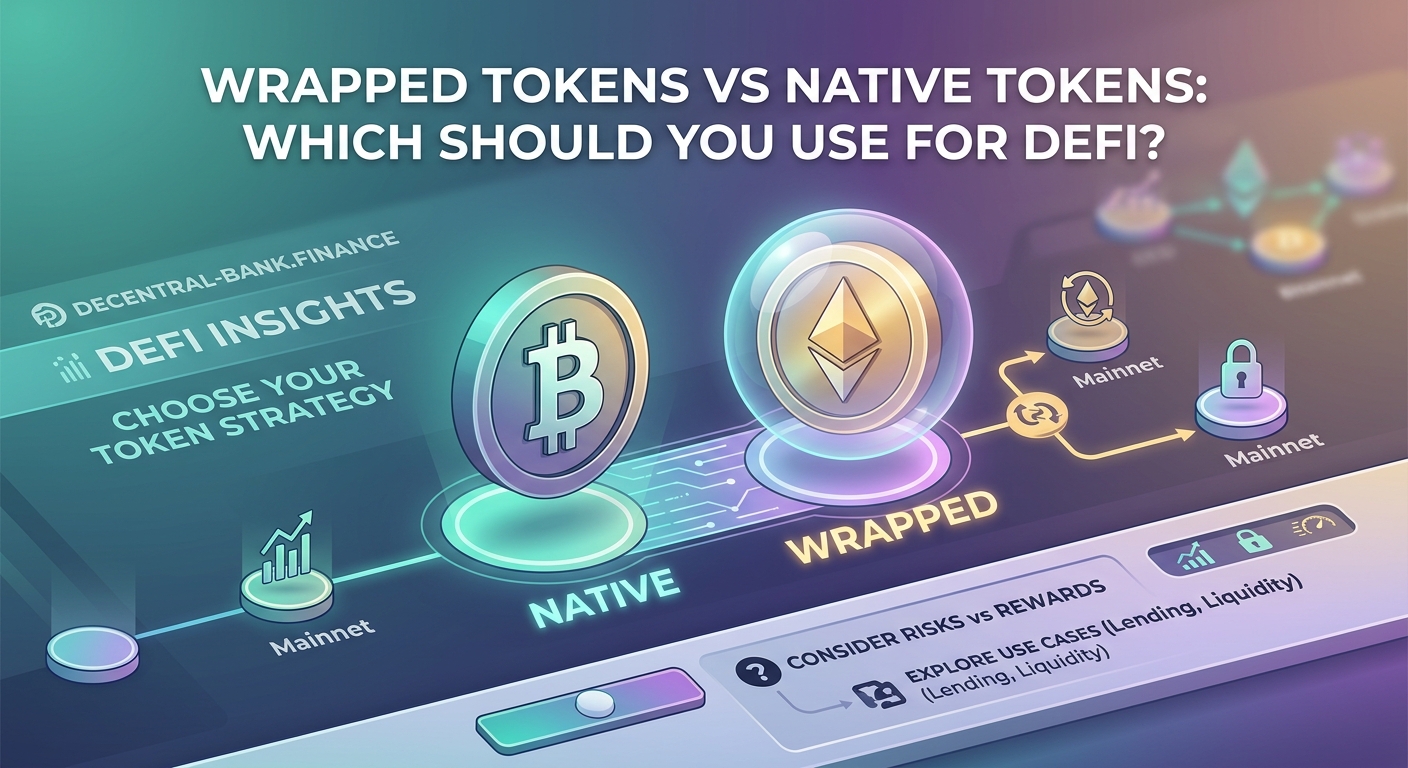
Native tokens shine when you’re working within their home ecosystem. If you’re staking ETH on Ethereum or using SOL on Solana, there’s no reason to complicate things with wrapped versions.
Security is cleaner with native tokens. You’re dealing with the original asset without additional smart contract layers or custodian risk. Every wrapper adds another potential point of failure.
Gas fees often favor native tokens on their home chains. Transferring ETH costs less than transferring wrapped versions because the blockchain is optimized for its native asset.
For getting started with DeFi, native tokens reduce complexity. You don’t need to understand custodians, minting mechanisms, or cross-chain bridges right away.
Here are situations where native tokens are your best choice:
- You’re only using protocols on one blockchain
- You want the simplest possible setup
- You’re holding long term without frequent protocol switching
- You’re concerned about minimizing third-party dependencies
- You’re working with smaller amounts where wrapping fees matter
Where wrapped tokens become necessary
Wrapped tokens solve a fundamental blockchain problem. Different chains can’t talk to each other natively. Bitcoin can’t move to Ethereum. Ether can’t move to Binance Smart Chain.
DeFi protocols often exist on chains different from where valuable assets originated. Most DeFi innovation happens on Ethereum, but Bitcoin holders want to participate without selling their BTC.
Wrapped tokens let you bring assets from one chain to another. You can use your Bitcoin in Ethereum DeFi protocols, earn yield on Polygon with Ethereum assets, or participate in Avalanche ecosystems with tokens from other chains.
Liquidity pools frequently require wrapped versions. A Uniswap pool pairing WBTC with USDC lets Bitcoin holders provide liquidity and earn fees, something impossible with native Bitcoin.
Understanding liquidity pools reveals why wrapped tokens matter so much for cross-chain DeFi participation.
The real risks you take with wrapped tokens
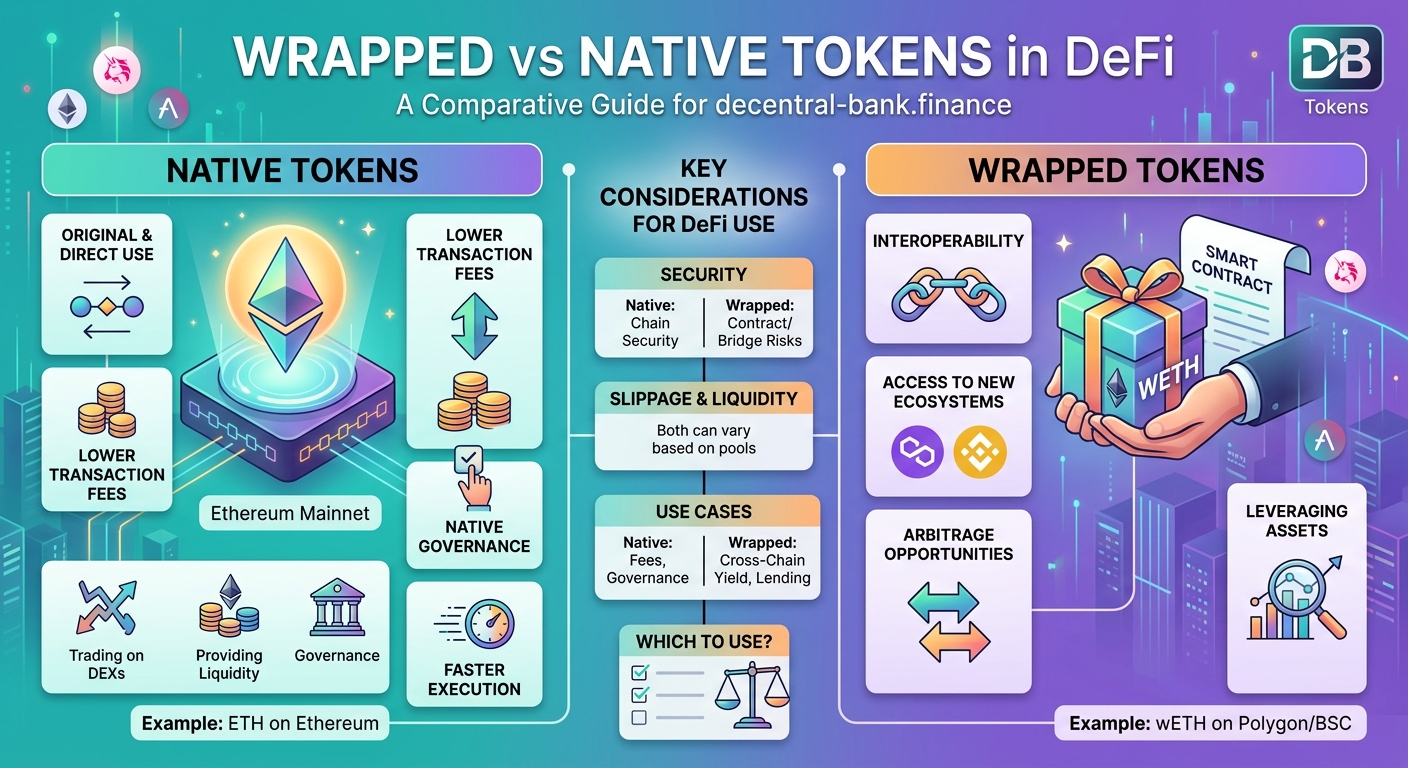
Every wrapped token introduces custodian risk. Someone or some smart contract holds your native tokens while you use the wrapped version. If that custodian gets hacked, goes bankrupt, or acts maliciously, your wrapped tokens could lose their backing.
WBTC relies on BitGo as a custodian. You’re trusting them to hold the actual Bitcoin and honor redemptions. That’s a very different security model than holding Bitcoin yourself in a secure wallet.
Smart contract risk multiplies with wrapped tokens. The wrapping mechanism itself runs on smart contracts that could contain bugs or vulnerabilities. Smart contract audits help, but they’re not perfect.
Depeg risk is real. Wrapped tokens should maintain a 1:1 ratio with their native counterparts, but market dynamics can break that peg temporarily or permanently. If confidence drops, wrapped tokens might trade below their backing value.
Redemption friction adds another layer. Converting wrapped tokens back to native versions isn’t always instant. You might face delays, fees, or minimum amounts that lock you in when you want out.
Always verify that wrapped tokens have transparent, verifiable reserves before using them in significant amounts. Check the custodian’s reputation, audit history, and whether reserves are publicly provable.
Comparing the two token types side by side
| Factor | Native Tokens | Wrapped Tokens |
|---|---|---|
| Security model | Direct blockchain ownership | Custodian or smart contract dependency |
| Blockchain compatibility | Single chain only | Cross-chain functionality |
| Complexity | Simple, straightforward | Additional wrapping/unwrapping steps |
| Gas efficiency | Optimized for home chain | Standard token operations |
| DeFi protocol access | Limited to home chain | Access to protocols on multiple chains |
| Custodian risk | None | Present with centralized wrappers |
| Smart contract risk | Minimal | Additional contract layers |
| Liquidity depth | Highest on native chain | Varies by wrapped version |
How to decide which token type fits your strategy
Start by mapping out which blockchains you actually need to use. If all your DeFi activities happen on Ethereum, native ETH works perfectly. If you want to use Bitcoin in Ethereum DeFi, you’ll need WBTC or another wrapped version.
Consider your risk tolerance carefully. Wrapped tokens add complexity and risk. Are the benefits worth those tradeoffs for your specific situation?
Calculate the costs involved. Wrapping and unwrapping tokens involves fees. Gas costs differ between native and wrapped versions. Sometimes the convenience isn’t worth the expense, especially for smaller amounts.
Think about your time horizon. Short-term trades might not justify wrapping costs. Longer-term DeFi participation across multiple chains makes wrapped tokens more economical.
Here’s a practical decision framework:
- Identify which DeFi protocols you want to use and which blockchains they operate on
- Check whether those protocols accept native versions of your tokens or require wrapped alternatives
- Research the specific wrapped token options available, focusing on custodian reputation and security track record
- Calculate total costs including wrapping fees, gas costs, and potential unwrapping fees
- Assess whether the DeFi opportunities justify the additional risks and costs of using wrapped tokens
Common mistakes that cost users money
Many people wrap tokens without checking if native alternatives exist on their target chain. Always verify that wrapping is actually necessary before adding that complexity.
Ignoring custodian research is dangerous. Not all wrapped tokens are created equal. Some have robust, transparent custodians. Others rely on questionable entities with poor track records.
Forgetting about unwrapping costs catches people off guard. You might earn great yields with wrapped tokens, only to lose a chunk when converting back to native versions.
Mixing up different wrapped versions causes confusion. Multiple wrapped Bitcoin versions exist (WBTC, renBTC, tBTC). They’re not interchangeable and have different security models.
Common DeFi mistakes often involve misunderstanding token types and their implications for security.
Leaving wrapped tokens on exchanges that don’t support unwrapping creates problems. You might get stuck unable to convert back to native tokens when you need to.
Practical examples of when to use each type
Let’s say you hold 1 BTC and want to earn yield. If you’re comfortable with Bitcoin-native DeFi protocols on the Lightning Network or using Bitcoin-specific platforms, keep your native BTC.
But if you want to provide liquidity on a major Ethereum DEX or participate in lending protocols on Ethereum, you’ll need to wrap your Bitcoin into WBTC.
Consider an Ethereum holder wanting to use Polygon for lower fees. You could bridge ETH to Polygon, where it becomes wrapped ETH (WETH) on that chain. For many Polygon DeFi protocols, this wrapped version works perfectly.
Someone staking Ethereum should absolutely use native ETH. The staking mechanisms are built for the native token. Staking strategies work best with native tokens on their home chains.
A trader moving between multiple chains frequently might keep some assets in wrapped form to avoid constant wrapping and unwrapping fees. The convenience can outweigh the added risk if you’re actively using those chains.
Security considerations you can’t ignore
Wrapped tokens require extra vigilance around smart contract approvals. You’re granting permissions to wrapping contracts, bridge contracts, and the DeFi protocols you use.
Monitor the health of wrapped token reserves. Some projects publish proof of reserves. Others don’t. The transparent ones deserve more trust.
Understand the unwrapping process before you need it. Know how long it takes, what fees apply, and whether there are minimum amounts. Don’t learn these details during a market crash when you urgently need to exit.
Consider diversifying across multiple wrapped versions if you’re using significant amounts. Don’t put all your cross-chain value in one wrapped token with one custodian.
Keep native tokens in cold storage for long-term holdings. Only wrap what you’re actively using in DeFi protocols.
The role of bridges in the wrapped token ecosystem
Bridges facilitate moving assets between blockchains, often creating wrapped versions in the process. Understanding how bridges work helps you evaluate wrapped token safety.
Some bridges use centralized custodians. Others rely on smart contracts and validator networks. The security model varies dramatically between bridge types.
Bridge hacks represent one of the biggest risks in DeFi. Billions have been lost to bridge exploits. When you use wrapped tokens created by bridges, you’re exposed to that bridge’s security.
Cross-chain bridge security continues improving, but risks remain significant.
Always research the specific bridge behind any wrapped token. Who operates it? Has it been audited? What’s its track record? These questions matter enormously for your security.
How gas fees differ between token types
Native tokens benefit from blockchain optimizations. Sending ETH on Ethereum costs less gas than sending ERC-20 tokens, even though ETH can be wrapped as WETH for protocol compatibility.
Wrapped tokens execute as standard smart contract tokens. Every transfer involves contract execution, which costs more than native transfers.
On Ethereum, this difference might mean 21,000 gas for ETH versus 50,000+ gas for wrapped tokens. Gas fee optimization becomes more important when using wrapped versions.
Some chains handle this differently. Polygon and other EVM-compatible chains treat wrapped versions of their native tokens similarly to the native asset in terms of gas costs.
Calculate gas costs for your expected transaction volume. High-frequency traders might save substantially by using native tokens when possible.
Understanding liquidity differences
Native tokens typically have the deepest liquidity on their home chains. ETH liquidity on Ethereum dwarfs wrapped ETH liquidity on other chains.
Wrapped tokens split liquidity across multiple versions and chains. WBTC, renBTC, and tBTC all represent Bitcoin, but they’re separate liquidity pools.
This fragmentation can work against you. Slippage increases when liquidity is spread thin across multiple wrapped versions.
Check liquidity depth before committing to a wrapped token. A wrapped version with shallow liquidity might cost you more in slippage than you save in other benefits.
Major wrapped tokens like WBTC have substantial liquidity on Ethereum. Smaller or newer wrapped versions might struggle with liquidity, making large trades expensive or impossible.
Tax implications you should know about
Wrapping tokens might create taxable events depending on your jurisdiction. Converting BTC to WBTC could be treated as a sale and purchase, triggering capital gains tax.
Unwrapping creates the same potential tax event. You’re converting one token to another, which tax authorities might view as a taxable transaction.
Track every wrapping and unwrapping transaction carefully. Your tax reporting gets more complex with wrapped tokens.
Native token transactions are usually simpler from a tax perspective. Holding and using native ETH on Ethereum involves fewer potentially taxable conversions than constantly wrapping and unwrapping.
Consult a crypto-savvy tax professional before making major decisions about wrapped tokens. Tax treatment varies by country and continues evolving.
Future developments changing the landscape
Layer 2 solutions are reducing the need for some wrapped tokens. You can use native ETH on Optimism or Arbitrum without wrapping, while still accessing Ethereum DeFi protocols.
Cross-chain communication protocols are improving. Future technologies might let you use native tokens across chains without traditional wrapping mechanisms.
Decentralized wrapping solutions are emerging. These reduce custodian risk by using trustless smart contracts and decentralized validator networks instead of centralized custodians.
Regulatory pressure might change wrapped token dynamics. Regulators are scrutinizing custodians and bridges, which could affect how wrapped tokens operate.
Stay informed about DeFi innovations that might reduce wrapped token necessity or improve their security models.
Building your token strategy
Your token choices should align with your overall DeFi strategy. Simple, single-chain strategies favor native tokens. Complex, multi-chain approaches require wrapped versions.
Start with native tokens while learning. Add wrapped tokens only when specific opportunities justify the additional complexity and risk.
Maintain a core position in native tokens for long-term holdings. Use wrapped versions tactically for specific DeFi opportunities.
Review your wrapped token exposure regularly. Markets change, protocols evolve, and better options emerge. What made sense six months ago might not be optimal today.
Document your wrapping and unwrapping transactions. You’ll thank yourself during tax season and when tracking your overall DeFi performance.
Making the choice that matches your needs
Neither native nor wrapped tokens are universally superior. Each serves different purposes in the DeFi ecosystem.
Native tokens offer simplicity, security, and efficiency on their home chains. They’re perfect when you’re staying within one blockchain ecosystem.
Wrapped tokens provide flexibility and access to cross-chain opportunities. They’re necessary when you want to use assets across multiple blockchains.
Your choice depends on your specific situation. Consider your DeFi goals, risk tolerance, technical comfort level, and which protocols you actually need to use.
The best approach for most people combines both. Keep long-term holdings in native tokens with strong security. Use wrapped versions strategically when cross-chain opportunities clearly justify the additional risks and costs.
Start small when experimenting with wrapped tokens. Test the wrapping and unwrapping process with amounts you’re comfortable risking. Build confidence before committing significant value to wrapped versions.
Pay attention to the fundamentals. Research custodians, verify reserves when possible, understand the specific risks of each wrapped token, and never assume all wrapped versions are equally safe.
Your DeFi journey will likely require both token types at different times. Understanding when to use each puts you in control of your strategy instead of blindly following what others do.