You’re about to deposit thousands of dollars into a DeFi protocol promising 20% annual returns. The website looks professional. The team seems credible. But have you checked if the smart contract powering that protocol has been audited?
Most people skip this step. They shouldn’t.
Smart contract audits are the closest thing DeFi has to safety inspections. They won’t guarantee your funds are safe, but they dramatically reduce the chance that a coding error will drain your wallet overnight.
Smart contract audits are professional security reviews that identify vulnerabilities in DeFi protocol code before hackers can exploit them. While audits significantly reduce risk, they don’t eliminate it completely. Before investing, always verify a protocol has been audited by reputable firms, read the audit report yourself, and check if identified issues were actually fixed by the development team.
What exactly is a smart contract audit?
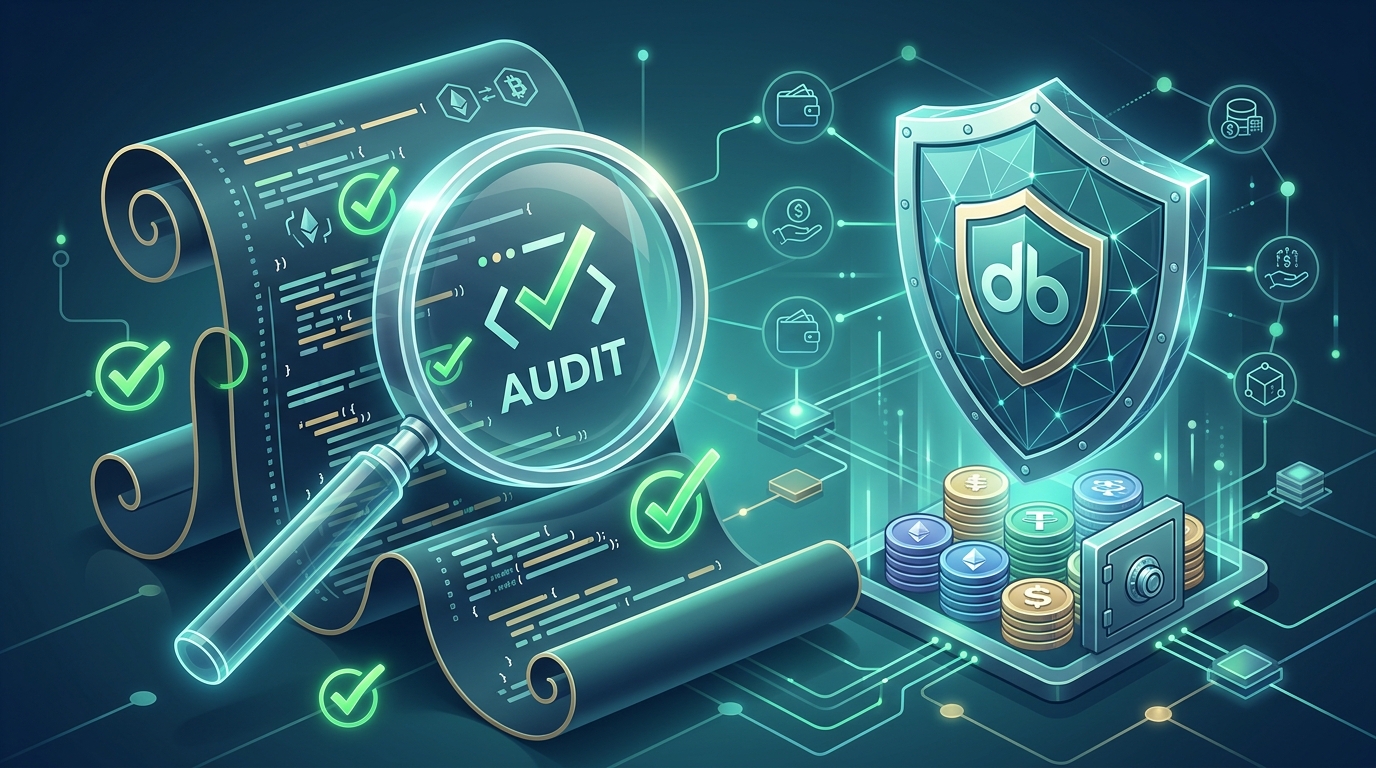
A smart contract audit is a line-by-line security review of the code that controls a DeFi protocol.
Think of it like a building inspection before you buy a house. Auditors check the foundation, the wiring, the plumbing. They look for structural problems that could cause catastrophic failure.
Smart contract auditors do the same thing, but for code instead of construction.
They analyze every function, every variable, every interaction point where users connect with the protocol. They’re looking for bugs that could let attackers steal funds, freeze withdrawals, or manipulate prices.
The audit process typically takes two to six weeks, depending on how complex the protocol is. Auditors use a combination of automated tools and manual code review to find vulnerabilities.
Here’s what makes smart contract audits different from traditional software security reviews: there’s no patch after launch. Once a smart contract is deployed to the blockchain, it’s usually permanent.
That’s why the audit happens before deployment, not after.
The three main types of audit checks
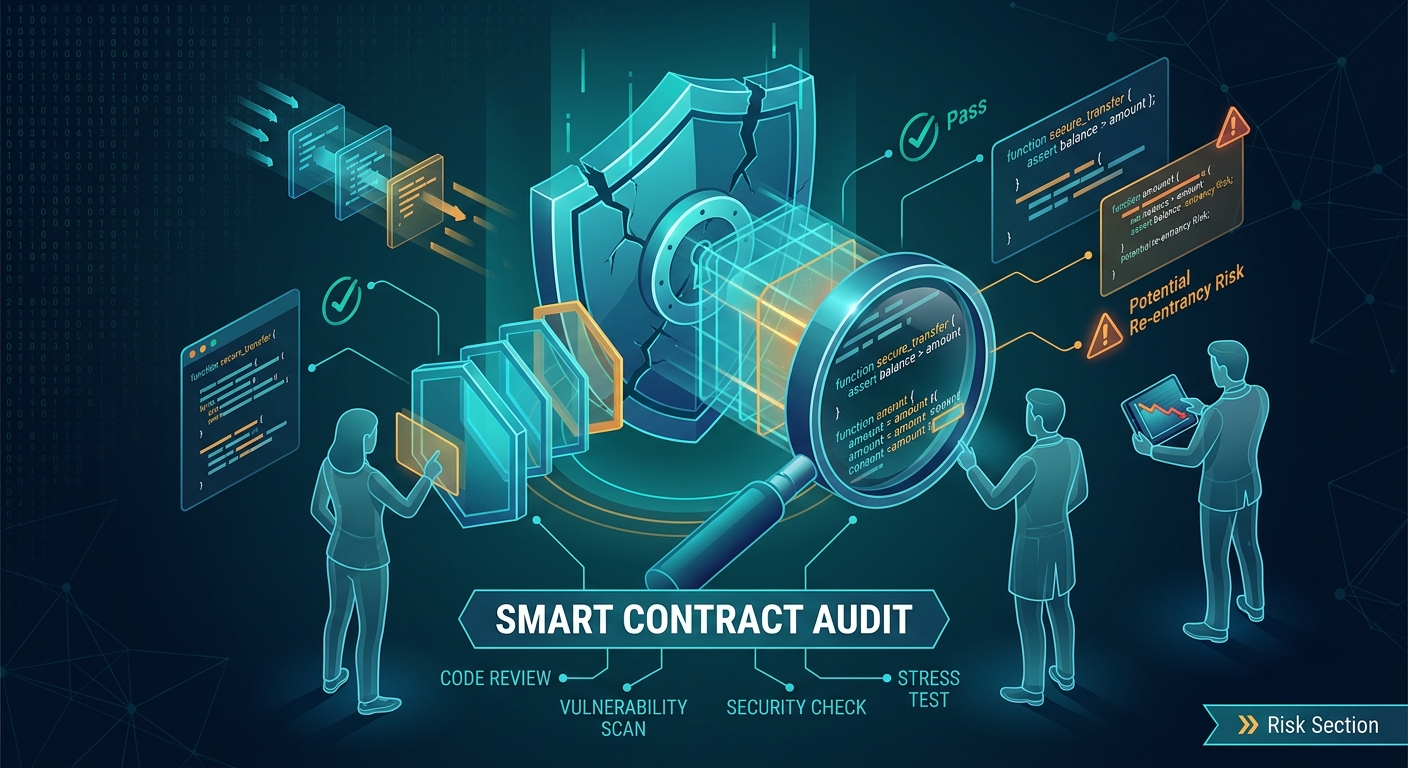
Security firms perform several distinct types of analysis during an audit. Each catches different categories of problems.
Automated static analysis
Automated tools scan the code without running it. They look for known vulnerability patterns like reentrancy attacks, integer overflows, and unprotected functions.
These tools are fast. They can review thousands of lines of code in minutes. But they only catch issues that match their programmed detection rules.
Manual code review
Human auditors read through the code logic step by step. They understand the intended behavior and look for ways the actual implementation might deviate from that intention.
This catches subtle logic errors that automated tools miss. Things like incorrect access controls, flawed economic assumptions, or edge cases that could be exploited.
Formal verification
Some audits include mathematical proofs that certain properties always hold true. For example, proving that the total supply of tokens can never exceed a specified maximum.
Formal verification is expensive and time-consuming. Most protocols only use it for their most critical functions.
How to read an audit report like a pro
Audit reports follow a standard structure. Learning to read them helps you assess risk before you invest.
Every report starts with a scope section. This tells you exactly which contracts and which versions were reviewed. Pay attention to this. If the protocol updated their code after the audit, the report might not cover the current version.
Next comes the findings section, usually organized by severity:
- Critical: Vulnerabilities that could result in immediate loss of all funds
- High: Serious issues that could lead to significant losses under certain conditions
- Medium: Problems that could cause unexpected behavior or limited losses
- Low: Minor issues that don’t pose immediate security risks
- Informational: Code quality suggestions and best practice recommendations
The most important part? The resolution status for each finding.
An audit that lists ten critical issues isn’t necessarily bad if all ten were fixed before deployment. An audit with zero critical issues but several unresolved medium findings might actually be riskier.
Always check the dates. Some protocols display audit badges from reports that are years old, even though they’ve made major code changes since then.
What audits catch and what they miss
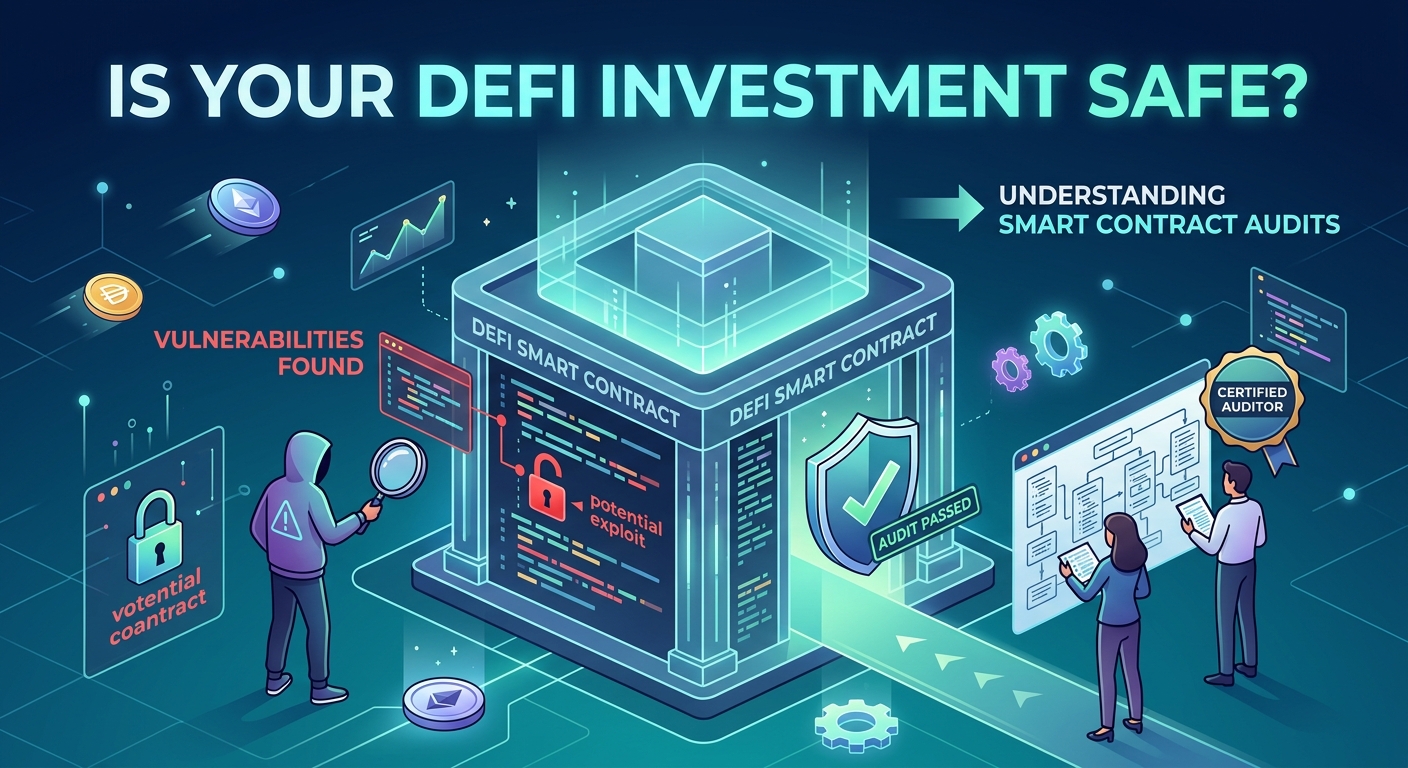
Smart contract audits are powerful, but they have clear limitations.
Audits excel at finding technical vulnerabilities in the code itself. They catch things like:
- Functions that don’t properly validate user inputs
- Missing access controls that let anyone call admin functions
- Math errors that could be exploited for profit
- Reentrancy vulnerabilities where attackers can repeatedly call functions
- Flash loan attack vectors
But audits don’t evaluate whether the protocol’s economic model makes sense. They don’t tell you if the promised returns are sustainable. They don’t assess whether the team is trustworthy.
An audit can confirm that the code does exactly what it’s designed to do. It can’t tell you if what it’s designed to do is a good idea.
Consider this real example: A lending protocol was audited and received a clean report. The code worked perfectly as designed. But the economic model incentivized users to borrow far more than the protocol could sustain. Within weeks of launch, it collapsed.
The code wasn’t hacked. The audit wasn’t wrong. The fundamental design was flawed.
Understanding what happens when you approve a smart contract helps you see why audits focus on technical security rather than business logic.
The audit process step by step
Here’s how a typical smart contract audit unfolds from start to finish:
-
Protocol team freezes the code: The development team commits to a specific version of their smart contracts and sends it to the auditing firm. No changes are allowed during the audit period.
-
Initial automated scan: Auditors run the code through automated analysis tools to identify obvious vulnerabilities and generate a preliminary report of potential issues.
-
Manual review begins: Senior auditors divide the codebase and begin detailed line-by-line analysis, documenting every potential vulnerability they find.
-
Team collaboration: Auditors meet with the development team to understand intended behaviors and discuss any unclear implementation decisions.
-
Draft report delivery: The auditing firm sends a preliminary report listing all identified issues, categorized by severity.
-
Remediation period: The development team fixes the identified vulnerabilities and submits updated code.
-
Re-audit of changes: Auditors verify that fixes were implemented correctly and didn’t introduce new vulnerabilities.
-
Final report publication: The completed audit report is published, showing all original findings and their resolution status.
The entire process typically costs between $5,000 and $200,000, depending on code complexity and the auditing firm’s reputation.
Comparing top audit firms and their approaches
Not all audit firms are created equal. Different firms have different specialties, methodologies, and track records.
Here’s how the major players compare:
| Audit Firm | Typical Timeline | Specialty | Public Reports |
|---|---|---|---|
| Trail of Bits | 4-6 weeks | Complex protocols, formal verification | Yes |
| ConsenSys Diligence | 3-5 weeks | Ethereum protocols, comprehensive testing | Yes |
| OpenZeppelin | 2-4 weeks | Token standards, upgradeability patterns | Yes |
| Certik | 2-3 weeks | Automated analysis, continuous monitoring | Yes |
| Quantstamp | 3-4 weeks | DeFi protocols, economic analysis | Yes |
| Hacken | 2-3 weeks | Fast turnaround, affordable pricing | Yes |
Some firms specialize in certain types of protocols. Trail of Bits is known for rigorous formal verification. OpenZeppelin has deep expertise in token standards and upgrade patterns. Certik offers ongoing monitoring after the initial audit.
Price varies significantly. Smaller firms might audit a simple protocol for under $10,000. Top-tier firms charge $50,000 or more for complex DeFi applications.
Multiple audits from different firms provide better coverage than a single audit. Each firm uses different tools and has different areas of expertise. What one misses, another might catch.
Red flags that should make you walk away
Some warning signs indicate a protocol isn’t taking security seriously, regardless of whether they claim to be audited.
No audit at all: If a protocol is handling significant value and hasn’t been audited, that’s an immediate red flag. The cost of an audit is trivial compared to the risk of a hack.
Audit from an unknown firm: Anyone can call themselves an auditor. If you can’t find other projects the firm has audited or verify their credentials, be skeptical.
Audit report isn’t public: Legitimate protocols publish their full audit reports. If a team claims to be audited but won’t share the report, they’re hiding something.
Critical issues marked as unresolved: If the audit found critical vulnerabilities and the team deployed anyway without fixing them, run.
Code changed after audit: Check the contract deployment date against the audit date. If the contract was deployed or upgraded after the audit, the audit might not cover the current code.
Team rushed the audit: Quality audits take time. If a complex protocol claims to have been fully audited in under two weeks, the review was probably superficial.
Anonymous team with no audit: Combining anonymity with no security review is a recipe for disaster. At minimum, one of these risk factors should be mitigated.
Learning to spot a rug pull before you lose your crypto complements audit verification as part of your due diligence process.
Free tools to verify audit claims yourself
You don’t need to be a developer to do basic verification of a protocol’s security claims.
Etherscan contract verification: On Ethereum, verified contracts show their source code on Etherscan. You can compare this code to the version that was audited. If they don’t match, the audit doesn’t apply to the deployed contract.
GitHub commit history: Most protocols host their code on GitHub. Check the commit history to see if changes were made after the audit date. Significant changes mean the audit is outdated.
Audit database searches: Websites like DeFi Safety and Rugdoc maintain databases of protocol audits. You can search for a protocol and see all known audit reports.
Token approval checkers: Tools like Revoke.cash and Etherscan’s token approval feature let you see exactly what permissions you’ve granted to smart contracts. Review these regularly.
Transaction simulators: Services like Tenderly let you simulate a transaction before executing it. This shows you exactly what will happen if you proceed.
For a comprehensive list of verification resources, check out these free tools to check if a DeFi protocol is safe.
Why audited protocols still get hacked
Even protocols with multiple audits from top firms sometimes suffer catastrophic hacks. Understanding why helps you maintain realistic expectations about what audits can and can’t protect against.
Zero-day vulnerabilities: These are attack vectors that weren’t known when the audit was conducted. Auditors can’t check for vulnerabilities that haven’t been discovered yet.
Composability risks: DeFi protocols interact with each other. An audit might verify that Protocol A is secure in isolation, but not test what happens when it’s combined with Protocol B and Protocol C in unexpected ways.
Economic exploits: Some attacks don’t exploit code vulnerabilities at all. They manipulate market conditions or exploit game theory weaknesses in the protocol’s incentive design.
Oracle manipulation: Many protocols rely on external price feeds. Attackers can sometimes manipulate these oracles to trick the protocol, even if the protocol’s own code is perfect.
Governance attacks: Protocols with governance tokens can be attacked through the governance system itself, even if the underlying smart contracts are secure.
Upgrade vulnerabilities: Upgradeable contracts introduce new attack surfaces. An audit of version 1.0 doesn’t guarantee version 1.1 is safe.
This is why smart contract audits still miss critical bugs despite the best efforts of professional security teams.
Building your personal security checklist
Before you deposit funds into any DeFi protocol, run through this verification process.
Start with the basics:
- Has the protocol been audited by at least one reputable firm?
- Is the full audit report publicly available?
- Were all critical and high-severity findings resolved?
- Was the audit conducted recently, or has the code changed significantly since then?
- Does the protocol have a bug bounty program?
Then go deeper:
- How long has the protocol been live without incidents?
- What’s the total value locked in the protocol?
- Has the protocol been forked from audited code, or built from scratch?
- Does the team have a history of security incidents?
- Is there a time lock on admin functions?
Finally, assess your personal risk tolerance:
- How much are you planning to deposit?
- Can you afford to lose this entire amount?
- Are you comfortable with the level of risk given the potential returns?
- Do you understand how the protocol generates yield?
Never invest more than you can afford to lose, regardless of how many audits a protocol has completed.
“An audit is a snapshot in time. It tells you the code was secure on the day it was reviewed. It doesn’t guarantee the code is still secure today, and it definitely doesn’t guarantee the protocol will be profitable tomorrow.” – Anonymous DeFi security researcher
What happens after you find a good audit
Finding a solid audit report is just the beginning of your due diligence process.
Read the entire report, not just the summary. Pay special attention to the informational findings. These often reveal insights about the development team’s security awareness and code quality.
Check if the protocol implemented all recommended fixes. Some teams fix critical issues but ignore medium and low-severity findings. This suggests they’re doing the minimum required rather than prioritizing security.
Look for evidence of ongoing security practices. Bug bounty programs, security monitoring, and regular re-audits indicate a team that takes security seriously beyond the initial launch.
Compare the audit findings to similar protocols. If every lending protocol audit flags certain risks but one protocol’s audit doesn’t mention them, either that protocol solved the problem or the audit wasn’t thorough.
Join the protocol’s community channels. Ask about security practices. See how the team responds to security questions. Defensive or evasive answers are red flags.
Understanding how DeFi actually works without banks or middlemen provides essential context for evaluating whether a protocol’s security measures match its complexity.
The future of smart contract security
The audit industry is evolving rapidly as DeFi grows and attacks become more sophisticated.
Continuous auditing is becoming more common. Instead of a one-time review before launch, some firms now offer ongoing monitoring that alerts teams to new vulnerabilities as they’re discovered.
Formal verification is getting cheaper and more accessible. Tools that once required PhD-level expertise are being simplified for broader use.
Automated security is improving. AI-powered analysis tools are getting better at catching subtle vulnerabilities that humans might miss.
Insurance protocols are emerging that let you buy coverage against smart contract failures. These protocols do their own security analysis and price coverage based on their risk assessment.
Decentralized audit DAOs are forming where community security experts collectively review code and stake their reputation on their findings.
But none of these innovations eliminate the need for your own due diligence. Technology improves, but so do attack methods.
The protocols winning in the long term are those that treat security as an ongoing practice, not a one-time checkbox before launch.
Making smarter investment decisions with audit knowledge
Armed with an understanding of smart contract audits, you can now approach DeFi investments with appropriate skepticism and better risk assessment.
Start small with new protocols, even if they’re audited. Give them time to prove themselves in production. Many vulnerabilities only emerge under real-world conditions.
Diversify across protocols with different audit firms and different security approaches. Don’t put all your funds in protocols audited by the same firm.
Stay informed about new attack vectors. Follow security researchers on Twitter. Read post-mortem reports when protocols get hacked. Each incident teaches the entire ecosystem something new.
Remember that audits are just one layer of security. Combine them with other safety practices like using a hardware wallet, never sharing your seed phrase, and regularly reviewing your token approvals.
The goal isn’t to achieve perfect security. That’s impossible in DeFi. The goal is to understand the risks well enough to make informed decisions about which ones are worth taking.
Your next steps in DeFi security
Smart contract audits are essential, but they’re not magic shields that make DeFi risk-free.
Treat them as one signal among many. A good audit from a reputable firm significantly reduces technical risk. It doesn’t eliminate economic risk, team risk, or market risk.
Before your next DeFi investment, take 30 minutes to find and read the audit report. Check that critical issues were fixed. Verify the audited code matches the deployed contract. Look for signs the team takes security seriously beyond just getting audited.
Your money deserves that level of diligence. The protocols that survive long-term are the ones that earn it through transparency, ongoing security investment, and a track record of protecting user funds.
Start building better security habits today. Your future self will thank you when the next major hack hits a protocol you wisely avoided.