Transaction fees on Ethereum mainnet hit $200 during peak congestion in 2021. A simple token swap could cost more than a week’s groceries. That single barrier kept millions of people out of DeFi, no matter how promising the yields looked. Layer 2 solutions changed everything by processing transactions off the main blockchain while keeping the same security guarantees. Now you can swap tokens, provide liquidity, or stake assets for a few cents instead of hundreds of dollars.
Layer 2 solutions reduce DeFi transaction costs by 90-99% by processing transactions off-chain and settling batches on Ethereum mainnet. Optimistic rollups like Arbitrum and Optimism, zk-rollups like zkSync and StarkNet, and sidechains like Polygon enable affordable swaps, lending, and yield farming while maintaining security through cryptographic proofs or fraud detection mechanisms.
Why Ethereum Gas Fees Became a DeFi Dealbreaker
Ethereum processes about 15 transactions per second. When thousands of users try to interact with popular protocols simultaneously, they compete for limited block space by bidding up gas fees. The network prioritizes whoever pays most.
During the 2021 bull run, minting an NFT cost $50-300. Claiming staking rewards? Another $40. Moving tokens between wallets? $25 minimum. Small investors couldn’t justify these costs when their entire position might be worth $500.
DeFi promised financial inclusion. High fees delivered the opposite. Only wealthy users could afford to participate regularly.
Layer 2 solutions solve this by handling transactions separately from Ethereum’s base layer. They bundle hundreds or thousands of transactions together, then submit a single proof to mainnet. The cost gets split among all users in that batch.
How Layer 2 Solutions Actually Work
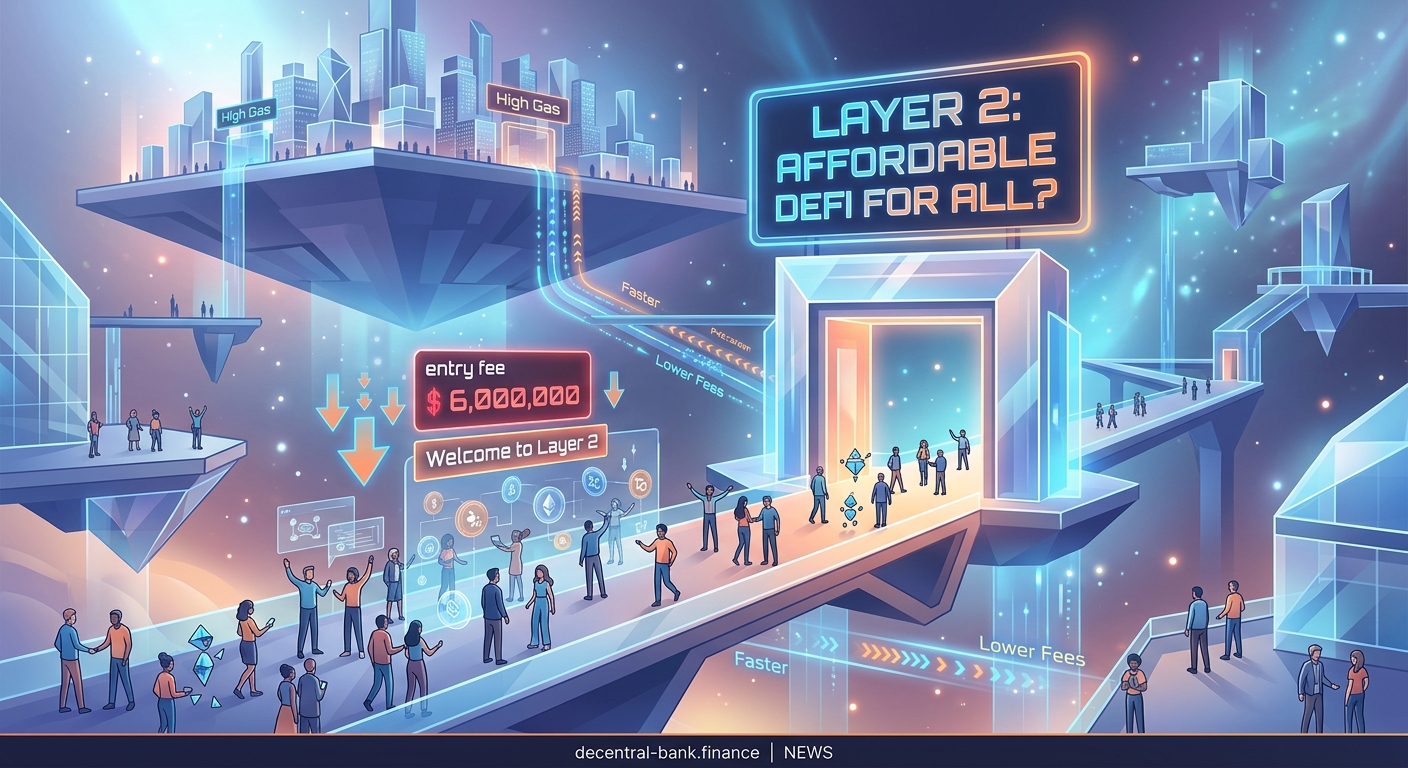
Think of Ethereum mainnet as a courthouse that keeps official records. Every transaction needs a judge’s stamp, which takes time and costs money.
Layer 2 solutions are like notary offices. They handle routine paperwork quickly and cheaply, then send verified summaries to the courthouse periodically. The courthouse trusts the notary’s verification process, so it doesn’t need to review every single document.
Different Layer 2 approaches use different verification methods. Each one balances speed, cost, and security differently.
Optimistic Rollups
Optimistic rollups assume all transactions are valid unless someone proves otherwise. They batch transactions off-chain, then post the data to Ethereum mainnet with a fraud-proof mechanism.
If someone submits invalid transactions, anyone can challenge them during a dispute period (usually 7 days). The challenger submits proof, the network verifies it, and the fraudulent batch gets rejected.
Arbitrum and Optimism are the two largest optimistic rollups. They reduce fees by 90-95% compared to mainnet while maintaining full EVM compatibility. Developers can deploy existing Ethereum smart contracts with minimal changes.
The tradeoff? Withdrawals take a week because the network needs time to verify no one is challenging the batch. You can use third-party bridges for faster withdrawals, but they charge fees.
Zero-Knowledge Rollups
ZK-rollups generate cryptographic proofs that transactions are valid without revealing transaction details. They submit these proofs to mainnet along with compressed transaction data.
The network verifies the proof mathematically. No dispute period needed. Withdrawals happen in minutes instead of days.
zkSync Era and StarkNet lead this category. They offer even lower fees than optimistic rollups, sometimes 99% cheaper than mainnet. The math behind zk-proofs guarantees correctness.
The challenge? Building zk-proof systems requires specialized cryptography. Not all Ethereum tools work seamlessly yet. Developers need to learn new languages like Cairo for StarkNet.
Sidechains
Sidechains run as independent blockchains with their own consensus mechanisms. They connect to Ethereum through bridges that lock tokens on one chain and mint equivalent tokens on the other.
Polygon is the most popular sidechain for DeFi. Transactions cost fractions of a cent. Block times are faster. The network handles thousands of transactions per second.
The security model differs from rollups. Sidechains don’t inherit Ethereum’s security. They rely on their own validator sets. If validators collude or the bridge gets compromised, funds are at risk.
Many users accept this tradeoff for everyday transactions while keeping larger holdings on mainnet or rollups.
State Channels
State channels let two parties transact off-chain indefinitely, then settle the final balance on-chain. Think of opening a bar tab instead of paying for each drink separately.
Lightning Network pioneered this for Bitcoin. Ethereum has Raiden Network and Connext.
State channels work best for repeated interactions between known parties. They’re not ideal for general DeFi protocols where you interact with different users constantly.
Real Cost Comparisons Across Networks
Here’s what common DeFi actions actually cost on different networks:
| Action | Ethereum Mainnet | Arbitrum | Optimism | zkSync Era | Polygon |
|---|---|---|---|---|---|
| Token swap | $15-50 | $0.50-2 | $0.50-2 | $0.10-0.50 | $0.01-0.10 |
| Add liquidity | $30-100 | $1-3 | $1-3 | $0.20-1 | $0.02-0.20 |
| Stake tokens | $20-60 | $0.75-2.50 | $0.75-2.50 | $0.15-0.75 | $0.02-0.15 |
| Claim rewards | $10-40 | $0.40-1.50 | $0.40-1.50 | $0.08-0.40 | $0.01-0.08 |
| Bridge withdrawal | N/A | $5-15 | $5-15 | $2-8 | $3-10 |
These numbers fluctuate with network congestion and ETH price. The proportional savings remain consistent.
For someone making 20 DeFi transactions monthly, mainnet costs $400-800. The same activity on Arbitrum costs $15-40. On Polygon? Under $5.
That difference determines whether DeFi is accessible or exclusive.
Which Protocols Already Moved to Layer 2
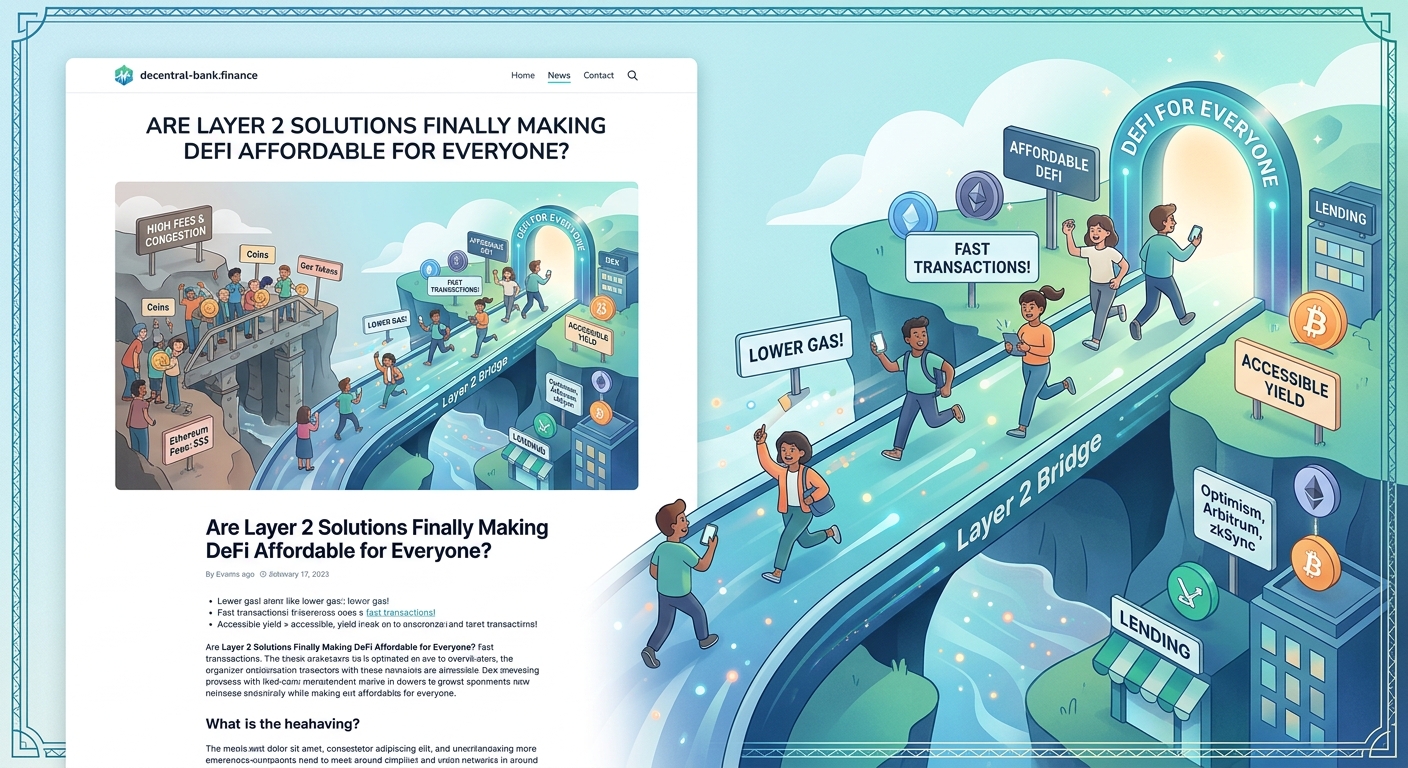
Major DeFi protocols deployed on multiple Layer 2 networks to capture cost-conscious users:
- Uniswap runs on Arbitrum, Optimism, and Polygon with identical interfaces to mainnet
- Aave offers lending markets on Arbitrum, Optimism, and Polygon
- Curve deployed pools across all major Layer 2s for stablecoin swaps
- GMX built natively on Arbitrum as a decentralized perpetuals exchange
- Stargate enables cross-chain swaps between Layer 2 networks
TVL (total value locked) on Layer 2 networks grew from $1 billion in early 2021 to over $15 billion by late 2023. Arbitrum alone holds $6 billion across hundreds of protocols.
Users can access the same yield farming strategies, liquidity pools, and lending markets they used on mainnet. The only difference is paying reasonable fees.
How to Start Using Layer 2 DeFi Safely
Getting started with Layer 2 requires bridging assets from Ethereum mainnet or buying directly on the Layer 2 network:
- Choose your Layer 2 network based on which protocols you want to use and your security preferences
- Set up your wallet by adding the network to MetaMask or using a wallet that supports multiple chains
- Bridge assets using official bridges or buy tokens directly on centralized exchanges that support Layer 2 withdrawals
- Start with small amounts to test transactions and understand how the network operates before moving significant funds
- Monitor bridge security by checking if the bridge has been audited and tracking any security incidents
Understanding how DeFi actually works helps you evaluate Layer 2 protocols more effectively.
Bridging Best Practices
Bridges connect different networks but introduce security risks. Follow these guidelines:
- Use official bridges provided by the Layer 2 team, not third-party alternatives
- Verify bridge contract addresses on the official documentation before connecting
- Understand withdrawal times, especially the 7-day delay for optimistic rollups
- Keep track of bridge fees, which can be $5-20 depending on mainnet congestion
- Consider buying directly on Layer 2 through exchanges to avoid bridging entirely
Coinbase, Binance, and Kraken now support direct withdrawals to Arbitrum and Optimism. You skip the bridge and save fees.
Wallet Setup for Multiple Networks
Setting up your first DeFi wallet requires extra attention when working across multiple chains.
Each Layer 2 network needs its own RPC endpoint in your wallet. MetaMask makes this simple with preset networks for major Layer 2s.
Store your seed phrase securely. Losing it means losing access across all networks. Recovery options are limited if you don’t have backups.
Consider using different wallets for different purposes. Keep large holdings in a hardware wallet and use a hot wallet for active Layer 2 trading.
Common Layer 2 Mistakes That Cost Users Money
Bridging without checking fees first. Bridge costs vary based on mainnet congestion. Bridging $100 during high gas periods might cost $30. Wait for lower congestion or buy directly on Layer 2.
Forgetting about withdrawal delays. Optimistic rollups require 7 days for withdrawals to mainnet. Plan ahead if you need funds quickly. Third-party bridges offer faster withdrawals but charge premium fees.
Approving unlimited token amounts. Smart contract approvals on Layer 2 work the same as mainnet. Malicious contracts can drain approved tokens. Set specific approval amounts instead of unlimited.
Ignoring network differences. Each Layer 2 has different block times, finality guarantees, and security models. Understanding these differences prevents costly assumptions.
Using unaudited bridges. Stick to official bridges or well-established alternatives. Bridge hacks resulted in over $2 billion in losses across crypto. Recent security upgrades improved safety, but risks remain.
Sending tokens to wrong network addresses. Sending Arbitrum tokens to an Optimism address can result in permanent loss. Always verify the network before confirming transactions.
Security Considerations for Layer 2 Users
Layer 2 networks inherit most of Ethereum’s security, but each approach has unique risks:
“Optimistic rollups are only as secure as their fraud-proof systems. If no one monitors for fraud during the challenge period, invalid transactions could finalize. ZK-rollups eliminate this concern through mathematical proofs, but they’re newer and less battle-tested. Choose based on your risk tolerance and transaction size.”
Checking if a DeFi protocol is safe applies equally to Layer 2 deployments.
Rollup-Specific Risks
Sequencer centralization. Most rollups use centralized sequencers to order transactions. If the sequencer goes down or censors transactions, the network stalls. Teams are working toward decentralized sequencers, but most aren’t there yet.
Upgrade keys. Many Layer 2 networks have admin keys that can upgrade smart contracts. This allows teams to fix bugs quickly but also introduces centralization risk. Check if upgrades have timelocks or require governance approval.
Data availability. Rollups must post transaction data to mainnet for anyone to reconstruct the state. If data becomes unavailable, users can’t prove their balances. This is a bigger concern for validiums that store data off-chain.
Sidechain-Specific Risks
Independent security. Sidechains don’t inherit Ethereum’s security. They rely on their own validator sets. Smaller validator sets are easier to attack or collude.
Bridge vulnerabilities. Sidechains require bridges to move assets. Bridge hacks are among the costliest in crypto. What happens when protocols get hacked shows the aftermath of security failures.
Centralization concerns. Some sidechains have relatively few validators controlled by a small number of entities. This trades decentralization for speed and low costs.
Layer 2 Impact on DeFi Accessibility
Transaction costs determined who could participate in DeFi. At $50 per transaction, you needed thousands of dollars to make yield farming worthwhile. The fees ate all profits from small positions.
Layer 2 solutions removed this barrier. Now someone with $100 can:
- Swap tokens multiple times to find best prices
- Provide liquidity to earn trading fees
- Stake assets in yield farms
- Borrow against collateral for leverage
- Participate in governance votes
The same strategies previously reserved for wealthy users work for everyone.
Traditional finance versus DeFi shows why this matters. Banks require minimum balances and charge fees that hurt small accounts most. DeFi on Layer 2 offers equal access regardless of account size.
Real User Impact Stories
A student in the Philippines uses Polygon to earn 8% APY on stablecoins. Transaction costs are $0.02. She compounds rewards weekly. On mainnet, gas fees would exceed her monthly earnings.
A freelancer in Brazil gets paid in USDC on Arbitrum. He swaps to local currency through a DEX for $0.50 per transaction. Traditional remittance services charge 5-10% plus fixed fees.
A retail investor in the US yield farms on Optimism with $500. She moves between protocols to chase best rates. Each transaction costs under $1. She couldn’t afford this strategy on mainnet.
These use cases were impossible at mainnet prices. Layer 2 made them routine.
Comparing Layer 2 Options for Different Use Cases
Choose your Layer 2 based on what you’re doing:
For general DeFi activities: Arbitrum and Optimism offer the best combination of low fees, security, and protocol availability. Most major protocols deployed here first.
For lowest possible fees: Polygon provides the cheapest transactions, though with different security tradeoffs. Good for high-frequency trading or small-value transactions.
For fastest withdrawals: zkSync Era and other zk-rollups finalize withdrawals in hours instead of days. Worth the slightly higher fees if you need flexibility.
For stablecoin swaps: Curve deployed on all major Layer 2s with deep liquidity. Stablecoins maintain their peg better with sufficient liquidity.
For derivatives trading: GMX on Arbitrum and dYdX on StarkNet offer decentralized perpetuals with low fees and high leverage.
For NFTs: Immutable X specializes in gaming and NFT applications with zero gas fees for trades.
Different DeFi protocols work better on different networks based on where liquidity concentrated.
Future Layer 2 Developments to Watch
Decentralized sequencers. Current centralized sequencers create censorship risks. Multiple teams are building decentralized alternatives that maintain speed while improving censorship resistance.
Native account abstraction. zkSync and StarkNet support account abstraction natively, enabling features like social recovery, session keys, and gas payment in any token.
Improved interoperability. New protocols enable direct transfers between Layer 2 networks without going through mainnet. This reduces costs and friction for multi-chain users.
Ethereum’s Proto-Danksharding. EIP-4844 will reduce Layer 2 costs another 10-100x by providing cheaper data availability on mainnet. Expected in 2024.
ZK-EVM maturity. Fully EVM-compatible zk-rollups will combine the best of both worlds: lowest fees with instant finality and perfect Ethereum compatibility.
Layer 3 applications. Some projects are building Layer 3s on top of Layer 2s for application-specific scaling. Gaming and social applications might use this approach.
Breakthrough DeFi innovations often emerge from Layer 2 experimentation first.
Gas Fee Optimization Strategies
Even on Layer 2, you can optimize further:
- Batch transactions when possible instead of executing separately
- Time transactions during low-activity periods for cheaper fees
- Use limit orders instead of market orders to avoid paying for immediate execution
- Aggregate small rewards before claiming to reduce transaction count
- Choose protocols with gas-optimized contracts that use less computation
Why DeFi transactions cost gas fees and how to minimize them applies across all networks.
Some protocols on Layer 2 subsidize gas fees for users. They pay transaction costs to improve user experience. Look for these opportunities when choosing where to deploy capital.
Making Layer 2 Work for Your DeFi Strategy
Layer 2 solutions transformed DeFi from an expensive experiment into a practical alternative to traditional finance. The technology works. The infrastructure exists. Major protocols deployed.
The remaining barrier is education. Users need to understand how different Layer 2 options work, which protocols deployed where, and how to bridge safely.
Start small. Bridge $50 to Arbitrum or Optimism. Make a swap. Provide liquidity. Stake some tokens. Experience how DeFi should work when fees don’t eat your profits.
Compare the same strategies on mainnet versus Layer 2. Calculate how much you save monthly. Factor that into your DeFi returns.
Layer 2 solutions didn’t just make DeFi cheaper. They made it accessible. Anyone can now participate in yield farming, liquidity provision, and decentralized trading regardless of portfolio size. That’s the financial inclusion DeFi promised from the beginning.