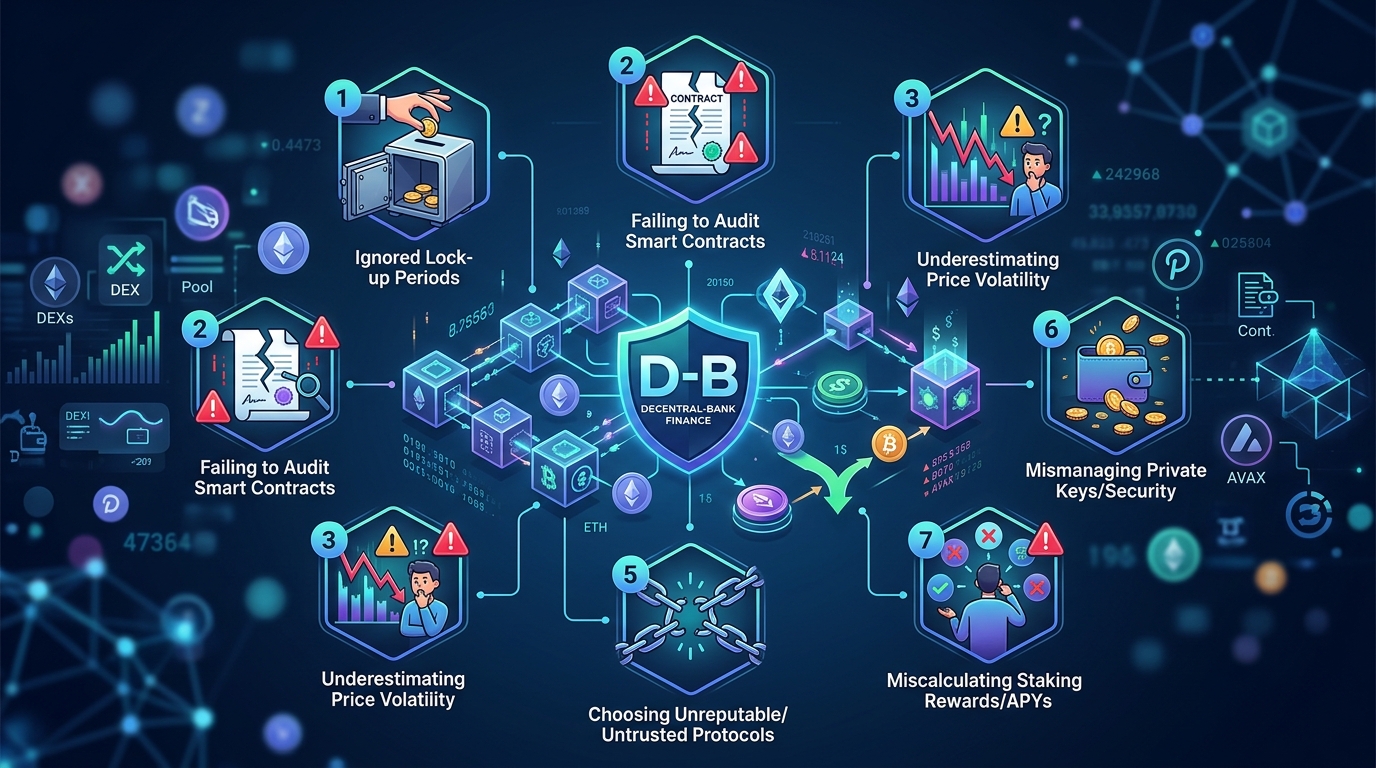
Staking looks simple on the surface. Lock up your tokens, earn rewards, watch your balance grow. But thousands of investors lose money every month because they skip crucial steps or misunderstand how staking actually works. A single oversight can mean lost rewards, slashed funds, or tokens stuck for months longer than expected.
Crypto staking mistakes cost investors millions annually through validator penalties, misunderstood lock-up periods, and poor reward calculations. This guide breaks down seven critical errors beginners and intermediate stakers make, from choosing unreliable validators to ignoring slashing risks. You’ll learn practical steps to protect your stake, compare different staking approaches, and understand when liquid staking makes sense versus traditional methods.
Choosing validators based only on the highest APY
High advertised rates grab attention. But validators offering 20% when competitors offer 12% often hide serious problems.
Some validators run on unstable infrastructure. Their nodes go offline regularly. When that happens, you miss rewards. Worse, some networks penalize offline validators by slashing a portion of staked funds.
Others charge hidden fees that eat into your actual returns. A validator might advertise 18% APY but take a 15% commission. Your real return drops to around 15.3%.
Check these factors before delegating:
- Uptime history over the past 90 days
- Commission rate and fee structure
- Total amount already staked with them
- How long they’ve been operating
- Whether they run redundant nodes
A validator with 99.5% uptime and 8% commission will usually outperform one with 95% uptime and 5% commission. The math favors reliability over a slightly lower fee.
If you’re just getting started with staking, how to start staking crypto: a complete beginner’s walkthrough walks through validator selection in more detail.
Ignoring lock-up periods and unbonding times

You stake 10 ETH. Two weeks later, you need that money. You try to unstake and discover you can’t access your funds for another 7 days. Or 14 days. Or 21 days, depending on the network.
Different blockchains enforce different unbonding periods. These cooldown windows exist for network security, but they trap unprepared stakers.
| Network | Typical Unbonding Period | Can You Earn During Unbonding? |
|---|---|---|
| Ethereum | 1-5 days | No |
| Cosmos | 21 days | No |
| Polkadot | 28 days | No |
| Cardano | 2-3 epochs (10-15 days) | Partial |
| Solana | Immediate (end of epoch) | Until epoch ends |
Some networks let you earn partial rewards during unbonding. Most don’t. You’re stuck in limbo, earning nothing, unable to sell if the market drops.
Plan for this before you stake. If you might need funds within 30 days, traditional staking creates risk. Is liquid staking worth the risk? comparing traditional vs liquid staking explains alternatives that let you maintain liquidity.
Staking your entire portfolio in one place
Concentration risk applies to staking just like any investment. Putting all your tokens with one validator or on one platform multiplies your exposure to problems.
What happens if your chosen validator gets hacked? Or their infrastructure fails during a critical network upgrade? Or they decide to raise their commission to 20% overnight?
You lose rewards across your entire stake. If slashing occurs, you lose principal too.
Better approach:
- Split your stake across 3-5 validators with different operators
- Choose validators in different geographic regions
- Mix large established validators with smaller reliable ones
- Keep some funds in liquid staking if you need flexibility
This spreads risk. One validator going offline or getting slashed only affects a portion of your stake. The rest keeps earning normally.
The same principle applies to protocols. Staking everything on one platform means one smart contract vulnerability could compromise your entire position. What happens when a DeFi protocol gets hacked? covers the real risks of protocol concentration.
Misunderstanding slashing penalties and validator behavior
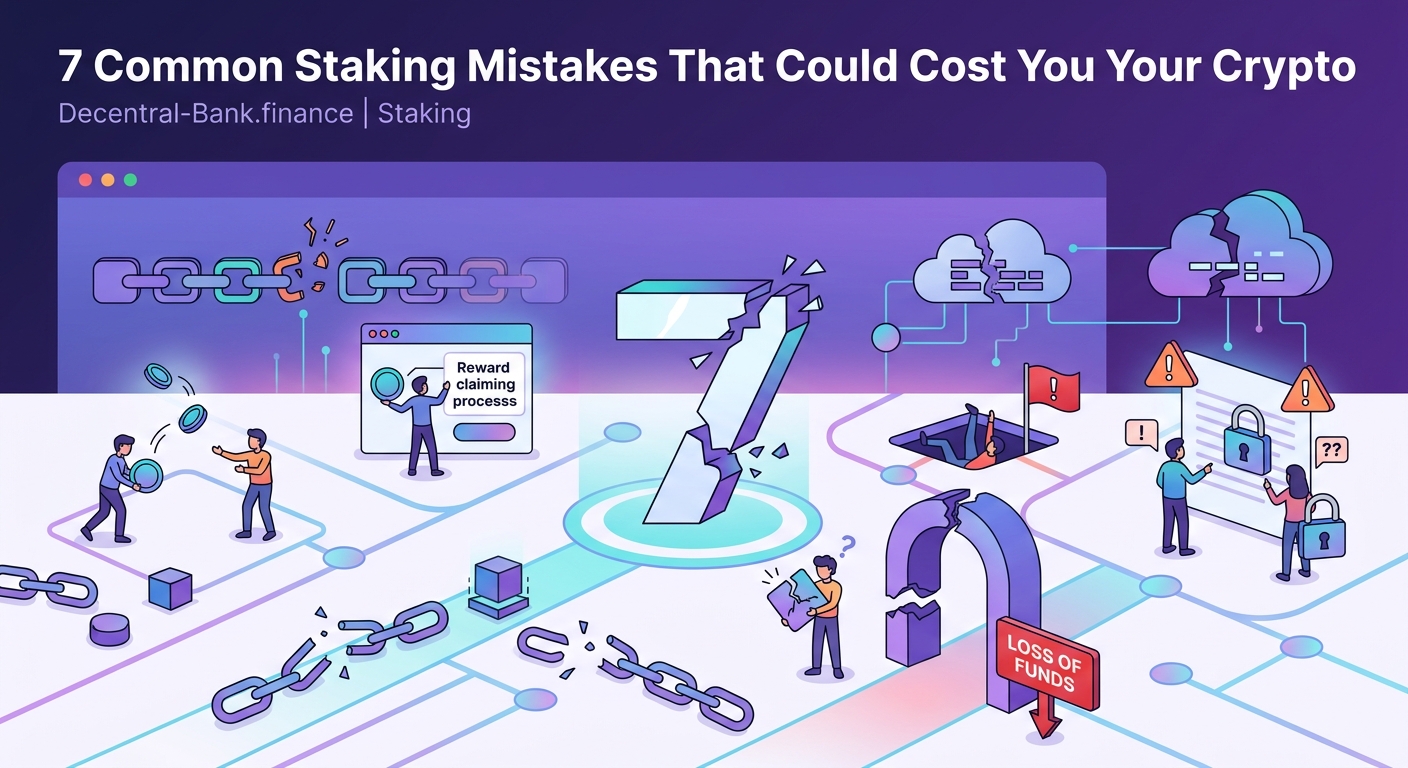
Slashing sounds abstract until it happens to you. Networks penalize validators who behave maliciously or fail to maintain their nodes properly. When a validator gets slashed, everyone who delegated to them loses a percentage of their stake.
Common reasons validators get slashed:
- Running duplicate validator nodes (double-signing)
- Extended downtime exceeding network thresholds
- Missing too many block proposals
- Participating in attacks or coordination failures
The penalty varies by network. Ethereum might slash 1 ETH for minor infractions. Polkadot can slash up to 100% for serious violations. Cosmos typically slashes 5% for downtime and up to 5% for double-signing.
You can’t control validator behavior after you delegate. But you can research before staking.
Red flags that indicate higher slashing risk:
- Validator runs a single node with no backup
- They operate validators on multiple networks with limited staff
- Recent slashing events in their history
- Vague or missing documentation about their infrastructure
Choose validators who publish detailed information about their setup, maintain active communication channels, and have a track record of zero slashing events over multiple years.
Understanding slashing penalties: how validators can lose your staked crypto provides a deeper technical breakdown of how different networks implement slashing.
Calculating rewards incorrectly and missing the real APY
That 12% APY looks great. But is it really 12%?
Many stakers confuse advertised rates with actual returns. They don’t account for:
- Compounding frequency
- Commission fees
- Network inflation
- Token price volatility
A validator advertising 12% APY with monthly compounding and 10% commission actually delivers closer to 10.8% annually. If the token loses 15% of its value during that year, your dollar-denominated return is negative despite earning more tokens.
Real APY calculation requires three steps:
- Start with the base staking rate
- Subtract validator commission
- Account for compounding (if you restake rewards)
Some protocols automatically compound. Others require manual claiming and restaking. If you claim monthly and restake, you earn slightly more than someone who claims annually.
The difference compounds over time. On a 10,000 token stake at 10% APY:
- Annual claiming: 11,000 tokens after one year
- Monthly claiming and restaking: 11,047 tokens after one year
- Daily compounding: 11,052 tokens after one year
Seems small. But over five years, daily compounding produces 6,487 more tokens than annual claiming.
Also watch for networks with high inflation rates. If a network inflates supply by 8% annually and you earn 10% staking rewards, your real gain is only 2% relative to total supply. You’re earning tokens, but your percentage of the network barely grows.
Forgetting about tax implications and reporting requirements
Staking rewards are taxable in most jurisdictions. The moment you receive them, they count as income. When you eventually sell, you owe capital gains tax on any appreciation.
This creates two taxable events:
- Receiving rewards (taxed as income at fair market value)
- Selling rewards (taxed as capital gains based on price change since receipt)
Many stakers ignore the first event. They only think about taxes when they sell. Then they discover they owe income tax on rewards received months or years earlier, plus capital gains on the sale.
If you earned 100 tokens worth $50 each as rewards, you owe income tax on $5,000. If those tokens are now worth $80 each and you sell, you owe capital gains tax on the $3,000 increase.
Track every reward distribution. Record the date, amount, and token price at receipt. This documentation becomes critical during tax season.
Some platforms provide tax reports. Most don’t. You’re responsible for accurate records regardless of whether the protocol helps.
Automated tools can track staking rewards across multiple wallets and protocols. They generate reports compatible with tax software. Without proper tracking, you risk underreporting income or overpaying because you can’t prove your cost basis.
Approving smart contracts without understanding the risks
Staking through DeFi protocols requires smart contract interactions. You approve the contract to access your tokens. This approval gives the contract permission to move your funds.
Sounds reasonable for legitimate staking. But malicious contracts use the same mechanism to drain wallets.
The approval step happens in seconds. Most people click through without reading what they’re authorizing. They assume the protocol is safe because it has a professional website or someone recommended it.
Then their wallet empties overnight.
Before approving any staking contract:
- Verify the contract address matches the official protocol
- Check if the contract has been audited by reputable firms
- Look for the audit report and read the findings
- Search for past exploits or vulnerabilities
- Start with a small test amount
Even audited contracts contain risks. Audits reduce risk but don’t eliminate it. What happens when you approve a smart contract? explains exactly what permissions you’re granting and how to revoke them later.
After staking, periodically review your active approvals. Revoke permissions for protocols you no longer use. Old approvals sitting dormant for months create unnecessary risk if that protocol gets compromised later.
Some wallets show all active approvals. Others require third-party tools. Either way, regular approval hygiene prevents future problems.
Comparing your staking options properly
Not all staking is equal. Different approaches suit different goals and risk tolerances.
Traditional staking locks your tokens with a validator. You earn rewards but can’t access funds during the unbonding period. This works well for long-term holders who don’t need liquidity.
Liquid staking gives you a derivative token representing your stake. You can trade this token while still earning staking rewards. It provides flexibility but adds smart contract risk and sometimes lower yields.
Exchange staking offers convenience. You stake directly through a centralized platform without managing validators or wallets. But you trust the exchange with custody and accept whatever rate they offer.
Here’s how they compare for common scenarios:
| Your Priority | Best Option | Why |
|---|---|---|
| Maximum security | Traditional staking with hardware wallet | Full custody, no smart contract risk |
| Flexibility to sell anytime | Liquid staking | Derivative tokens trade freely |
| Simplicity | Exchange staking | No validator research needed |
| Highest yields | Traditional staking with low-fee validator | No intermediary taking a cut |
| Using stake as collateral | Liquid staking | Derivative tokens work in DeFi protocols |
Each approach makes sense for different situations. Someone building a long-term position might prefer traditional staking despite the lock-up. A trader who wants exposure to staking yields while maintaining liquidity would choose liquid staking.
The mistake is picking an approach without understanding the tradeoffs. Exchange staking seems simple, but you sacrifice custody and often earn lower rates. Liquid staking provides flexibility but introduces smart contract risks that traditional staking avoids.
When should you unstake your crypto? exit strategy guide for stakers helps you think through timing and approach based on market conditions and personal circumstances.
Protecting your staked assets for the long term
Staking mistakes compound over time. A bad validator choice costs you rewards every day. Poor security practices leave you vulnerable for months. Ignoring tax obligations creates problems that surface years later.
But informed stakers who understand these common errors protect their capital and maximize returns. They research validators thoroughly. They spread risk across multiple delegates. They track rewards for tax purposes from day one.
Start with small amounts while you learn. Test the unbonding process so you know exactly how long it takes. Review your validator performance monthly. Adjust your strategy as you gain experience.
The rewards from proper staking add up significantly over years. Avoiding these seven mistakes keeps more of those rewards in your wallet instead of lost to penalties, poor choices, or unexpected complications.