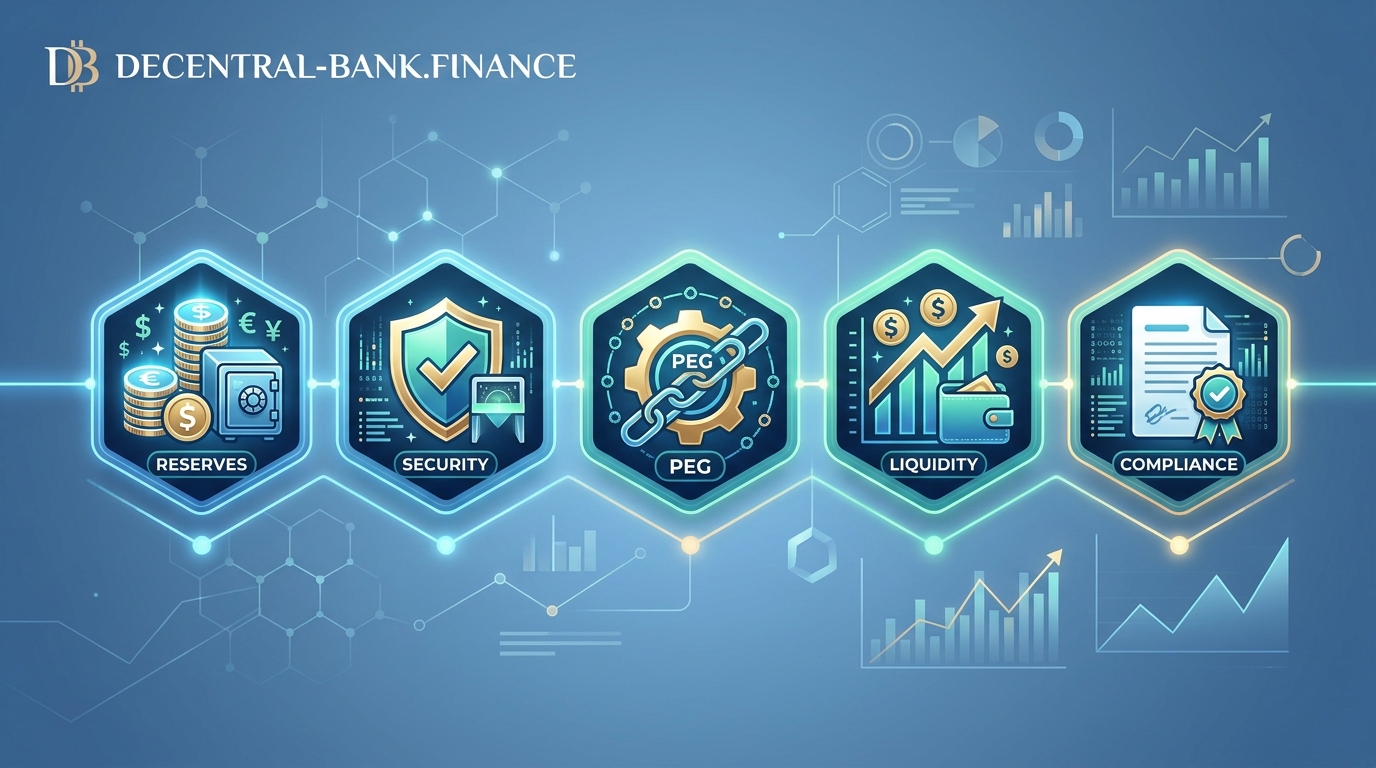
Stablecoins promise price stability in a volatile crypto market, but not all of them deliver on that promise. Some maintain their peg through transparent reserves, while others rely on complex algorithms that can fail spectacularly. Before you buy your first stablecoin, you need to understand what keeps it stable and what could cause it to break.
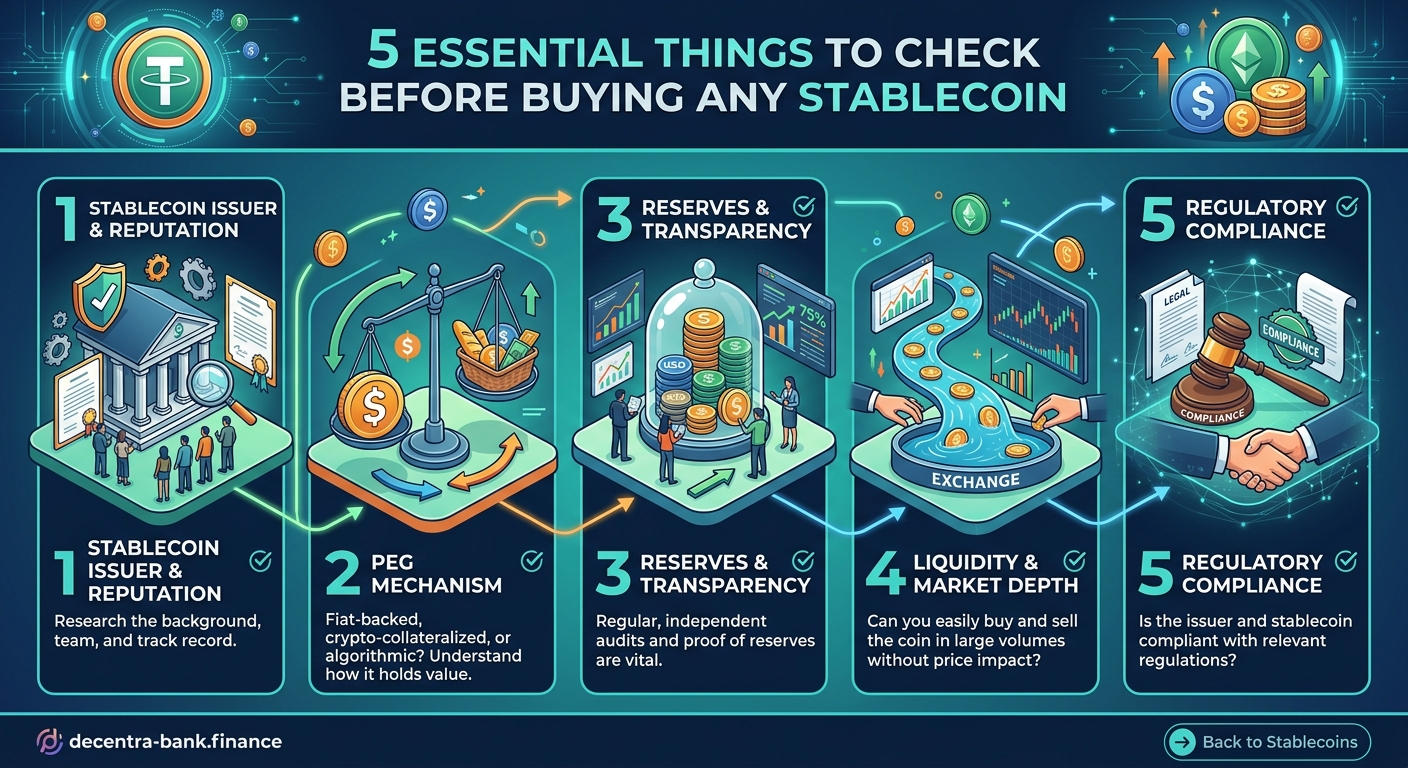
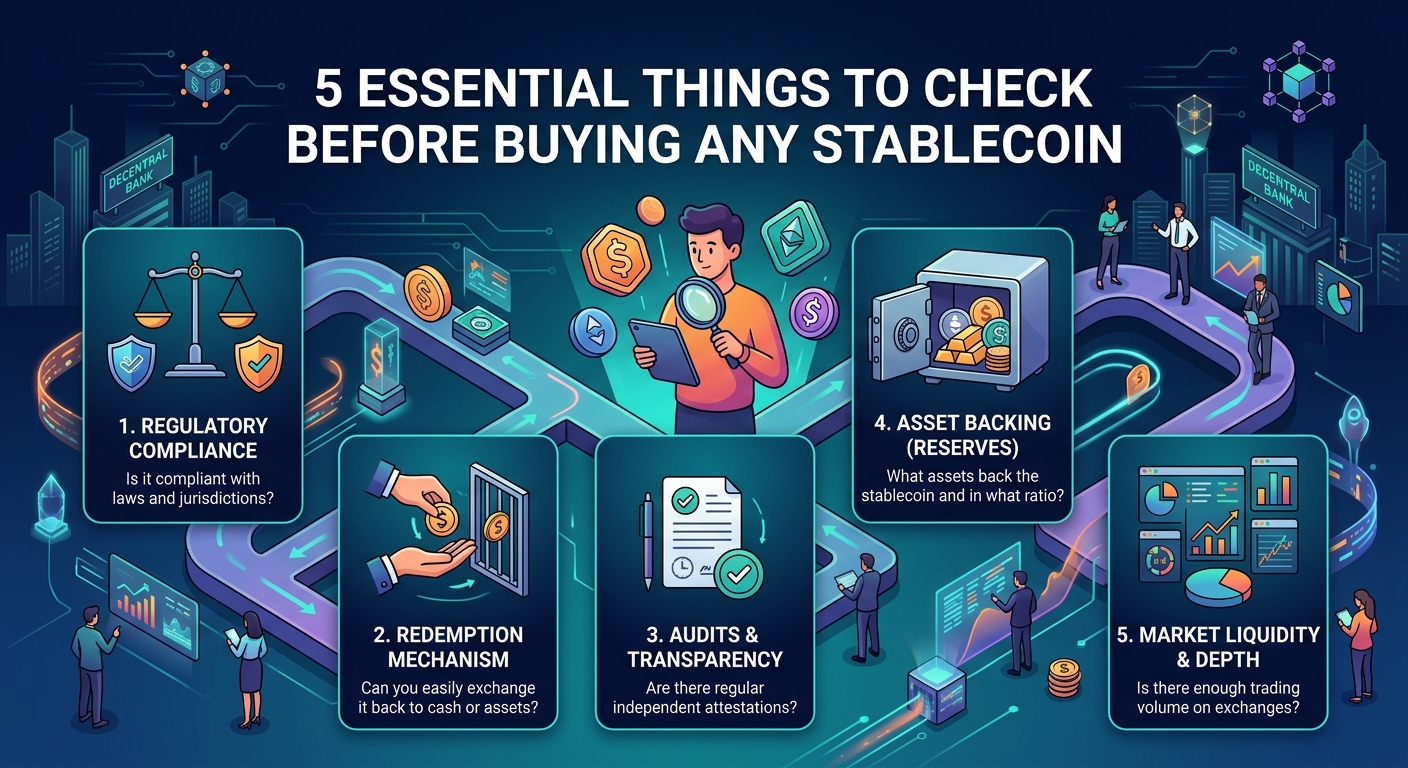
Before buying any stablecoin, verify its collateral type, check reserve transparency, understand the peg mechanism, review the issuer’s reputation, and assess regulatory compliance. Each factor directly impacts whether your stablecoin will maintain its $1 value during market stress. Fiat-backed stablecoins like USDC offer the most transparency, while algorithmic versions carry significantly higher risk of de-pegging.
Understanding the collateral backing your stablecoin
The first thing you need to check is what actually backs the stablecoin you’re considering.
Fiat-backed stablecoins hold traditional currency in bank accounts. For every token in circulation, there should be one dollar (or equivalent) sitting in a reserve account. USDC and USDT follow this model, though with varying degrees of transparency.
Crypto-collateralized stablecoins use other cryptocurrencies as backing. DAI, for example, is backed by Ethereum and other crypto assets locked in smart contracts. These typically require over-collateralization, meaning $150 worth of crypto might back $100 worth of stablecoins.
Algorithmic stablecoins rely on code and market incentives rather than physical reserves. They expand and contract supply based on demand. This sounds elegant in theory but has led to spectacular failures like TerraUSD’s collapse in 2022.
If you’re new to crypto, understanding how different DeFi mechanisms work helps you grasp why collateral type matters so much.
Here’s how these three types compare:
| Collateral Type | Stability | Transparency | Decentralization | Risk Level |
|---|---|---|---|---|
| Fiat-backed | High | Varies | Low | Low to Medium |
| Crypto-backed | Medium | High | High | Medium |
| Algorithmic | Low to Medium | High | High | High |
Verifying reserve transparency and audit practices
Transparency separates trustworthy stablecoins from potential disasters.
Look for stablecoins that publish regular attestations from reputable accounting firms. USDC publishes monthly reports from Grant Thornton showing their reserve composition. These reports should be easy to find on the issuer’s website.
Real-time reserve tracking is even better. Some stablecoins now offer on-chain proof of reserves, letting anyone verify backing at any moment. This eliminates the lag between audit periods when problems could emerge.
Red flags include:
- No public attestations or audits
- Vague descriptions of reserve composition
- Delays in publishing promised reports
- Attestations from unknown or questionable firms
- Reserves held in risky assets rather than cash equivalents
USDT faced criticism for years over reserve transparency before improving their disclosure practices. That history matters when evaluating trust.
The difference between a stablecoin with transparent reserves and one without is the difference between a bank that shows you its balance sheet and one that asks you to trust them blindly. In crypto, trust without verification is a recipe for loss.
Examining the peg maintenance mechanism
How does the stablecoin actually stay at $1? This mechanism determines what happens during market stress.
Fiat-backed stablecoins maintain their peg through redemption guarantees. You can always exchange one token for one dollar with the issuer. This arbitrage opportunity keeps market prices aligned with the peg.
Crypto-collateralized stablecoins use liquidation mechanisms. When collateral value drops too low, the system automatically sells it to maintain backing. Understanding these collateral ratios is essential if you’re considering these types.
Algorithmic stablecoins rely on supply adjustments and secondary tokens. When price drops below $1, the system incentivizes burning tokens. When price rises above $1, it mints new ones. This works until it doesn’t, usually during extreme market conditions.
Learning about different peg mechanisms gives you context for evaluating stability claims.
Researching the issuer’s track record and reputation
The organization behind a stablecoin matters as much as its technical design.
Check how long they’ve been operating. Circle (USDC issuer) has maintained operations since 2018 with no major de-pegging events. Tether (USDT issuer) has a longer but more controversial history.
Look at their response to past challenges:
- Did they maintain the peg during market crashes?
- How transparent were they during controversies?
- Did they honor all redemption requests?
- How did they handle regulatory inquiries?
Research the team behind the project. Anonymous teams aren’t automatically bad, but assessing whether you should trust protocols with anonymous teams requires extra diligence.
Check their regulatory relationships. Are they licensed money transmitters? Do they cooperate with financial authorities? Regulation might seem boring, but it provides accountability that pure code cannot.
Assessing regulatory compliance and legal standing
Regulatory status affects both safety and usability.
Stablecoins operating in regulatory gray areas face potential shutdowns. When regulators crack down, your tokens could become difficult or impossible to redeem. This happened with several smaller stablecoins that couldn’t meet compliance requirements.
Look for these compliance indicators:
- Money transmitter licenses in relevant jurisdictions
- Banking partnerships with regulated institutions
- Clear terms of service and user agreements
- KYC/AML procedures for large transactions
- Transparent legal structure and jurisdiction
Understanding how major protocols respond to regulatory frameworks helps you anticipate which stablecoins will survive regulatory scrutiny.
Regulated stablecoins typically offer:
- Legal recourse if something goes wrong
- Insurance on underlying reserves
- Clear redemption processes
- Protection against issuer bankruptcy
Unregulated stablecoins might offer:
- Greater privacy
- Lower barriers to entry
- More decentralization
- Higher risk of regulatory action
Evaluating liquidity and exchange support
A stablecoin is only useful if you can actually use it.
Check which exchanges list the stablecoin. Major platforms like Coinbase, Binance, and Kraken provide confidence that the asset has passed their listing requirements. Limited exchange support means fewer options for buying, selling, or trading.
Examine trading pairs and volume. Can you easily convert the stablecoin to other assets? High trading volume indicates healthy liquidity. Low volume means you might face slippage when making large transactions.
Look at DeFi protocol integration. Popular decentralized exchanges support major stablecoins across multiple protocols. Limited DeFi support restricts your ability to earn yield or participate in lending markets.
Consider blockchain availability. Multi-chain stablecoins like USDC exist on Ethereum, Polygon, Arbitrum, and other networks. This flexibility matters for managing transaction costs and accessing different ecosystems.
Comparing fee structures and transaction costs
The cost of using a stablecoin affects its practical value.
Minting fees apply when creating new tokens directly from the issuer. Many stablecoins charge nothing for minting, but some impose minimum amounts or require institutional accounts.
Redemption fees matter when converting back to fiat. USDC charges no fees for redemptions over $100, making it cost-effective for regular users. Other stablecoins impose percentage-based fees that eat into your value.
Network transaction fees depend on the blockchain, not the stablecoin itself. Ethereum-based stablecoins can cost $5 to $50 per transaction during network congestion. Understanding why DeFi transactions cost gas fees helps you choose the right network for your needs.
Bridge fees apply when moving stablecoins between blockchains. These typically range from $1 to $20 depending on the networks involved. Recent security upgrades to cross-chain bridges have made these transfers safer but not necessarily cheaper.
Recognizing common stablecoin risks and red flags
Even legitimate stablecoins carry risks you need to understand.
De-pegging risk exists for all stablecoins. Real examples of stablecoins losing their peg show this isn’t theoretical. Market stress, bank failures, or technical issues can push prices away from $1.
Centralization risk affects fiat-backed stablecoins. Circle or Tether can freeze your tokens if required by law enforcement or if you violate terms of service. This control contradicts crypto’s decentralization ethos but provides accountability.
Smart contract risk impacts crypto-backed and algorithmic stablecoins. Bugs in code can lead to loss of funds. Understanding what happens when protocols get hacked prepares you for these scenarios.
Banking risk threatens fiat-backed stablecoins if their reserve banks fail. USDC briefly de-pegged in March 2023 when Silicon Valley Bank collapsed, holding $3.3 billion of Circle’s reserves.
Watch for these warning signs:
- Sudden changes in reserve composition
- Delays in processing redemptions
- Price consistently trading below $1
- Unusual trading volume patterns
- Negative news about the issuer or banking partners
Starting with established stablecoins for safety
Your first stablecoin purchase should prioritize safety over innovation.
USDC offers the best combination of transparency, regulatory compliance, and liquidity for beginners. Circle publishes monthly attestations and maintains banking relationships with major institutions. The token trades on virtually every exchange and integrates with most DeFi protocols.
USDT provides the highest liquidity globally but carries more controversy. Tether’s reserve transparency improved significantly but remains less detailed than USDC’s. If you need maximum liquidity for trading, USDT works well despite its checkered history.
DAI appeals to users prioritizing decentralization. As a crypto-collateralized stablecoin, it doesn’t depend on traditional banks. However, understanding how DAI maintains its peg without a bank account requires more technical knowledge.
Comparing USDT vs USDC vs DAI in detail helps you choose based on your priorities.
Avoid algorithmic stablecoins until you understand advanced crypto concepts. Why they’re risky but innovative matters, but that innovation comes with substantial risk of total loss.
Storing your stablecoins securely after purchase
Buying safely is only half the equation. Storage matters just as much.
Choosing between hot wallets and cold wallets depends on how you plan to use your stablecoins. Active trading suits hot wallets, while long-term holding calls for cold storage.
Never leave large amounts on exchanges longer than necessary. Exchange hacks remain common, and your stablecoins aren’t insured like traditional bank deposits. Transfer to a wallet you control.
Setting up your first DeFi wallet correctly prevents common security mistakes. Your seed phrase controls your funds, so understanding what happens if you lose it emphasizes why backup matters.
Consider hardware wallets for amounts you’d be upset to lose. Whether you need a hardware wallet depends on your holdings and risk tolerance.
Using stablecoins in DeFi protocols safely
Once you own stablecoins, DeFi opportunities emerge.
Lending platforms let you earn yield by supplying stablecoins to borrowers. The best DeFi lending platforms vary in risk and return. Start with established protocols that have operated safely for years.
Liquidity pools offer higher yields but introduce impermanent loss. Providing liquidity on Uniswap requires understanding this risk. Stablecoin pairs typically minimize impermanent loss compared to volatile asset pairs.
Stablecoin staking provides passive income without impermanent loss. Whether you can earn yield without losing the peg depends on the protocol and mechanism used.
Understanding liquidity pools before depositing stablecoins prevents costly mistakes. These mechanisms power most DeFi protocols but carry risks you need to recognize.
Always verify smart contracts before approving transactions. What happens when you approve a smart contract explains the permissions you’re granting. Revoking suspicious token approvals protects against exploits.
Building your stablecoin knowledge foundation
The more you understand, the safer your stablecoin usage becomes.
Common DeFi terms appear frequently in stablecoin discussions. Knowing these terms helps you research effectively and ask informed questions.
Traditional finance versus DeFi differences clarify why stablecoins work differently than bank deposits. This context prevents false assumptions about safety and insurance.
Your complete beginner roadmap provides structure for learning DeFi concepts systematically. Stablecoins are just one piece of a larger ecosystem.
The complete DeFi security checklist covers precautions beyond stablecoin selection. Security requires multiple layers of protection, not just choosing the right token.
Stay informed about stablecoin developments. Why stablecoin reserves matter becomes clearer as you follow news about reserve audits and regulatory actions.
Making your first stablecoin purchase with confidence
Armed with this knowledge, you can approach your first stablecoin purchase strategically.
Start small while learning. Buy $50 or $100 worth before committing significant funds. This lets you test the process, understand transaction fees, and verify your wallet setup works correctly.
Use established exchanges for your first purchase. Coinbase, Kraken, and Binance offer straightforward stablecoin buying with bank transfers or credit cards. Their interfaces guide beginners through the process.
Document your transaction details. Record which stablecoin you bought, the amount, the date, and the wallet address. This information helps with tax reporting and troubleshooting if issues arise.
Monitor the peg regularly. Check that your stablecoin trades near $1 on major exchanges. Significant deviations signal problems requiring investigation.
Diversify if holding large amounts. Don’t put all your stablecoins in one type. Splitting between USDC and DAI, for example, reduces issuer-specific risk while maintaining stability.
Your path to safer stablecoin ownership
Stablecoins bridge traditional finance and crypto, offering stability without abandoning digital assets. But that bridge only remains safe when you verify its foundations before crossing.
Check the collateral backing, verify reserve transparency, understand the peg mechanism, research the issuer’s reputation, and assess regulatory compliance before buying any stablecoin. These five factors determine whether your “stable” coin will actually remain stable when markets turn volatile.
Start with USDC or another well-established option for your first purchase. Learn how it works, store it securely, and gradually expand your knowledge. The crypto space rewards careful research and punishes assumptions. Your diligence today prevents losses tomorrow.