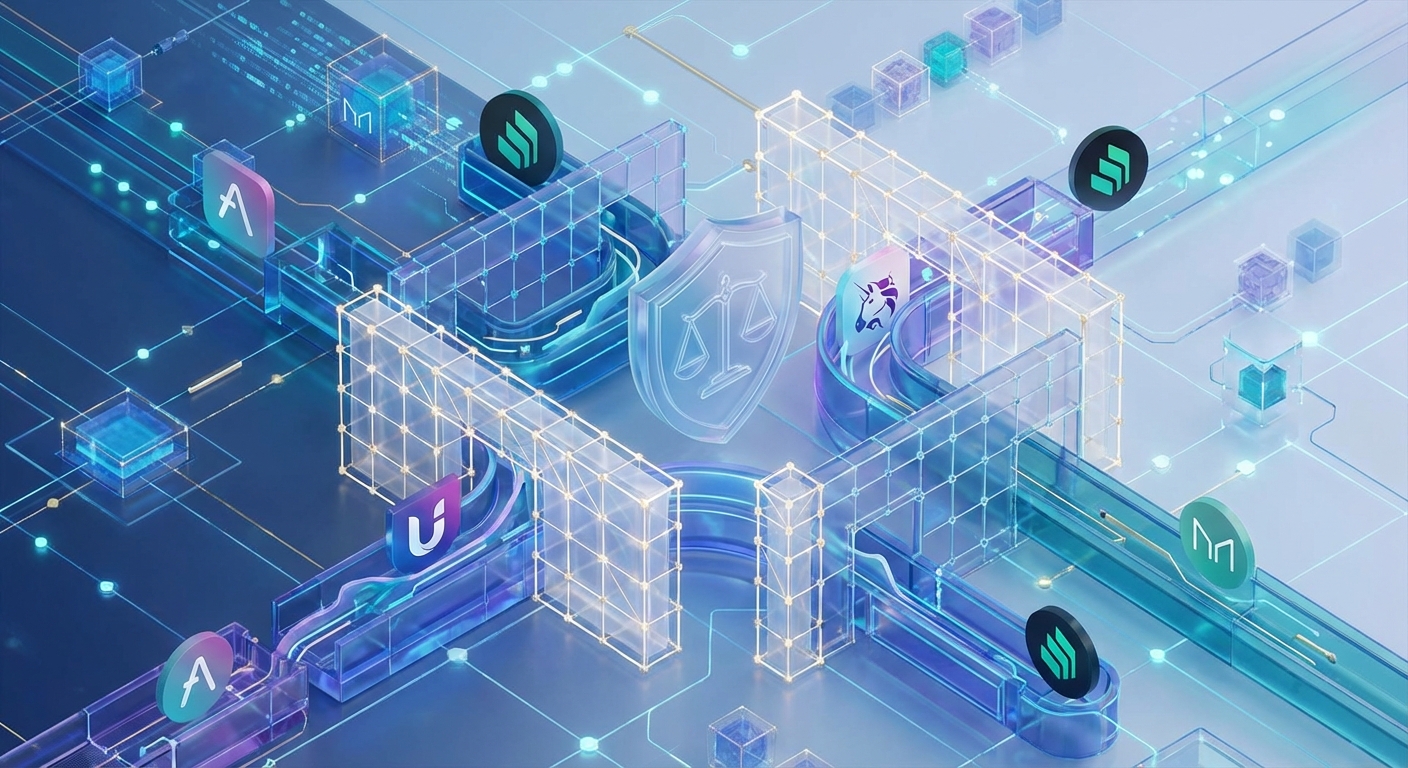
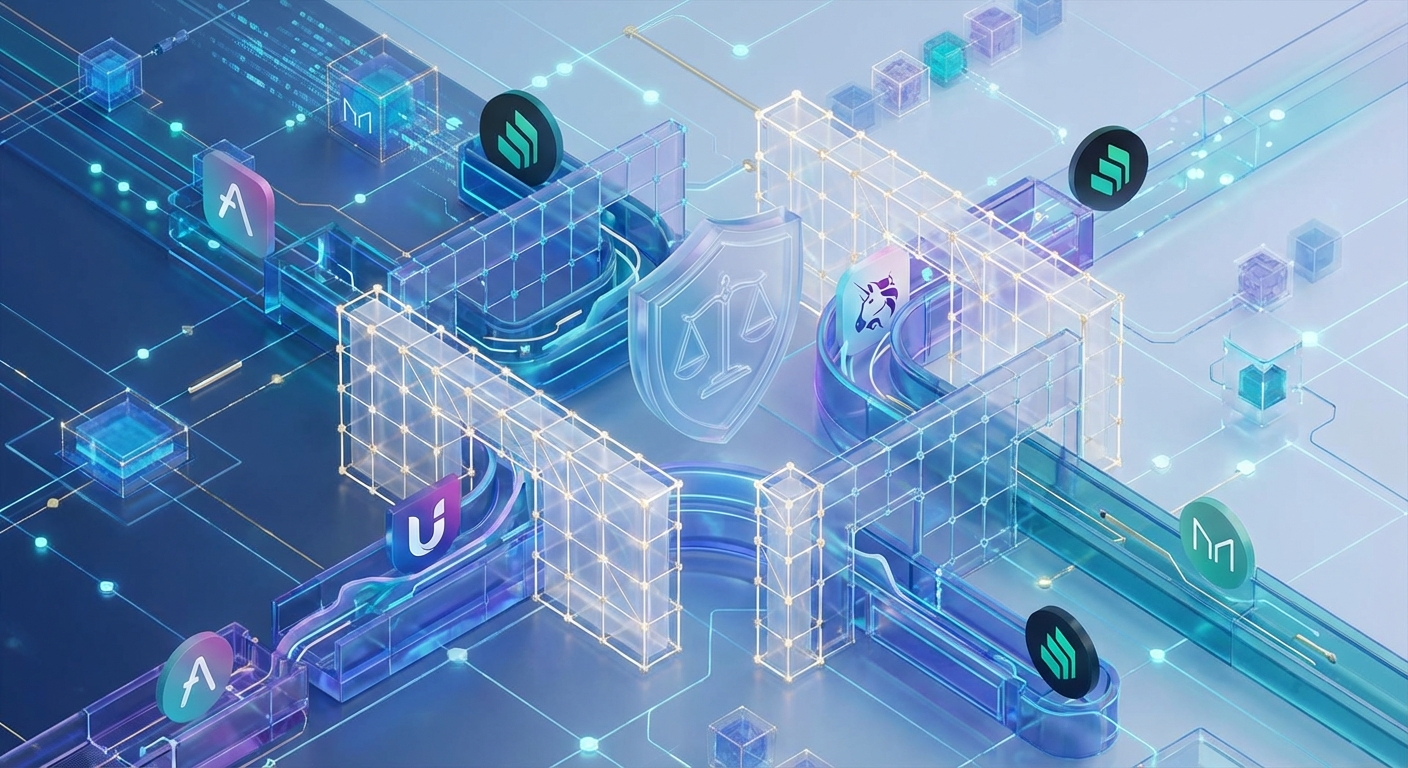
The way we interact with decentralized finance is changing faster than most people realize. New protocols launching in 2025 are solving problems that frustrated users for years: high gas fees, confusing interfaces, and security vulnerabilities that left wallets exposed. These aren’t incremental updates. They represent fundamental shifts in how smart contracts execute, how liquidity moves between chains, and how everyday investors protect their assets.
DeFi innovations 2025 focus on intent-based transactions, AI-powered risk assessment, modular liquidity networks, account abstraction wallets, and privacy-preserving computation. These technologies reduce complexity, lower costs, and strengthen security for crypto users. Adoption is accelerating as protocols move from testnet to mainnet deployment, creating practical benefits for both new and experienced investors managing digital assets.
Intent-Based Transactions Are Replacing Manual Swaps
Traditional DeFi requires you to specify every step. You choose the protocol, set slippage tolerance, approve token contracts, and hope the transaction completes before prices shift. Intent-based systems flip this model. You declare what you want, and solver networks compete to execute it.
Protocols like Anoma and Essential are building infrastructure where you express outcomes instead of actions. Want to convert 1 ETH into the maximum possible USDC across any available venue? The system finds the optimal path through dozens of liquidity pools, aggregators, and bridges. It handles approvals, routes through the cheapest gas networks, and guarantees execution or refunds your fees.
This matters because complexity has been DeFi’s biggest barrier. New users abandon transactions when faced with confusing parameters. Intent-based systems abstract away technical decisions while maintaining decentralization. Solvers stake collateral and compete on execution quality, creating a market for efficient transaction routing.
The architecture also improves MEV protection. When you broadcast specific swap instructions, bots can front-run your order. Intent systems use batch auctions and encrypted mempools, so solvers see your desired outcome but can’t extract value by reordering transactions.
Intent-based protocols represent the first real UX breakthrough in DeFi. Users shouldn’t need to understand liquidity fragmentation or gas optimization. They should state their goal and trust the network to deliver the best result.
Early implementations show 15-30% better execution prices compared to manual routing. As more solvers join these networks, competition will drive even tighter spreads and faster settlement.
AI Risk Oracles Are Scoring Protocol Safety in Real Time
Smart contract exploits drained over $1.8 billion from DeFi protocols in 2024. Traditional audits catch obvious bugs but miss economic exploits and governance attacks. AI risk oracles are changing how we assess protocol safety by analyzing on-chain behavior continuously.
Projects like Hypernative and Forta Network deploy machine learning models that monitor transaction patterns, liquidity movements, and code changes. These systems flag anomalies before they become exploits. If a lending protocol suddenly sees unusual collateral withdrawals or a governance token accumulates in a single wallet, the oracle alerts users and triggers automated defensive actions.
The models train on historical exploit data, learning signatures of reentrancy attacks, flash loan manipulations, and oracle manipulation. They assign risk scores to protocols based on:
- Smart contract complexity and upgrade patterns
- Liquidity concentration and withdrawal velocity
- Governance token distribution and voting behavior
- Historical security incidents and response times
- Integration dependencies with other protocols
Users can query these scores before depositing funds. Some protocols are integrating risk oracles directly into their interfaces, displaying safety ratings next to APY numbers. This creates accountability. Projects with poor security practices see capital flow to safer alternatives.
Insurance protocols are also using AI risk assessments to price coverage. Instead of flat premiums, policies adjust based on real-time risk scores. This makes insurance more affordable for well-secured protocols and more expensive for risky experiments.
The technology isn’t perfect. False positives can trigger unnecessary panic, and sophisticated attackers might learn to evade detection patterns. But the directional improvement is clear. Investors finally have data-driven tools to evaluate protocol safety beyond marketing claims and audit badges.
Modular Liquidity Networks Are Solving Cross-Chain Fragmentation
Liquidity used to be stuck on individual chains. Ethereum had deep pools, but high fees pushed users to Arbitrum, Optimism, Base, and dozens of other networks. Each chain developed isolated liquidity, making cross-chain swaps expensive and slow.
Modular liquidity networks like Everclear and Across Protocol are building shared liquidity layers that work across all chains simultaneously. Instead of bridging tokens between networks, these systems use intent-based settlement and rebalancing mechanisms.
Here’s how it works in practice:
- You want to swap USDC on Arbitrum for ETH on Base.
- The modular network matches your intent with someone making the opposite trade.
- Both transactions settle on their native chains without bridging.
- Liquidity providers rebalance pools in the background using optimized batch transfers.
This approach cuts costs dramatically. Traditional bridges charge 0.1-0.5% fees plus gas on both source and destination chains. Modular networks settle most trades for under 0.05% with gas paid only once. Settlement times drop from 10-30 minutes to under 60 seconds.
The architecture also improves capital efficiency. Liquidity providers don’t need to lock funds on every chain. They deposit into a unified pool that serves all networks, earning fees from cross-chain activity without fragmenting their capital.
Security improves too. Traditional bridges create honeypots where attackers target locked funds. Modular networks minimize locked value by settling trades peer-to-peer and only moving liquidity when rebalancing is needed.
| Traditional Bridges | Modular Liquidity Networks |
|---|---|
| 0.1-0.5% fees per transfer | Under 0.05% fees |
| 10-30 minute settlement | Under 60 seconds |
| Liquidity locked per chain | Unified liquidity pool |
| High security risk from locked funds | Minimal locked value exposure |
Adoption is accelerating. Major DEX aggregators are integrating modular networks as default routing options. Users get better prices without knowing they’re trading cross-chain.
Account Abstraction Wallets Are Eliminating Seed Phrases
Losing a seed phrase means losing your crypto forever. This reality has kept millions of potential users out of DeFi. Account abstraction wallets launching in 2025 replace seed phrases with familiar recovery methods while maintaining self-custody.
ERC-4337 and similar standards turn wallets into smart contracts with programmable security rules. You can set up social recovery where trusted contacts can help restore access if you lose your device. You can enable biometric authentication, hardware security keys, or time-locked recovery mechanisms.
These wallets also eliminate gas token requirements. New users don’t need to buy ETH before using Ethereum apps. Paymasters sponsor transactions or let you pay fees in the tokens you’re already holding. This removes a major onboarding friction point.
Session keys are another breakthrough feature. Instead of approving every transaction manually, you grant temporary permissions to apps. A DeFi dashboard might get permission to execute trades under $100 for the next hour. You interact with protocols like using a regular app, but the underlying transactions remain on-chain and verifiable.
The security improvements are substantial:
- Multi-signature requirements for large transactions
- Spending limits that reset daily or weekly
- Automatic transaction simulation before signing
- Allowlist restrictions for token approvals
- Emergency freeze functions if compromise is detected
Early account abstraction wallets like Safe, Argent, and Braavos are seeing strong adoption. Users report feeling more confident managing crypto when they know recovery options exist. The technology is still maturing, but the direction is clear. Seed phrases will become optional for users who want more flexible security models.
Privacy-Preserving Computation Is Protecting Transaction Data
Every DeFi transaction is public by default. Your wallet address, trading patterns, and portfolio holdings are visible to anyone who knows where to look. This transparency creates risks. Competitors can copy your strategies, scammers can target large holders, and employers might discriminate based on your financial activity.
Privacy-preserving computation technologies launching in 2025 let you prove facts about your assets without revealing the underlying data. Zero-knowledge proofs, fully homomorphic encryption, and secure multi-party computation are moving from research papers to production protocols.
Projects like Aztec Network and Penumbra are building private DeFi platforms where transaction amounts and participant identities remain encrypted. You can still verify that trades executed correctly and that smart contracts enforced their rules, but observers can’t see who traded what.
This enables new use cases that weren’t possible with public transactions:
- Private salary payments in stablecoins without revealing compensation to coworkers
- Confidential fundraising where investors don’t know each other’s contribution amounts
- Anonymous voting in DAO governance without linking votes to token holdings
- Dark pool trading for large orders that won’t move markets when announced
The technology also improves security. Many exploits rely on analyzing public transaction patterns to identify targets. Private computation makes these attacks harder by hiding the information attackers need.
Regulatory compliance remains possible with selective disclosure. You can prove to an auditor that your transactions comply with tax rules without making your entire history public. This balance between privacy and accountability is crucial for mainstream adoption.
Performance is improving rapidly. Early zero-knowledge systems required minutes to generate proofs. New implementations prove transactions in under 10 seconds with costs approaching standard Ethereum transactions. As the technology matures, privacy will become a default option rather than a specialized feature.
Practical Steps to Engage with These Innovations
Understanding these technologies is one thing. Using them safely is another. Here’s how to start experimenting with DeFi innovations 2025 without taking unnecessary risks:
- Start with small test transactions on protocols that have been live for at least three months. Early launches often have bugs that get discovered through actual use.
- Check if the protocol has undergone multiple independent audits and maintains an active bug bounty program. Security should be verifiable, not assumed.
- Use AI risk oracles to compare safety scores before depositing significant funds. Treat low scores as warnings that deserve investigation, not automatic disqualifications.
- Test account abstraction wallets with small amounts first. Verify that recovery mechanisms work as expected before moving your primary holdings.
- Monitor protocol governance forums and developer activity. Active communities and frequent updates indicate healthy projects that respond to issues.
The table below summarizes key security considerations for each innovation:
| Innovation | Primary Risk | Mitigation Strategy |
|---|---|---|
| Intent-based transactions | Solver collusion or failure | Use protocols with diverse solver networks and fallback mechanisms |
| AI risk oracles | False positives causing panic | Cross-reference multiple oracle sources before acting |
| Modular liquidity networks | Rebalancing delays during volatility | Check historical settlement times during high-traffic periods |
| Account abstraction wallets | Smart contract bugs in wallet code | Choose wallets with extensive audit history and insurance coverage |
| Privacy-preserving computation | Proof generation failures | Test with small amounts and verify transaction completion |
These innovations are already live on mainnets. You don’t need to wait for future releases. But you should approach them with the same caution you’d apply to any financial technology. Test features, understand the risks, and only commit funds you can afford to lose while learning.
Resources for Staying Current with DeFi Development
The DeFi landscape changes weekly. New protocols launch, existing ones upgrade, and security researchers discover vulnerabilities. Staying informed requires active monitoring of several information sources.
Protocol documentation is your primary resource. Read the technical papers and user guides before using new platforms. Understanding how a system works helps you identify when something goes wrong.
Security-focused Twitter accounts and Telegram channels provide real-time alerts about exploits and vulnerabilities. Following researchers who specialize in smart contract security gives you early warning about emerging threats.
On-chain analytics platforms let you verify claims about protocol usage and liquidity. Marketing materials often exaggerate adoption metrics. Checking actual transaction volumes and unique user counts reveals the truth.
Developer forums and GitHub repositories show how actively projects are maintained. Protocols with frequent commits and responsive maintainers are more likely to fix bugs and adapt to changing conditions.
Podcast interviews with protocol founders and security researchers provide context that written documentation misses. Hearing developers discuss their design choices helps you understand their priorities and risk tolerance.
Testing on testnets before mainnet gives you hands-on experience without financial risk. Most innovations launch on test networks first. Experimenting there lets you learn interfaces and identify confusing features before real money is involved.
Making DeFi Work for Your Situation
These five innovations address real problems that have frustrated crypto users since DeFi began. Intent-based transactions simplify complex operations. AI risk oracles provide safety data that was previously unavailable. Modular liquidity networks make cross-chain activity affordable. Account abstraction wallets remove the seed phrase burden. Privacy-preserving computation protects your financial information.
None of these technologies are perfect. Early versions will have bugs. User interfaces will confuse people. Some projects will fail while others succeed. But the direction is clear. DeFi is becoming more accessible, more secure, and more practical for everyday use.
The investors who take time to understand these innovations now will have advantages as adoption accelerates. You’ll recognize which protocols solve real problems versus which ones just add complexity. You’ll know how to evaluate security before others realize risks exist. And you’ll be comfortable with tools that make crypto management simpler and safer.
Start with one innovation that addresses your biggest frustration with current DeFi. If gas fees annoy you, try intent-based systems. If security worries you, experiment with AI risk oracles. If managing multiple wallets across chains feels overwhelming, test modular liquidity networks. Pick the problem that matters most to you and find the solution that fits your needs.