DeFi rug pulls have drained billions from unsuspecting investors. One minute you’re watching your tokens moon, the next minute the developers have vanished with your money. The good news? Most rug pulls follow predictable patterns that you can learn to spot before risking a single dollar.
Protecting yourself from DeFi rug pulls requires verifying smart contract ownership, checking liquidity locks, researching team backgrounds, and watching for warning signs like anonymous developers or unrealistic returns. Most scams share common red flags that careful investors can identify through contract audits, community research, and skepticism toward projects promising guaranteed high yields. Smart due diligence prevents most losses.
Understanding what makes rug pulls possible
DeFi projects run on smart contracts that handle your money automatically. Unlike traditional banks with regulations and insurance, these contracts execute exactly as programmed. If developers write malicious code into the contract, they can drain funds at will.
The decentralized nature of crypto means no central authority protects you. You become your own security team. This responsibility feels overwhelming at first, but the protective measures are straightforward once you know what to check.
Rug pulls typically fall into three categories. Hard rug pulls involve malicious code that lets developers steal funds directly. Soft rug pulls happen when teams dump their tokens, crashing the price. Liquidity pulls occur when developers remove trading liquidity, leaving you unable to sell.
Verify smart contract ownership before investing
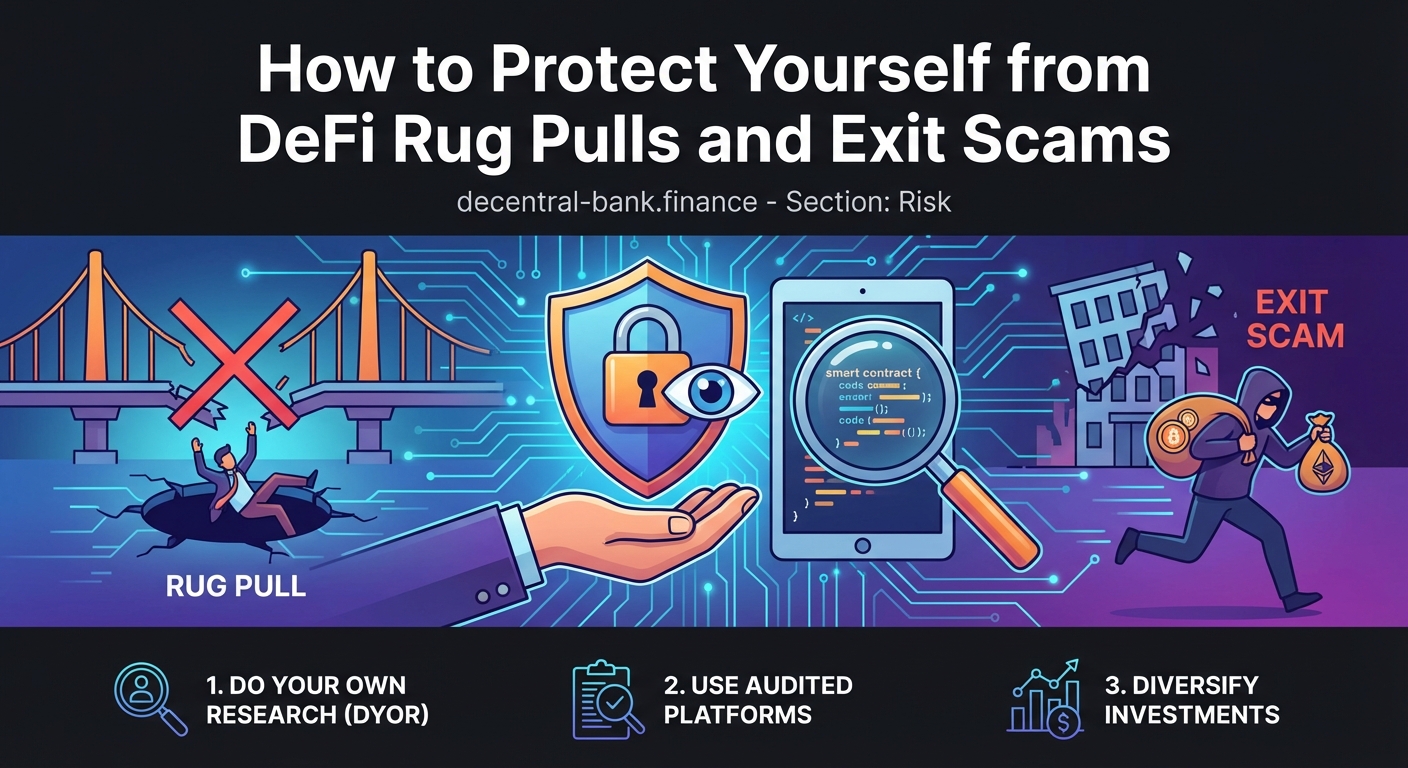
The first defense against rug pulls starts with checking who controls the smart contract. Developers who retain full ownership can modify contract rules, mint unlimited tokens, or pause trading whenever they want.
Look for contracts that have renounced ownership or transferred control to a timelock contract. Renounced ownership means developers permanently gave up their ability to change the code. Timelocks require a waiting period before any changes take effect, giving you time to exit if something looks suspicious.
You can verify ownership through blockchain explorers like Etherscan or BscScan. Search for the contract address and check the “Contract” tab. Look for functions called “owner” or “renounceOwnership” to see the current status.
Never invest in projects where anonymous developers maintain full control over smart contracts. This combination creates the perfect conditions for exit scams with zero accountability.
Check liquidity locks and vesting schedules
Liquidity represents the pool of tokens available for trading. When developers lock liquidity, they prove they cannot suddenly remove it and disappear. Unlocked liquidity is one of the biggest red flags in DeFi.
Legitimate projects lock liquidity for months or years through services like Unicrypt or Team Finance. You can verify these locks by checking the liquidity provider (LP) tokens. If LP tokens sit in a verified locking contract, developers cannot access them until the lock expires.
Team token vesting matters just as much. Projects often allocate large percentages to team members and early investors. If these tokens unlock all at once, massive sell pressure can crash the price even without malicious intent.
Red flags versus green flags comparison
| Red Flag | Green Flag |
|---|---|
| Anonymous team with no verifiable history | Doxxed team members with LinkedIn profiles and past projects |
| Unlocked liquidity that can be removed anytime | Liquidity locked for 6+ months through verified services |
| Promises of guaranteed 1000% returns | Realistic yield projections with clear revenue sources |
| Contract ownership retained by single wallet | Ownership renounced or controlled by timelock/multisig |
| No code audit from reputable firms | Audited by CertiK, PeckShield, or similar firms |
| Community questions get deleted or ignored | Active, transparent communication with community concerns |
Research the team and project history
Anonymous teams are not automatically scams, but they require extra scrutiny. Many legitimate privacy-focused projects have anonymous founders. However, anonymous teams combined with other red flags should make you walk away.
For doxxed teams, verify their identities through LinkedIn, Twitter, and GitHub. Check their previous projects. Did those projects succeed or get abandoned? Have team members been involved in failed projects that hurt investors?
Search for the project name plus “scam” or “rug pull” on Twitter and Reddit. Read what the community says. Look for patterns in complaints. A few angry investors exist in every project, but widespread concerns about specific issues deserve attention.
Check the project’s GitHub repository. Active development shows ongoing work. If the code repository has not been updated in months, or if it looks copied from another project, that signals trouble.
Audit the smart contract code
Smart contract audits from reputable firms like CertiK, PeckShield, or Quantstamp provide valuable security insights. However, audits are not foolproof. Some scam projects pay for audits on clean contracts, then deploy different malicious code.
You can perform basic contract checks yourself without coding knowledge. Tools like Token Sniffer and RugDoc analyze contracts for common scam functions. They flag issues like:
- Honeypot code that lets you buy but not sell
- Hidden mint functions that create unlimited tokens
- Blacklist functions that freeze specific wallets
- Excessive transaction taxes that drain value
Even with limited technical knowledge, you can spot obvious problems. Look for contracts with extremely high complexity. Scammers often obfuscate code to hide malicious functions. Simple, clean contracts are generally safer.
Follow this verification checklist
Before investing in any DeFi project, work through these steps in order:
- Check the smart contract ownership status and verify it has been renounced or transferred to a timelock.
- Confirm liquidity is locked for a reasonable period through a verified locking service.
- Research team members and verify their identities and track records.
- Run the contract address through automated scanning tools to check for common scam patterns.
- Review the tokenomics to ensure team allocations have proper vesting schedules.
- Read the audit report if one exists and check that the deployed contract matches the audited code.
- Monitor community sentiment across multiple platforms for consistent red flags.
- Start with a small test investment before committing significant funds.
Watch for behavioral warning signs
Beyond technical checks, certain behaviors signal potential rug pulls. Marketing that focuses entirely on price predictions rather than product utility should concern you. Legitimate projects discuss their technology, use cases, and roadmap.
Aggressive promotion through paid influencers without substance raises questions. Many rug pulls spend heavily on marketing to create hype, then exit during the excitement. If every crypto influencer suddenly promotes the same unknown project, stay cautious.
Pressure tactics like “limited time offers” or “last chance to buy” exploit FOMO (fear of missing out). Legitimate projects do not need artificial urgency. They build value over time through actual development and adoption.
Watch how teams respond to criticism. Projects that delete negative comments, ban questioners from Telegram, or attack critics often have something to hide. Transparent teams address concerns directly and welcome scrutiny.
Common mistakes that lead to losses
Even experienced investors fall for sophisticated scams. These mistakes account for most rug pull losses:
- Investing based solely on social media hype without independent research
- Ignoring red flags because of potential returns
- Trusting audit reports without verifying the deployed contract matches
- Following influencer recommendations without checking if they were paid
- Investing more than you can afford to lose in unproven projects
- Skipping the verification checklist because a project “feels legitimate”
- Holding positions in projects with obvious warning signs hoping for recovery
Start with established protocols
If you’re new to DeFi, begin with established protocols that have proven track records. Projects like Uniswap, Aave, and Compound have operated for years with billions in total value locked. They have survived market crashes, regulatory scrutiny, and countless copycats.
These established protocols still carry risks, but they have demonstrated security over time. Use them to learn how DeFi works before venturing into newer, higher-risk projects.
As you gain experience, you will develop better instincts for spotting problems. You will recognize patterns that newer investors miss. This education takes time, and you might pay for some lessons through small losses. That is why starting with small amounts in established protocols makes sense.
Understanding realistic returns
One of the easiest ways to spot potential scams involves checking the promised returns. If a project offers 1,000% annual percentage yields (APY), ask where that money comes from. Sustainable yields in DeFi typically range from 3% to 30% depending on risk level.
Extremely high yields usually come from:
- Inflationary tokenomics that print new tokens (which dilutes your holdings)
- Ponzi-like structures where new investor money pays earlier investors
- Temporary incentives that will end soon
- Unsustainable business models that will collapse
Real yield comes from actual revenue. Projects that generate fees from real users can sustainably reward token holders. Projects with no clear revenue source cannot maintain high yields indefinitely.
Building a safer DeFi strategy
Protection from rug pulls requires a multi-layered approach. Never rely on a single check or tool. Combine technical verification, team research, community sentiment, and your own risk tolerance.
Diversification helps limit damage from any single rug pull. Spread investments across multiple projects and protocols. If one turns out to be a scam, it represents a manageable loss rather than a total wipeout.
Set clear rules for yourself before investing. Decide your maximum investment in unaudited projects. Determine what percentage of your portfolio you will risk on newer protocols. Having predetermined limits prevents emotional decisions during hype cycles.
Stay educated about new scam techniques. Scammers constantly develop new methods to bypass security measures. Following security researchers and reputable crypto news sources helps you stay ahead of emerging threats.
Your security depends on your diligence
No checklist provides perfect protection. Sophisticated scammers can fake audits, create convincing fake identities, and temporarily lock liquidity before pulling it later. However, following these verification steps eliminates the majority of obvious scams.
Most rug pulls succeed because investors skip basic research. They see others making money and jump in without checking anything. That panic-driven investing creates the perfect environment for scammers.
Take the time to verify every project. If a project cannot pass basic security checks, move on. Thousands of DeFi projects exist, and missing one potential moonshot is better than losing your investment to a rug pull. Your capital preservation matters more than catching every opportunity.
The DeFi space rewards patient, careful investors who do their homework. Build good habits now, and they will protect you throughout your crypto journey.
Leave a Reply