You hold Bitcoin or Ethereum. The price might climb higher, but you need cash today. Selling means missing future gains and triggering taxable events. Borrowing against your crypto lets you access liquidity without giving up ownership or upside potential.
Crypto-backed loans let you deposit digital assets as collateral to borrow stablecoins or fiat currency. You keep ownership and potential price appreciation while accessing cash. Loan-to-value ratios typically range from 25% to 50%, and you must maintain collateral levels to avoid liquidation. Centralized platforms offer convenience, while DeFi protocols provide transparency and non-custodial control. Interest rates vary from 0% to 15% annually depending on platform and loan terms.
Why borrow instead of sell
Selling crypto creates immediate tax consequences in most jurisdictions. Capital gains taxes can consume 15% to 37% of your profits depending on your holding period and income bracket.
Borrowing avoids this entirely. You receive cash without a taxable event because loans are not considered income. Your crypto remains yours, continuing to appreciate if the market rises.
You also preserve your position. If you believe your assets will increase in value, borrowing lets you access funds today while keeping exposure to future price movements.
How crypto collateral loans work
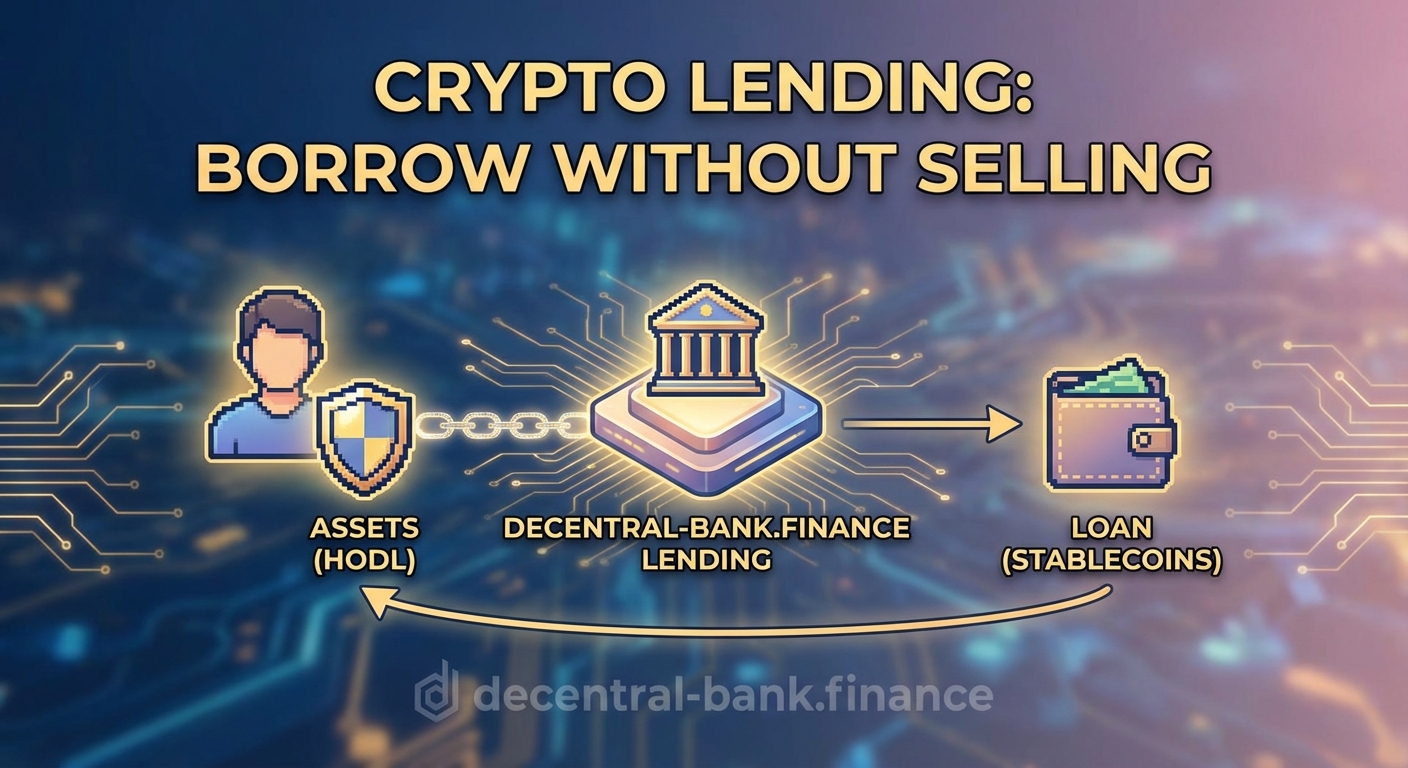
You deposit cryptocurrency into a lending platform or protocol. The platform assigns a loan-to-value ratio, typically 25% to 50% of your collateral’s current market value.
If you deposit $10,000 worth of Bitcoin and the platform offers a 50% LTV, you can borrow up to $5,000 in stablecoins or fiat currency. Your Bitcoin stays locked as collateral until you repay the loan.
Interest accrues on the borrowed amount. Rates range from 0% on promotional offers to 15% annually on standard terms. You can repay anytime, and your collateral unlocks once the principal and interest are settled.
If your collateral value drops and your LTV exceeds the platform’s threshold, you face liquidation. The platform sells enough of your crypto to bring the ratio back to safe levels or close the position entirely.
Step-by-step process to borrow against your crypto
- Choose a lending platform that matches your needs for custody, interest rates, and supported assets.
- Create an account and complete identity verification if using a centralized service, or connect your wallet for DeFi protocols.
- Deposit your chosen cryptocurrency as collateral into the platform’s designated address or smart contract.
- Select your loan amount based on the available LTV ratio and confirm the terms, including interest rate and repayment schedule.
- Receive stablecoins or fiat directly to your wallet or bank account, usually within minutes to a few hours.
- Monitor your collateral ratio regularly to avoid liquidation if market prices fluctuate.
- Repay the loan principal plus accrued interest to unlock your collateral and close the position.
Centralized platforms versus DeFi protocols
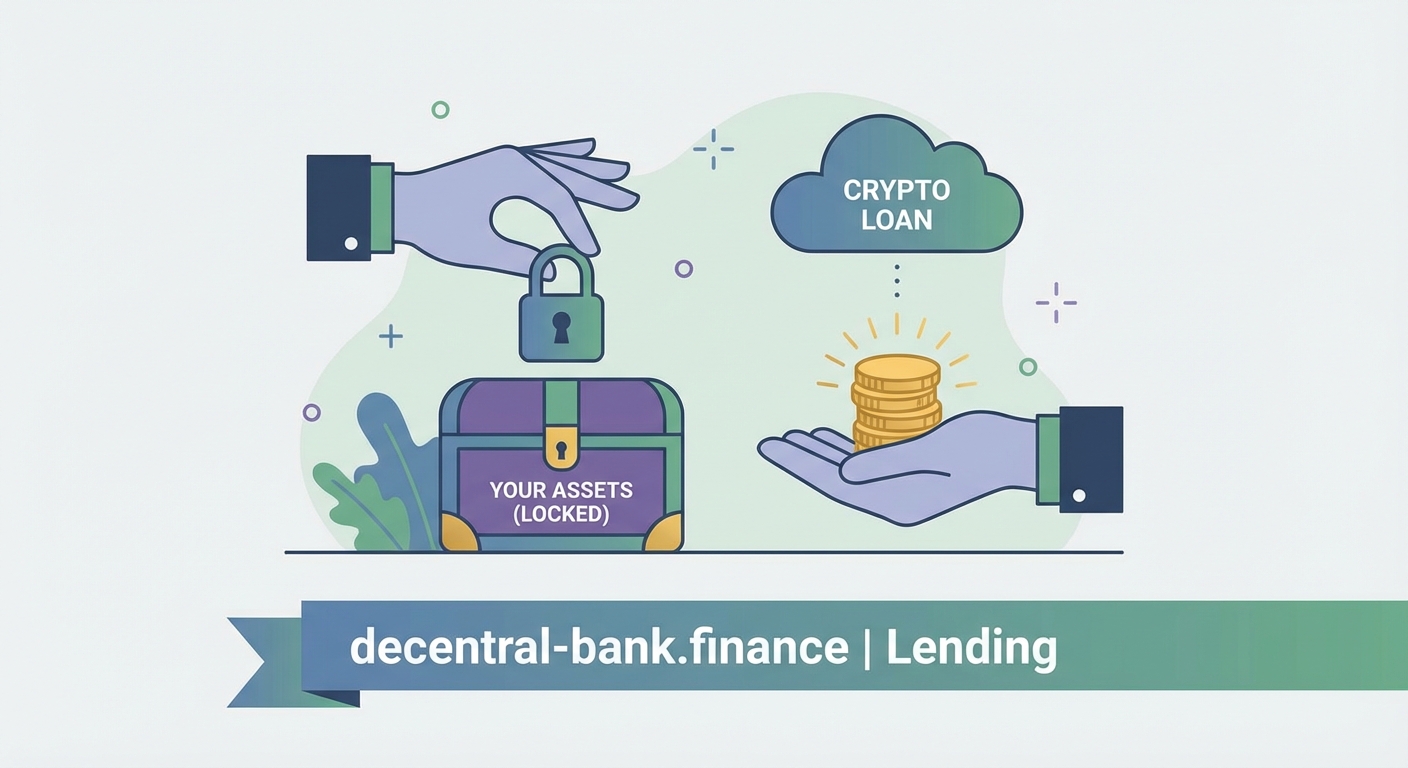
Centralized platforms like BlockFi, Nexo, and Celsius offer user-friendly interfaces and customer support. You deposit crypto into accounts they control. They handle custody, interest calculations, and loan disbursement.
These services require identity verification and trust that the platform manages your assets responsibly. Recent platform failures have shown the risks of custodial arrangements.
DeFi protocols such as Aave, Compound, and MakerDAO operate through smart contracts on public blockchains. You retain custody of your assets in your own wallet. Transactions are transparent and verifiable on-chain.
DeFi requires more technical knowledge. You interact with smart contracts directly, manage gas fees, and bear full responsibility for wallet security. No customer service desk exists to reverse mistakes.
| Platform Type | Custody | Verification | Interest Rates | Technical Skill |
|---|---|---|---|---|
| Centralized | Platform holds assets | KYC required | 4% to 12% | Low |
| DeFi Protocol | User wallet | None | 2% to 15% | Medium to High |
| Peer-to-peer | Escrow or smart contract | Varies | Negotiable | Medium |
Choosing the right collateral
Bitcoin and Ethereum are the most widely accepted collateral assets. They offer deep liquidity and relatively stable LTV ratios.
Stablecoins like USDC or DAI can serve as collateral on some platforms, though they typically offer lower LTV ratios since they lack price appreciation potential.
Altcoins with smaller market caps face higher volatility. Platforms assign lower LTV ratios to riskier assets, meaning you can borrow less per dollar of collateral value.
Some protocols accept LP tokens or staked assets as collateral, letting you earn yield while borrowing. This strategy compounds returns but adds complexity and additional liquidation risks.
Understanding loan-to-value ratios
LTV measures how much you can borrow relative to your collateral value. A 50% LTV on $20,000 of Ethereum means you can borrow up to $10,000.
Conservative LTVs around 25% to 33% provide a larger buffer against price drops. Your collateral can decline significantly before triggering liquidation.
Aggressive LTVs of 50% or higher maximize your borrowing power but leave little room for market volatility. A 20% price drop on 50% LTV collateral can trigger immediate liquidation.
Most platforms set a liquidation threshold slightly above the maximum LTV. If your ratio crosses this line, automated systems sell your collateral to protect the lender.
Managing liquidation risk
Price volatility is the primary threat to crypto-backed loans. If your collateral value drops, your LTV increases automatically.
You can prevent liquidation by adding more collateral to lower your ratio. Depositing additional crypto increases the total value backing your loan.
Alternatively, repay part of the loan principal to reduce the borrowed amount. This lowers your LTV even if collateral prices remain flat or decline.
Set price alerts at levels that would bring you close to liquidation thresholds. Many platforms send notifications, but proactive monitoring gives you time to act before automated systems take over.
Treat your liquidation threshold as a hard stop. Build in a 10% to 15% buffer below the platform’s official limit to account for sudden price swings and network congestion that might delay your response.
Interest rate structures
Fixed rates remain constant throughout the loan term. You know exactly what you’ll owe at repayment, making budgeting straightforward.
Variable rates fluctuate based on supply and demand for loans on the platform. Rates can drop during periods of high liquidity or spike when borrowing demand surges.
Zero-percent promotional rates attract new users but typically last only 30 to 90 days. Read terms carefully to understand what rate applies after the promotional period ends.
Some platforms calculate interest daily, others monthly. Compounding frequency affects your total cost. Daily compounding on a 10% annual rate costs slightly more than monthly compounding at the same nominal rate.
Tax implications of crypto loans
Borrowing against crypto is generally not a taxable event in the United States and many other jurisdictions. You receive cash but have an obligation to repay, so it’s not considered income.
However, if your collateral gets liquidated, that sale triggers capital gains or losses based on your original purchase price. Track your cost basis carefully.
Interest payments are typically not tax-deductible for personal loans. Business use cases may qualify for deductions, but consult a tax professional familiar with cryptocurrency regulations.
Repaying a loan with different crypto than you borrowed can create taxable events. If you borrowed USDC but repay with Bitcoin, that Bitcoin sale has tax consequences.
Common mistakes to avoid
Borrowing at maximum LTV leaves no safety margin. Even small price drops trigger liquidation and permanent loss of your collateral.
Ignoring interest accumulation can surprise you at repayment. A 10% annual rate on a $10,000 loan costs $1,000 per year, or about $83 monthly.
Using borrowed funds to buy more crypto creates leveraged exposure. If prices drop, you lose on both your collateral and your new purchases while still owing the loan.
Failing to read liquidation terms means you might not understand exactly when and how the platform will sell your assets. Some use market orders that can execute at unfavorable prices during volatility.
Trusting platforms without researching their security history and financial health puts your collateral at risk. Multiple lending platforms have frozen withdrawals or declared bankruptcy in recent years.
Strategies for different scenarios
Short-term cash needs: Borrow at conservative LTV ratios and repay within weeks or months. Minimize interest costs and liquidation exposure.
Tax optimization: Use loans to access funds without selling appreciated assets before long-term capital gains treatment kicks in after one year of holding.
Yield farming: Borrow stablecoins against volatile crypto collateral, then deploy those stablecoins in yield-generating protocols. The yield must exceed your loan interest rate for this to profit.
Dollar-cost averaging: Take small loans against accumulated crypto to fund regular purchases of additional assets, smoothing your entry points without selling existing holdings.
Platform selection criteria
Look for transparent fee structures. Some platforms charge origination fees, maintenance fees, or early repayment penalties on top of interest rates.
Check supported assets. Not every platform accepts all cryptocurrencies as collateral or offers loans in your preferred currency.
Review security practices. Cold storage for the majority of assets, insurance coverage, and regular audits indicate stronger protection for your collateral.
Read user reviews and check the platform’s history. How long have they operated? Have they experienced hacks or liquidity crises? How did they handle past problems?
Test customer support before depositing large amounts. Send a question and evaluate response time and helpfulness. DeFi protocols won’t have support, so assess documentation quality and community resources instead.
Building your borrowing strategy
Start small. Test a platform with a modest loan to understand the interface, timing, and processes before committing significant collateral.
Maintain a collateral buffer of at least 15% to 20% below your liquidation threshold. This cushion protects against normal market volatility.
Diversify across platforms if you’re borrowing large amounts. Concentration risk means one platform failure could lock up all your collateral simultaneously.
Set calendar reminders for interest payment dates and loan maturity if your terms include them. Missed payments can trigger penalties or accelerate liquidation timelines.
Keep emergency funds in stablecoins or fiat to add collateral or repay loans if needed. Relying solely on selling other crypto during a downturn means you might face unfavorable prices exactly when you need liquidity most.
Borrowing without losing your upside
Crypto-backed loans solve the painful choice between needing cash today and believing in higher prices tomorrow. You access liquidity while your assets continue working for you.
The key is respecting the risks. Liquidation can wipe out your collateral faster than you expect during volatile markets. Conservative LTV ratios, careful platform selection, and active monitoring turn borrowing from a gamble into a strategic tool.
Start with a small position. Learn how the mechanics work with amounts you can afford to lose. As you gain confidence and understanding, you can scale your borrowing to match your financial goals while keeping your crypto holdings intact and positioned for future growth.
Leave a Reply